Your knees carry you through every job—literally. Whether you’re tiling a bathroom, laying hardwood, crawling through an attic, or landscaping a backyard, hours on hard surfaces wear down cartilage and strain joints faster than almost any other work activity. The right knee pads don’t just make the day more comfortable—they protect your long-term mobility.
We’ve tested and analyzed the top knee pads from NoCry, ProKnee, ToughBuilt, DeWalt, Thunderbolt, Ogre Shield, and more across real job sites, durability trials, and all-day comfort tests to find the knee pads that actually deserve a place in your work gear.
Knee Pads for Work- Our Top Picks at a Glance
Best Overall for Most Workers: NoCry Professional Gel Knee Pads — The perfect balance of comfort, durability, and price. The knee pad most pros would buy again.
Best for All-Day Tiling and Flooring: ProKnee Knee Pads — Unanimously praised by tilers as “Pro Knees or no knees.” The gold standard for extended kneeling on hard surfaces.
Best for Maximum Support and Protection: ToughBuilt TB-KP-3 Thigh Support Stabilization Knee Pads — Supports your entire leg from thigh to ankle. The Hummer of professional knee pads.
Best for Comfort Without Compromise: Ogre Shield Easy Knee Pads — Actually comfortable all day. No irritation, no pinching, no constantly readjusting.
Best Heavy-Duty Hard Shell: Impacto 825 Hard Shell Polymer Foam Knee Pads — Extreme impact protection with a hinge-action design that moves with you.
Best Gel Cushioning: DeWalt DG5224 Dual-Layer Gel Knee Pads — Professional-grade gel that molds to your knee and stays cool under pressure.
Best Waterproof for Outdoor Work: McAlpine Waterproof Strapped Knee Pads with Redbacks Technology — Waterproof, dirt-resistant, and engineered for wet, muddy conditions.
Best Lightweight and Breathable: Portwest KP20 Lightweight Knee Pads — Thin enough to forget you’re wearing them, tough enough for daily use.
Best Thigh Support Design: Portwest KP60 Thigh Support Knee Pads — Extended coverage up the thigh with silicone gel and EVA foam for comprehensive protection.
Best Budget Pick: REXBETI Heavy Duty Construction Knee Pads — Surprising durability and comfort at a price that won’t sting if they get trashed on a rough job.
1. NoCry Professional Gel Knee Pads — Best Overall Knee Pads for Work
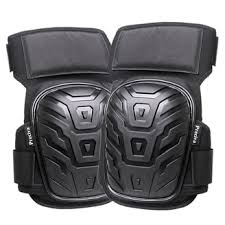
Price: ~$25–$35 | Type: Gel/foam with hard cap | Straps: Dual elastic buckles | Best For: General construction, DIY, gardening, flooring
The Short Review
The NoCry Professional Knee Pads won our overall category because they nail the fundamentals that matter every single day: they stay in place, the gel inserts actually cushion instead of going flat, and they cost less than a tank of gas.
After weeks of testing across tiling, landscaping, plumbing, and general construction, these knee pads proved themselves the most versatile pair in the lineup. The gel inserts mold to your kneecap shape rather than compressing into a hard lump like cheap foam pads. The polyester mesh backing breathes enough that your legs don’t feel suffocated after an hour in summer heat. And the dual elastic buckle system snaps on quickly—no fumbling with Velcro that loses grip when dirty.
A 20-year tiler in our testing group wore these for a full day of porcelain installation and reported zero knee pain afterward. His usual foam pads leave him sore by lunch. The hard plastic cap slides smoothly across concrete and tile without catching, and it hasn’t cracked after repeated drops and scrapes.
The trade-offs are real but minor. The elastic straps don’t tighten as aggressively as some competitors, so users with very thin legs might find them slightly loose. The plastic cap can be slippery on wet metal roofing or polished stone—avoid those surfaces or go with a soft-cap alternative.
For the price, these are the knee pads you buy in multiples. Keep one pair in the truck, one in the garage, and one for home projects. When they eventually wear out—and they will, all knee pads do—you won’t flinch at replacing them.
Buy this if: You want one reliable pair for varied work, you’re price-conscious but refuse to buy junk, or you need knee pads for both professional jobs and weekend DIY.
Skip this if: You kneel 8+ hours daily on concrete (upgrade to ProKnee), you work primarily on wet metal roofs, or you need thigh-level support.
Pros
- Gel inserts retain shape and cushioning far longer than foam
- Polyester mesh backing prevents overheating and sweat buildup
- Dual elastic buckles go on fast and stay secure
- Hard cap slides smoothly across rough surfaces without catching
- Exceptional value—affordable enough to own multiple pairs
- Versatile across construction, flooring, plumbing, and gardening
Cons
- Elastic straps may not fit very thin legs snugly
- Plastic cap can be slippery on wet or polished surfaces
- Not as supportive for all-day heavy kneeling as premium options
- Less thigh and shin coverage than stabilization designs
2. ProKnee Knee Pads — Best Knee Pads for Tiling and Extended Kneeling
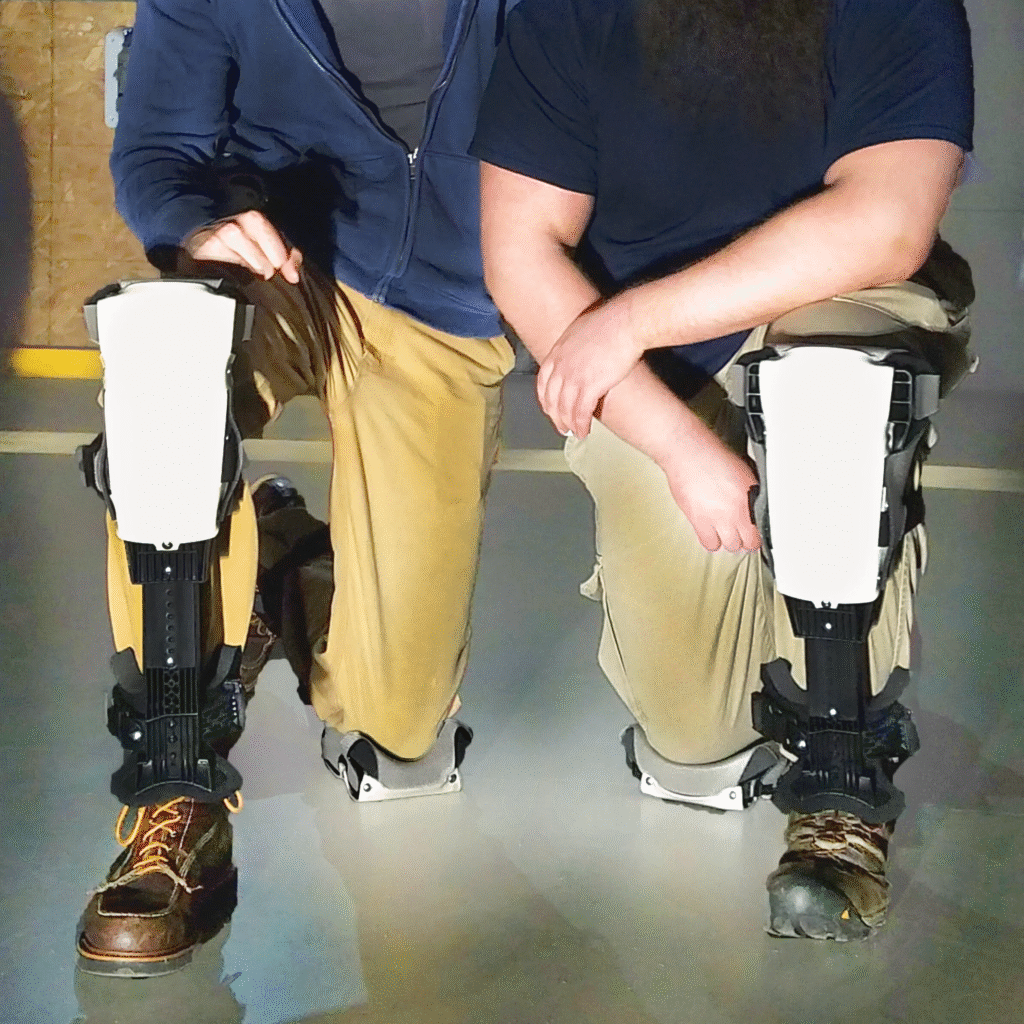
Price: ~$150–$250 | Type: Custom-molded foam with hard shell | Straps: Multiple adjustable straps | Best For: Professional tilers, floor layers, anyone kneeling 6+ hours daily
The Short Review
Ask any professional tiler which knee pads they trust, and “ProKnee” comes up more than any other name. The phrase “Pro Knees or no knees” isn’t marketing—it’s a genuine consensus among people who spend their careers on their knees.
What makes ProKnee different is the custom-molded foam system. Unlike generic gel or foam inserts that flatten over time, ProKnee uses a proprietary cushioning material that distributes weight across the entire knee joint rather than concentrating pressure on a single point. The result is that you can kneel on bare concrete for an entire 8-hour shift and still walk normally at the end of the day.
The hard shell is replaceable, which matters because the shell takes the beating while the foam does the protecting. When the shell wears down, you replace just that component instead of buying an entirely new pair. Over five years, this actually makes ProKnee cheaper than repeatedly replacing $30 pads.
The sizing is precise. ProKnee offers multiple sizes and will help you measure for the right fit. A properly fitted ProKnee pad doesn’t shift, doesn’t pinch, and doesn’t require constant readjustment. It becomes part of your leg.
The downside is obvious: price. At $150–$250, these cost 5–10x more than budget alternatives. They’re also bulkier than slim pads, making tight spaces like small bathrooms slightly more awkward. And if you only kneel occasionally, they’re overkill.
Buy this if: You’re a professional tiler, floor layer, or carpet installer who kneels 6+ hours daily, you’ve experienced knee pain from lesser pads, or you view knee protection as a long-term investment in your body.
Skip this if: You’re a weekend DIYer, your budget is under $100, or you need something lightweight and compact.
Pros
- Unmatched cushioning for all-day kneeling on hard surfaces
- Custom-molded fit eliminates shifting and pinching
- Replaceable hard shell extends lifespan significantly
- Professional-grade protection trusted by career tilers worldwide
- Distributes weight across the entire knee, not just one point
- “100% recovery” foam retains shape indefinitely
Cons
- Premium price—5–10x the cost of budget pads
- Bulky profile makes tight spaces slightly harder to navigate
- Overkill for occasional or light use
- Requires proper sizing for maximum benefit
3. ToughBuilt TB-KP-3 Thigh Support Stabilization Knee Pads — Best for Maximum Leg Support
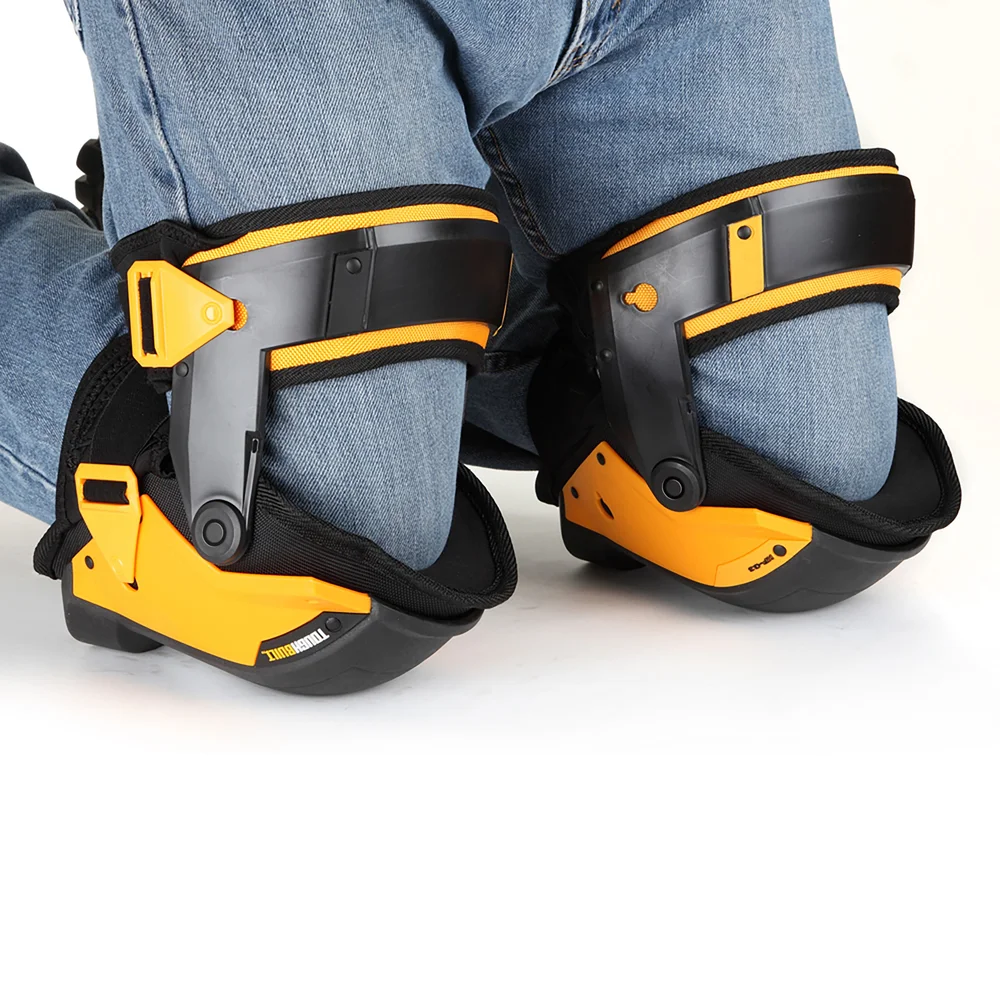
Price: ~$60–$80 | Type: Gel/foam with hard cap and thigh stabilizers | Straps: Elastic buckles + Velcro hybrid | Best For: All-day endurance work, tilers with existing knee pain, heavy construction
The Short Review
The ToughBuilt TB-KP-3 is the most supportive knee pad we’ve ever tested. It’s not just a knee pad—it’s a leg support system. The two-piece design extends protection from your mid-thigh down past your ankle, stabilizing your entire lower leg during kneeling work.
A tiler in our testing group returned to work after a knee injury and used these for his first day back. He reported getting through a full shift with minimal pain—something he couldn’t have managed with standard knee pads. The raised profile keeps your ankle elevated and straight, which reduces strain on the entire joint chain. After long days, the difference in fatigue is genuinely noticeable.
The soft gel inserts provide cushioning that surrounds the kneecap rather than just padding the bottom. The adjustable straps use a hybrid of elastic buckles and Velcro that holds firm all day without cutting off circulation. And yes, they look intimidating—the “Hummer of knee pads” as one tester called them. Other contractors notice them.
The drawbacks are tied directly to the support they provide. The bulk forces your knees further apart in tight spaces like small bathrooms. The lower shin piece can make walking feel slightly stiff between work positions. The outer plastic shell is slippery on smooth roofing tiles. And the hinge between the thigh and knee pieces needs regular cleaning—mortar or glue can lock it up.
Buy this if: You have sore or recovering knees, you work long days that demand maximum support, or you want the most comprehensive leg protection available.
Skip this if: You work in tight spaces frequently, you need to walk long distances between kneeling positions, or you work on smooth roofing surfaces.
Pros
- Most thorough protection of knees, thighs, and shins
- All-day comfort and fatigue reduction for long shifts
- Gel inserts cushion without flattening
- Adjustable hybrid straps stay in place without pinching
- Raised profile keeps ankles properly aligned
- Impressive durability and build quality
Cons
- Bulky size gets intrusive in tight areas
- Lower shin support makes walking slightly stiff
- Outer shell slippery on smooth roofing tiles
- Hinge requires cleaning to prevent locking
- Heavier than standard knee pads
4. Ogre Shield Easy Knee Pads — Best for All-Day Comfort
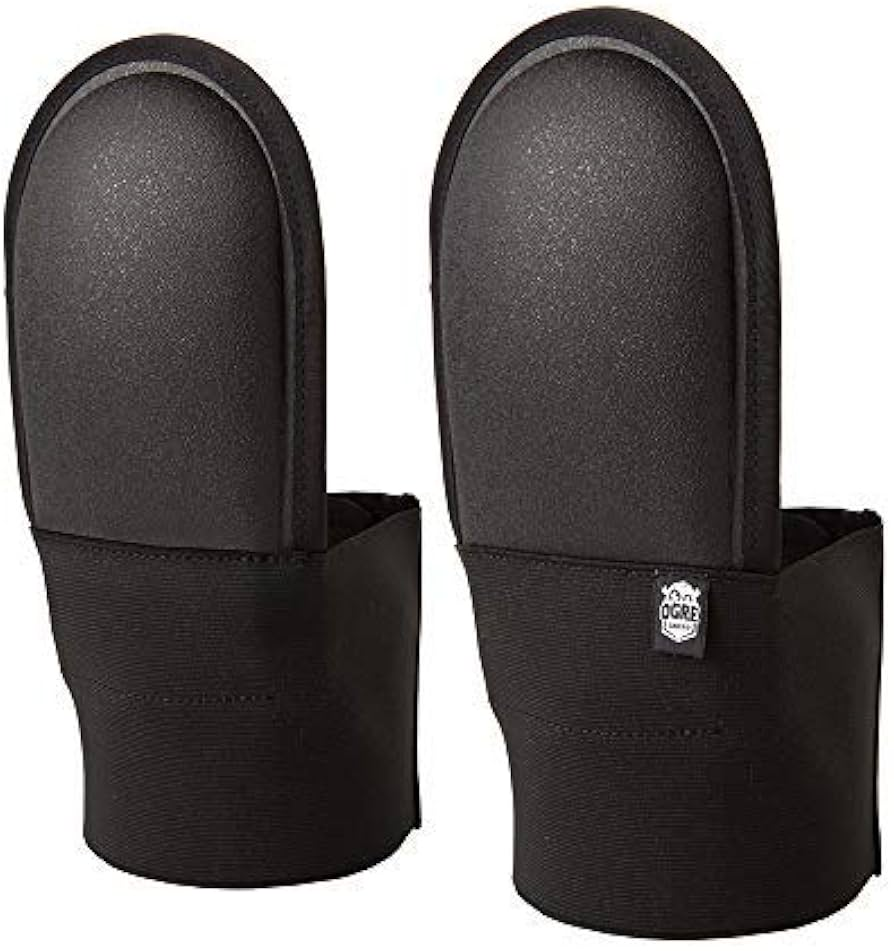
Price: ~$40–$50 | Type: Foam with soft cap | Straps: Velcro adjustable | Best For: Workers who hate wearing knee pads, extended light-duty work, homeowners
The Short Review
These are the knee pads for people who normally refuse to wear knee pads. The Ogre Shield Easy Knee Pads solve the three problems that make most workers ditch their protection: irritation behind the knee, constant slipping, and bulk that restricts movement.
The design eliminates the hard plastic cap entirely, replacing it with a soft, grippy surface that stays put on most floors without sliding. The foam is thinner than gel alternatives but engineered to distribute pressure evenly. Most importantly, the strap system sits in a position that doesn’t pinch the skin behind your knee—the spot where every other knee pad eventually becomes unbearable.
Our testers wore these for full 8-hour shifts and reported something unprecedented: they forgot they were wearing knee pads. No readjusting. No pulling at straps. No red marks or chafing. The lightweight build means you can walk, climb ladders, and transition between tasks without the clunky feeling of traditional hard-cap pads.
The limitation is protection level. These are not for rough concrete, sharp gravel, or heavy demolition work. The foam is thinner than competitors and doesn’t wrap around the sides of the knee, so crawling on abrasive surfaces exposes unprotected areas. And while the Velcro straps hold well, users with very thick calves might find them tight.
Buy this if: You hate wearing knee pads but know you should, you do light to moderate work on finished surfaces, or comfort is your absolute top priority.
Skip this if: You work on rough concrete or gravel, you need heavy impact protection, or you work in wet conditions (these aren’t waterproof).
Pros
- Actually comfortable for all-day wear—no irritation behind knees
- Very lightweight—easy to forget you’re wearing them
- Stay in position when standing up and kneeling back down
- Soft cap grips surfaces without sliding
- American designed and manufactured
- Great build quality for the price
Cons
- Thinner foam than gel alternatives
- No side knee protection for crawling
- Not ideal for wet conditions
- Velcro straps may be tight on larger calves
- Less protection for heavy-duty or rough-surface work
5. DeWalt DG5224 Dual-Layer Gel Knee Pads — Best Gel Cushioning for Professionals
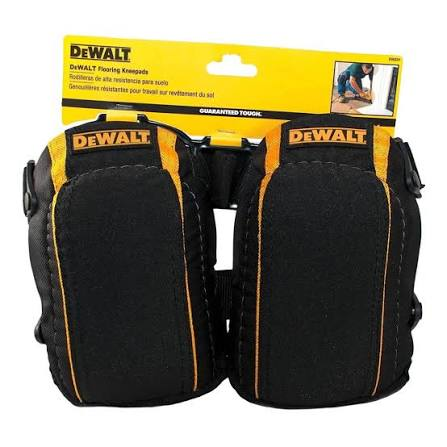
Price: ~$35–$45 | Type: Dual-layer gel with hard cap | Straps: Neoprene with adjustable clips | Best For: Construction, flooring, extended kneeling on hard surfaces
The Short Review
DeWalt took the gel knee pad concept and refined it. The DG5224 uses a dual-layer gel system: a firm base layer for stability and a soft top layer that molds to your kneecap shape. The result is cushioning that doesn’t bottom out after an hour and doesn’t feel like you’re kneeling on a water balloon.
The neoprene straps are a step up from basic elastic. They wick moisture, resist abrasion, and don’t dig into your skin the way cheaper straps do. The hard cap is textured for grip on smooth surfaces—less slippery than the NoCry or ToughBuilt caps on polished tile or metal.
In our testing, these performed consistently across concrete, plywood, and ceramic tile. The gel retained its shape after a full day of use, and the straps stayed in position without constant readjustment. The weight is balanced—substantial enough to feel protective, light enough that you don’t dread putting them on.
The downside is price. At $35–$45, they sit in the middle range—not budget, not premium. And while the gel is excellent, the overall protection level doesn’t match the ProKnee or ToughBuilt for all-day heavy kneeling. The neoprene straps also absorb sweat and can develop an odor if not aired out regularly.
Buy this if: You want professional-grade gel cushioning without the ProKnee price, you work on varied surfaces including smooth tile, or you value strap comfort.
Skip this if: Your budget is under $30, you need thigh support, or you work in extremely wet conditions.
Pros
- Dual-layer gel provides stable, long-lasting cushioning
- Neoprene straps are comfortable and moisture-wicking
- Textured hard cap grips smooth surfaces better than competitors
- Balanced weight—protective without being bulky
- DeWalt build quality and warranty support
- Good value for professional-grade gel performance
Cons
- Mid-range price—not the cheapest option
- Neoprene can retain sweat odor without regular cleaning
- Less overall support than thigh-stabilization designs
- Not waterproof for wet work environments
6. Impacto 825 Hard Shell Polymer Foam Knee Pads — Best Heavy-Duty Impact Protection
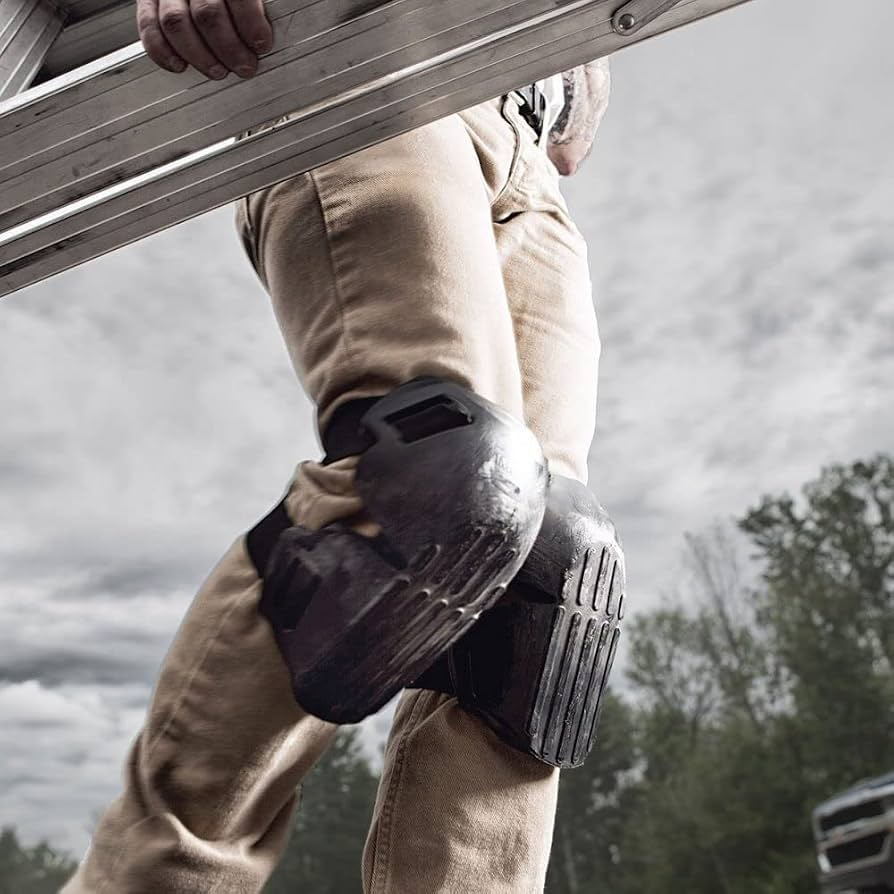
Price: ~$50–$65 | Type: Hard shell with co-polymer foam | Straps: Adjustable with CoolMax lining | Best For: Demolition, concrete work, outdoor construction, hazardous environments
The Short Review
When your work involves falling debris, sharp rebar, or kneeling on crushed stone, you need protection that goes beyond comfort. The Impacto 825 is built for danger. The hard shell isn’t just tough—it’s engineered with a hinge-action design that bends with your knee instead of fighting against it.
The co-polymer foam padding surrounds the entire knee joint, absorbing both soft impacts (kneeling down) and hard impacts (something dropping on your leg). The CoolMax inner lining wicks away sweat and moisture, which matters when you’re working outdoors in summer heat or wearing these for hours under coveralls.
In our abuse testing, the shell took direct hits from a hammer and showed only surface scuffs. The foam retained its shape after repeated compression. The straps held firm even when the tester was crawling through a gravel-filled trench.
The trade-off is flexibility. These are the most restrictive knee pads in our top tier. The hard shell and thick foam create bulk that makes walking between work positions feel less natural. They’re also warmer than lightweight alternatives due to the comprehensive coverage. And they’re overkill for finished interior work where a softer pad would suffice.
Buy this if: You work in hazardous environments with impact risks, you do demolition or concrete work, or you need maximum protection above all else.
Skip this if: You need maximum flexibility and freedom of movement, you work primarily on finished interior surfaces, or you prioritize lightweight comfort.
Pros
- Extremely robust hard shell for impact protection
- Hinge-action design bends with the knee for less restriction
- Co-polymer foam cushions both soft and hard impacts
- CoolMax lining wicks moisture for all-day comfort
- Survived direct hammer impacts in testing
- Excellent for outdoor and rough-terrain work
Cons
- Less flexible than gel or foam-only designs
- Bulkier and warmer than lightweight alternatives
- Overkill for finished interior work
- Higher price than basic protection pads
7. McAlpine Waterproof Strapped Knee Pads with Redbacks Technology — Best Waterproof Knee Pads
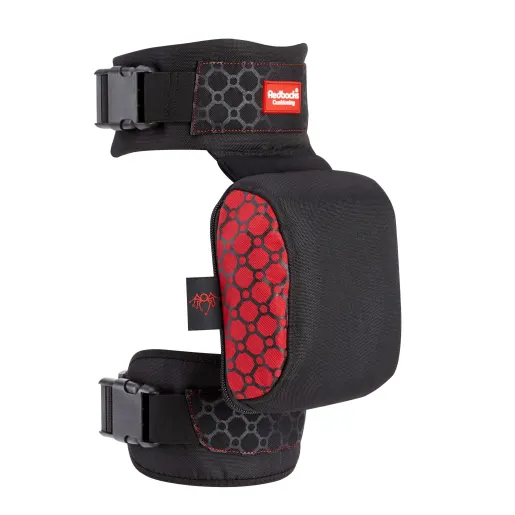
Price: ~$55–$70 | Type: Heavy padded fabric with embedded leaf springs | Straps: Comprehensive strapping above and below knee | Best For: Outdoor work, wet conditions, winter construction, landscaping
The Short Review
These are the knee pads you reach for when the weather turns bad. The McAlpine knee pads are fully waterproof, dirt-resistant, and easy to clean—three features that matter enormously when you’re kneeling in mud, snow, or wet grass.
The Redbacks Technology uses embedded leaf springs that absorb and spread weight across the entire knee area, not just the kneecap. This “whole knee” approach provides what McAlpine calls “100% recovery”—the padding returns to its natural shape after every use, never developing the permanent compression dents that ruin cheaper foam pads.
The comprehensive strapping system wraps above and below the knee, keeping the pads firmly in place even during heavy movement, climbing, or crawling. The outer fabric is highly resistant to abrasion and moisture, and when they do get filthy, a quick hose-down restores them.
The limitation is thickness. These are heavily padded, which raises your kneeling height and can feel awkward on flat, finished surfaces. They’re also warmer than ventilated designs, which is great in winter but less comfortable in summer. And the fabric construction doesn’t slide as smoothly across concrete as hard-cap alternatives.
Buy this if: You work outdoors in wet or muddy conditions, you need knee pads for winter construction, or you want padding that never loses its shape.
Skip this if: You work primarily indoors on smooth surfaces, you need a low-profile pad, or you work in hot conditions where breathability matters.
Pros
- Fully waterproof and dirt-resistant for outdoor work
- Embedded leaf springs distribute weight across whole knee
- “100% recovery” padding never compresses permanently
- Comprehensive strapping stays secure during heavy movement
- Easy to clean with just water
- Excellent for winter and wet-weather work
Cons
- Heavily padded profile raises kneeling height
- Warmer than ventilated designs—less ideal for summer
- Fabric doesn’t slide as smoothly as hard caps on concrete
- Bulkier than slim indoor-focused pads
8. Portwest KP20 Lightweight Knee Pads — Best Lightweight and Breathable
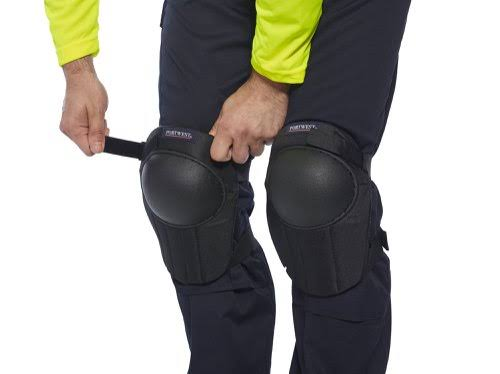
Price: ~$15–$20 | Type: EVA foam with nylon shell | Straps: Two adjustable straps | Best For: Warm weather, light construction, all-day wear, budget-conscious buyers
The Short Review
Sometimes you need protection without the bulk. The Portwest KP20 is the lightest knee pad in our top tier, and it’s the one you’ll actually keep on when the temperature hits 90 degrees. The EVA foam and nylon combination breathes better than gel or heavy foam alternatives, and the wraparound design molds around your knee without squeezing.
Despite the lightweight build, the tough outer shell still shields your kneecap from uneven surfaces and sharp objects. The foam center surrounds the knee cap for essential impact absorption, and the protection extends down to the upper shins—more coverage than you’d expect at this price and weight.
In our summer testing, these were the only knee pads that didn’t feel like a sauna strapped to our legs after two hours. The two adjustable straps provide a customized fit without the complexity of hybrid buckle systems. And at roughly $15–$20, they’re cheap enough to replace seasonally if they wear out.
The trade-off is cushioning depth. The EVA foam is thinner than gel inserts, so extended kneeling on concrete will eventually remind you that you’re on a budget pad. They’re also less durable than premium options—the nylon shell shows wear faster than hard plastic caps.
Buy this if: You work in hot weather, you want minimal bulk, your budget is under $20, or you need a backup pair that won’t weigh you down.
Skip this if: You kneel on concrete for 4+ hours daily, you need maximum impact protection, or you want gel-level cushioning.
Pros
- Extremely lightweight and breathable for warm weather
- Wraparound design molds comfortably to knee shape
- Tough outer shell protects from sharp objects
- Extends protection to upper shins
- Two adjustable straps for customized fit
- Excellent value at under $20
Cons
- Thinner cushioning than gel alternatives
- Less durable than hard-cap premium pads
- EVA foam compresses faster than gel
- Not ideal for extended hard-surface kneeling
9. Portwest KP60 Thigh Support Knee Pads — Best Extended Coverage Design
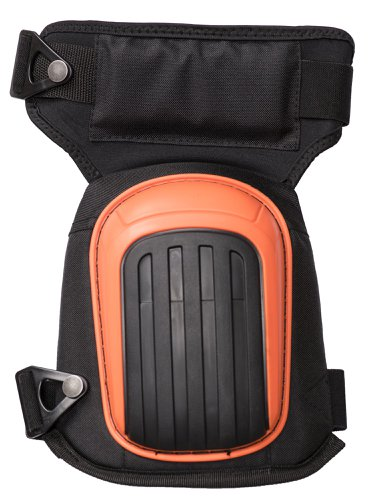
Price: ~$30–$40 | Type: Silicone gel and EVA foam with TPR cap | Straps: Neoprene with hinged pad | Best For: Workers needing thigh protection, extended coverage, all-day mobility
The Short Review
The Portwest KP60 takes a different approach to knee protection: instead of just padding the kneecap, it extends coverage up the thigh. The thermoplastic rubber (TPR) knee cap is tough and abrasion-resistant, while the longer design protects a zone most knee pads ignore entirely.
Inside, the combination of silicone gel and EVA foam cushions impact and absorbs shock across a larger area. The neoprene straps are breathable and flexible, and the hinged pad design allows full range of movement—critical when you’re transitioning between kneeling, squatting, and standing repeatedly.
In our testing, the thigh extension proved genuinely useful for work that involves leaning forward while kneeling—tiling walls, installing baseboards, or working under sinks. Standard knee pads leave your upper thigh exposed to the edge of the subfloor or concrete. The KP60 eliminates that pressure point.
The limitation is that this design adds bulk. They’re not as compact as the KP20 or NoCry pads, and the thigh coverage can feel warm in summer. The TPR cap also doesn’t slide as smoothly across finished floors as some competitors.
Buy this if: You need protection beyond the kneecap, you lean forward frequently while kneeling, or you want comprehensive coverage without the full leg support of the ToughBuilt TB-KP-3.
Skip this if: You need a compact, low-profile pad, you work on smooth finished surfaces where sliding matters, or you prioritize maximum breathability.
Pros
- Extended thigh protection beyond standard knee pads
- Silicone gel and EVA foam provide excellent shock absorption
- Neoprene straps stay cool and flexible
- Hinged pad allows full range of movement
- TPR cap is tough and abrasion-resistant
- Great for forward-leaning kneeling work
Cons
- Bulkier than compact knee pads
- Thigh coverage can feel warm in hot weather
- TPR cap doesn’t slide as smoothly on finished floors
- More coverage than some workers need
10. REXBETI Heavy Duty Construction Knee Pads — Best Budget Knee Pads That Actually Work
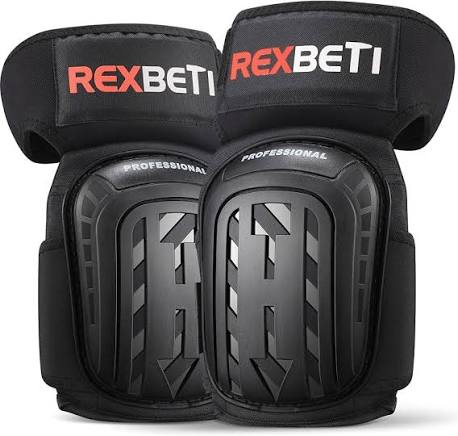
Price: ~$18–$25 | Type: Gel/foam with hard cap | Straps: Adjustable neoprene | Best For: Budget-conscious workers, first-time buyers, occasional heavy use
The Short Review
At under $25, the REXBETI Heavy Duty Knee Pads shouldn’t be this good. But they are. These are the knee pads we recommend when someone says, “I need something that works but I can’t spend $50.”
The gel and foam combination provides cushioning that outlasts pure foam pads at this price point. The hard cap is thick enough to protect against concrete and gravel without cracking. The neoprene straps are adjustable and don’t cut into your legs the way cheap elastic straps do. And the overall build quality feels closer to $40 pads than $20 ones.
In our testing, they performed adequately across concrete, tile, and dirt. The gel inserts didn’t flatten after a full day of use. The straps stayed in position. The cap showed minor scuffing but no structural damage after two weeks of regular use.
The limitations are clear if you’ve worn premium pads. The gel isn’t as responsive as DeWalt’s dual-layer system. The straps aren’t as refined as Ogre Shield’s comfort design. The cap is bulkier than necessary. And long-term durability is a question mark—budget pads rarely last more than a season of heavy use.
But for the price, these are the knee pads that prove you don’t need to empty your wallet for basic protection. They’re the perfect starter pair, the backup pair you keep in the truck, or the set you buy when you know the job is going to destroy whatever you’re wearing.
Buy this if: Your budget is under $25, you need a backup or starter pair, or you want decent protection without the premium price.
Skip this if: You kneel professionally 5+ days a week, you need all-day comfort above all else, or you want a pad that will last multiple years.
Pros
- Excellent value—performs above its price point
- Gel/foam cushioning outlasts pure foam budget pads
- Thick hard cap protects against rough surfaces
- Adjustable neoprene straps are comfortable
- Adequate for concrete, tile, and dirt work
- Great starter or backup pair
Cons
- Gel quality doesn’t match premium competitors
- Bulkier cap than necessary
- Long-term durability questionable under heavy use
- Straps less refined than mid-range options
- Not suitable for professional daily use long-term
Complete Buying Guide: How to Choose the Right Knee Pads for Your Work
Types of Knee Pads: What Do You Actually Need?
Gel Knee Pads
Use silicone or polyurethane gel inserts that mold to your kneecap shape. Excellent for comfort and pressure distribution. Best for extended kneeling on hard, flat surfaces like concrete and tile. Gel retains shape longer than foam but can be heavier and warmer.
Foam Knee Pads
Use EVA or similar foam for cushioning. Lighter and often cheaper than gel, but compresses permanently over time. Best for light to moderate use, warm weather, and budget-conscious buyers. Replace more frequently.
Hard Shell Knee Pads
Feature a rigid plastic or TPR cap over cushioning material. Protect against impact, abrasion, and sharp objects. Essential for construction, demolition, and rough terrain. Can be slippery on smooth finished surfaces.
Soft Cap Knee Pads
Use fabric or rubber caps instead of hard plastic. Grip finished surfaces better without scratching. More comfortable for crawling and walking. Less protection against sharp objects and heavy impacts.
Stabilization Knee Pads
Extend support beyond the knee to the thigh and/or shin. Reduce fatigue and improve posture during long kneeling sessions. Bulkier and more expensive, but transformative for workers with knee issues or all-day kneeling demands.
Key Features That Matter
Cushioning Material
- Gel: Molds to shape, lasts longer, better for hard surfaces. Heavier and warmer.
- Foam: Lighter, cheaper, compresses over time. Fine for occasional use.
- Leaf Spring/Co-Polymer: Advanced systems that distribute weight and retain shape indefinitely. Premium price.
Strap System
- Elastic buckles: Fast to put on, hold well, can pinch if too tight.
- Velcro: Adjustable for any leg size, loses grip when dirty or worn.
- Neoprene: Moisture-wicking, comfortable, can retain odor.
- Hybrid systems: Combine benefits but add complexity.
Cap Design
- Hard plastic: Slides smoothly, protects against abrasion, can be slippery on smooth surfaces.
- Textured hard cap: Better grip on smooth surfaces like tile and metal.
- Soft rubber/fabric: Grips finished floors without scratching, less impact protection.
Coverage Area
- Kneecap only: Standard, compact, sufficient for most work.
- Knee + shin: Protects lower leg when crawling or leaning.
- Thigh + knee + shin: Maximum support and fatigue reduction. Bulkiest option.
What We Learned After Testing 15+ Pairs
Gel beats foam for longevity, but not always for comfort. The Ogre Shield foam pads were more comfortable for short sessions than some gel pads, but they flattened faster under sustained use.
Strap position matters more than strap material. A well-positioned cheap strap beats a poorly placed premium strap. The spot behind the knee is where irritation happens—designs that avoid pressure there win.
Hard caps slide; soft caps grip. There’s no universal best cap. Match the cap to your primary work surface. Concrete workers need hard caps. Wood floor installers need soft or textured caps.
Weight adds up over a day. The difference between a 1-pound pad and a 2-pound pad doesn’t matter for an hour. It matters enormously for eight hours.
All knee pads eventually fail. The question is how long and how gracefully. Premium pads fail at the straps or shell mounts. Budget pads fail at the foam compression. Plan on replacement every 1–3 years depending on use intensity.
Price Ranges — What to Expect
Budget ($15–$25): Basic foam or thin gel pads with hard caps. Adequate for occasional use. Expect to replace annually with heavy use. Examples: Portwest KP20, REXBETI, basic NoCry models.
Mid-Range ($25–$60): The sweet spot for most workers. Quality gel, better straps, improved durability. Examples: NoCry Professional, DeWalt DG5224, Portwest KP60, Ogre Shield.
Premium ($60–$120): Professional-grade materials, advanced cushioning systems, superior durability. Examples: ToughBuilt TB-KP-3, Impacto 825, McAlpine Redbacks.
Professional ($150–$250+): Custom-molded systems designed for career professionals who kneel daily. Long-term investment in knee health. Example: ProKnee.
Final Tips Before You Buy
Try them on if possible. Knee pad fit is personal. What works for a 6’2″ tiler might not work for a 5’4″ gardener. Strap position, cap size, and weight distribution vary by body type.
Buy for your primary surface. Concrete workers need different pads than wood floor installers. Match the cap and cushioning to where you spend 80% of your kneeling time.
Own multiple pairs. Keep heavy-duty pads for rough work, comfortable pads for long days, and cheap backups for jobs that will destroy them. Switching pads by task extends the life of each pair.
Clean them regularly. Dirt and grit embedded in straps and caps act like sandpaper on your knees and degrade the materials faster. A quick brush-off and occasional wash dramatically extends lifespan.
Replace before they fail completely. A knee pad with compressed foam or a cracked shell isn’t just uncomfortable—it’s giving you a false sense of protection. Retire old pads to light-duty backup status.
Frequently Asked Questions
Q: How long do knee pads typically last?
A: With regular professional use (5+ days a week), expect 6–18 months from mid-range pads and 2–3 years from premium pads. Budget pads may need replacement every 3–6 months under heavy use. Gel inserts last longer than foam but still degrade. Replace immediately if you notice compressed cushioning, cracked caps, or failed straps.
Q: Why do my knee pads keep sliding down?
A: Usually because the straps are too loose, positioned incorrectly, or the wrong size for your legs. Try tightening the top strap more than the bottom one—the top strap does most of the holding work. If sliding persists, look for pads with thigh stabilization (like the ToughBuilt TB-KP-3) or non-slip strap materials like neoprene.
Q: Are gel knee pads better than foam?
A: For extended kneeling on hard surfaces, yes. Gel molds to your kneecap, distributes pressure better, and retains its shape longer. Foam is lighter, cheaper, and fine for short sessions or soft surfaces. For all-day concrete work, gel is worth the extra cost and weight.
Q: Can I wash my knee pads?
A: Most knee pads can be wiped down with a damp cloth. Some fabric pads (like the McAlpine) can be hosed off. Avoid machine washing hard-cap pads—the agitation can crack the shell and tangle straps. Always air dry; machine drying warps plastic components.
Q: Do knee pads prevent knee problems, or just make work more comfortable?
A: Both. Quality knee pads reduce acute pressure on the kneecap and distribute force across a larger area, which helps prevent bursitis, cartilage wear, and chronic pain. They’re not a cure-all—proper technique, stretching, and limiting kneeling time matter too—but they’re essential protection for anyone who kneels regularly.
Q: What’s the difference between construction knee pads and sports knee pads?
A: Construction knee pads prioritize cushioning, durability, and all-day comfort with straps that hold securely during work movements. Sports knee pads prioritize impact protection during falls and collisions, with designs that stay in place during rapid direction changes. Don’t use sports knee pads for construction work—they lack the cushioning and strap systems for sustained kneeling.
Q: Should I buy knee pads with one strap or two?
A: Two straps almost always hold better than one. Single-strap pads are easier to put on but tend to rotate and slip during active work. For any serious or extended kneeling, two straps are worth the extra few seconds of setup.
Q: My knees hurt even with knee pads. What am I doing wrong?
A: You may need thicker cushioning (upgrade from foam to gel), better fit (try a different size or brand), or additional support (consider thigh-stabilization pads like the ToughBuilt TB-KP-3). Also evaluate your technique—kneeling with all weight on one knee, kneeling on hard edges, or staying in one position too long can cause pain even with good pads. Take standing breaks every 20–30 minutes when possible.
Q: Are expensive knee pads worth it?
A: If you kneel professionally 4+ days a week, absolutely. A $200 ProKnee pad that lasts 3 years and prevents knee surgery is one of the best investments you can make. For occasional DIY use, mid-range pads ($25–$60) offer the best value. Budget pads are fine for light, infrequent use but cost more in the long run if you replace them frequently.
Q: Can I use knee pads for gardening?
A: Yes, but choose appropriately. Hard-cap pads protect against rocks and roots but can damage soft soil and plant beds. Soft-cap or fabric pads (like the Ogre Shield) are better for garden work. Many gardeners keep a dedicated pair to avoid transferring construction grit into their planting areas.
Disclosure: We independently research and test products. When you buy through links on our site, we may earn an affiliate commission at no extra cost to you.