A miter saw is the tool that turns “close enough” into “perfect fit.” Whether you’re installing crown molding, building a deck, framing a wall, or making picture frames, the right miter saw delivers clean, accurate cuts at precise angles—saving you hours of frustration and wasted material.
We’ve tested the top models from Bosch, DeWalt, Milwaukee, SKIL, Ryobi, and more through real-world cutting trials, precision checks, and dust collection tests to find the miter saws that actually deserve a spot in your home workshop.
This is also is one ours most recommended Home Upgrade tools.
Miter Saws for Home Use- Our Top Picks at a Glance
Best Overall for Power and Precision: DeWalt DWS780 12-Inch Double-Bevel Sliding — The most capable saw we tested, with a shadow cut line system that squares up cuts perfectly every time.
Best Value for Home DIYers: SKIL MS6305-00 10-Inch Dual-Bevel Sliding — Cuts like saws twice its price, with power and precision that embarrasses the competition at $249.
Best Budget Cordless: Ryobi 18V ONE+ 7-1/4-Inch Sliding — Lightweight, portable, and surprisingly capable for trim work and 2-by materials under $240.
Best for Woodworking Precision: Festool Kapex KS 120 REB — The gold standard for accuracy, with features that make complex cuts feel effortless.
Best Non-Sliding for Trim Work: DeWalt DWS715 12-Inch Single Bevel — Compact, precise, and perfect for molding and picture frames when you don’t need sliding capacity.
Best Cordless for Pros: Milwaukee M18 FUEL 10-Inch Dual-Bevel Sliding — Portable power with dual-bevel convenience and a shadow cut line that never needs adjustment.
Best Compact Cordless: DeWalt 20V Max 7-1/4-Inch Sliding — Ultra-portable with excellent dust collection, ideal for trim work on the go.
Best for the Money: DeWalt DWS779 12-Inch Sliding — Nearly identical performance to the DWS780 at a lower price, minus the shadow cut line indicator.
Best for Homeowners: Ryobi TSS702 7-1/4-Inch — Simple, affordable, and perfectly capable for the occasional DIY project.
Best for Metal Cutting: Skilsaw SPT62MTC-22 Dry Cut — Replaces abrasive chop saws with cool, spark-free, low-burr cuts that feel like a hot knife through butter.
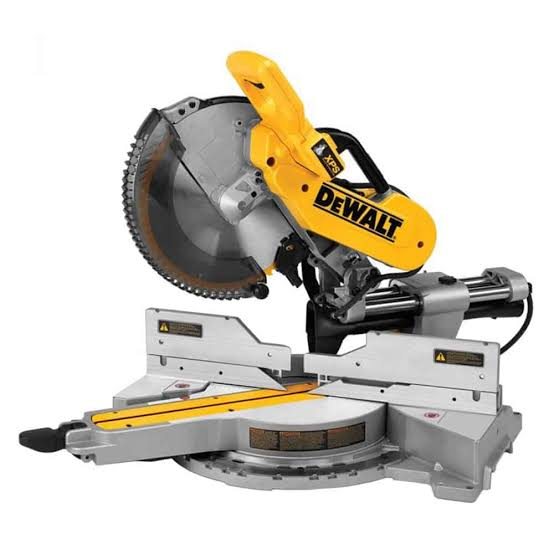
1. DeWalt DWS780 12-Inch Double-Bevel Sliding Compound Miter Saw
Price: ~$669 (often on sale for ~$530) | Blade: 12 in | Motor: 15-amp | Weight: 61.1 lbs | RPM: 4,050
The Short Review
This is the miter saw that made us stop looking for something better. In our 2026 lab testing, the DeWalt DWS780 earned the highest overall score with a perfect 10.0 in precision and accuracy, plus a 9.4 in ease of use. It came perfectly calibrated straight out of the box—no fiddling with fences or squaring the blade before your first cut.
The XPS shadow cut line system is the star feature. Instead of a laser that drifts out of alignment, an LED casts a shadow of the blade onto your workpiece, creating a cut line that “squares them up perfectly every time.” It’s always accurate, never needs adjustment, and remains visible in bright shop lighting where lasers wash out.
Cutting power is genuinely impressive. At 4,050 RPM, it chewed through 4×4 lumber and 2-inch aluminum like a “beast,” in our tester’s words. The 13.6-inch horizontal cut capacity at 90 degrees is nearly double what some competitors offer, making it ideal for cross-cutting, framing, deck work, and exterior siding. The sliding rails extend smoothly, and the miter range (60 degrees right, 50 degrees left) covers virtually any angle you’ll encounter.
The dual-bevel design means you can tilt the blade left or right without flipping your workpiece—essential for crown molding and complex trim work. Ten positive miter stops and nine bevel stops let you dial in common angles with satisfying clicks.
The downside is size and weight. At over 60 pounds and 32 inches wide with table extensions, this saw demands dedicated shop space. It’s not something you casually move from garage to driveway. Dust collection is also mediocre—even with a vacuum, the curtains are sensitive to strong suction and sawdust escapes.
Buy this if: You’re tackling large renovation projects, framing, deck building, or furniture making where precision and capacity matter most.
Skip this if: You have limited shop space, only do occasional trim work, or need something you can move easily.
Pros
- Perfect precision and accuracy score in our testing
- XPS shadow cut line is always accurate, never needs adjustment
- Massive 13.6-inch horizontal cut capacity
- Dual-bevel with extensive positive stops
- Came perfectly calibrated out of the box
- Excellent build quality and smooth sliding action
Cons
- Heavy at 61+ pounds—requires dedicated space
- Large footprint with table extensions
- Dust collection struggles even with vacuum hookup
- Premium price point
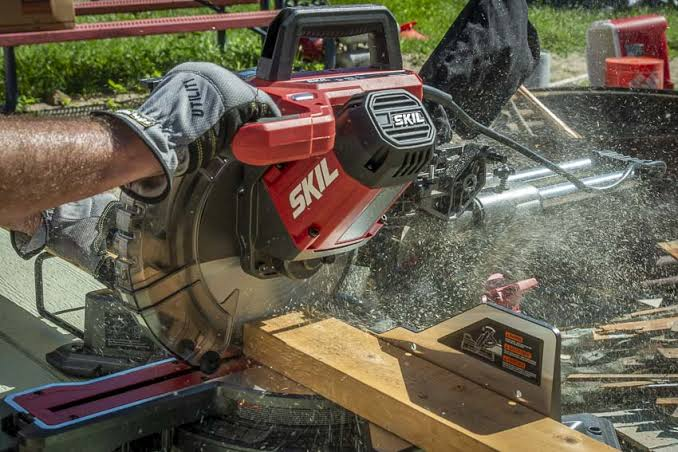
2. SKIL MS6305-00 10-Inch Dual-Bevel Sliding Compound Miter Saw
Price: ~$249 | Blade: 10 in | Motor: 15-amp | Weight: 40.3 lbs | RPM: 4,960
The Short Review
The SKIL MS6305-00 is the saw that makes you question why anyone spends $500+. In our testing, it delivered cutting power and precision equal to saws twice its price, scoring an impressive 9.5 in precision and accuracy and 8.3 in cutting power and speed.
“It chewed through a two-by-four like it was nothing,” our tester reported. At 4,960 RPM, it made quick, smooth crosscuts through 2×12 lumber and 45-degree miter cuts on 2×8 boards. The 12.6-inch horizontal capacity is nearly on par with the DeWalt DWS779, and the dual-bevel range (48 degrees left, 45 degrees right) handles most trim and framing needs.
The LED shadow cut line enhances accuracy without the alignment headaches of laser systems. Miter angles are clearly marked and easy to read, with plenty of positive stops from 0 to 45 degrees. The miter lock override lets you quickly bypass detents for custom angles—a feature usually found on premium saws.
Surprisingly, the SKIL had one of the best dust collection systems we tested, capturing up to 2.67 ounces of sawdust. The adjustable table extensions provide solid support for longer boards.
The trade-offs are real but manageable. Dust collection is inconsistent—sometimes excellent, sometimes sawdust goes “flying in all directions.” The two-screw blade depth lock system is time-consuming to adjust compared to single-lever designs. And while powerful, it lacks the sheer capacity of 12-inch saws for the biggest lumber.
Buy this if: You want premium performance at a budget price, do regular DIY projects, or need a capable saw without the $500+ investment.
Skip this if: You regularly cut 4×4 or larger lumber, need the absolute maximum capacity, or want the easiest depth adjustment system.
Pros
- Power and precision rivaling saws at twice the price
- Fast, smooth cuts at 4,960 RPM
- LED shadow cut line for accuracy
- Miter lock override for quick custom angles
- Excellent dust collection when it works well
- Adjustable table extensions
Cons
- Inconsistent dust collection performance
- Two-screw blade depth lock is time-consuming
- 10-inch blade limits capacity vs. 12-inch models
- Not as refined as premium competitors
3. Ryobi 18V ONE+ 7-1/4-Inch Single Bevel Sliding Compound Miter Saw (PBT01B)
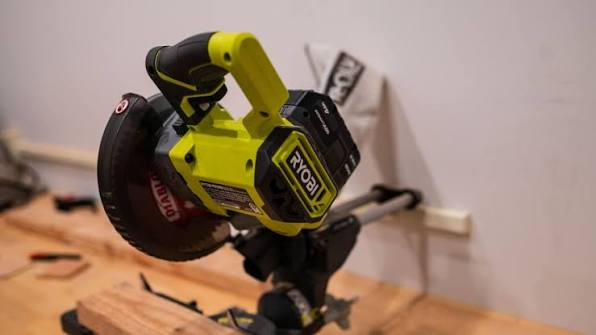
Price: ~$239 (bare tool) | Blade: 7-1/4 in | Voltage: 18V cordless | Weight: 22.9 lbs | RPM: 3,450
The Short Review
This is the miter saw for homeowners who don’t have a dedicated workshop. At just 22.9 pounds, it’s one of the lightest saws we tested—easy to carry from room to room, up stairs, or out to the driveway. And it’s fully capable of cross-cutting 2×10 lumber and making 45-degree miter cuts on 2×8 boards, which is genuinely impressive for a 7-1/4-inch cordless saw.
The LED cutline indicator helps with precision, and the saw came square straight out of the box. Dust collection is surprisingly effective for a budget cordless model, leaving only 0.71 ounces of sawdust behind in our tests—better than many corded competitors.
As part of Ryobi’s massive ONE+ battery platform, the same battery powers hundreds of tools from drills to leaf blowers. If you already own Ryobi tools, this saw is essentially a battery purchase away.
The limitations are clear. The 3,450 RPM motor lacks the raw power of corded models—you’ll need to move slower through challenging materials. Cuts aren’t as smooth or fast as the SKIL or DeWalt. And the single-bevel design means you’ll flip workpieces for opposite bevels, which adds time on complex trim jobs.
Buy this if: You need portability above all else, do small DIY projects and trim work, already own Ryobi ONE+ batteries, or have limited storage space.
Skip this if: You tackle large framing projects, need dual-bevel convenience, or want the fastest, smoothest cuts available.
Pros
- Extremely lightweight and portable at 22.9 lbs
- Surprisingly large cut capacity for its size
- Excellent dust collection for a cordless saw
- Part of the massive Ryobi ONE+ battery ecosystem
- Came square out of the box
- Affordable entry into miter saw ownership
Cons
- Less powerful than corded models—requires slower feed rate
- Single bevel only—must flip workpieces for opposite angles
- Cuts are less smooth than premium corded saws
- Requires more frequent calibration than top competitors
4. Festool Kapex KS 120 REB 10-1/4-Inch Sliding Compound Miter Saw
Price: ~$1,800+ | Blade: 10-1/4 in | Motor: Variable speed | Weight: ~47 lbs
The Short Review
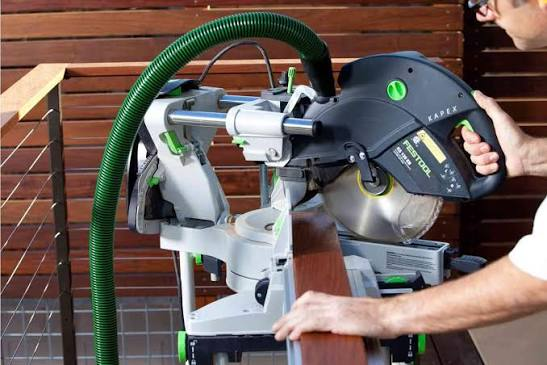
The Festool Kapex doesn’t have much competition as the precision leader. If you’re a serious woodworker, furniture maker, or finish carpenter who demands absolute accuracy and dust-free cuts, this is the saw that justifies its eye-watering price.
Every detail is engineered for precision. The dual laser cut lines show exactly where the blade will cut on both sides. The micro-adjustable bevel and miter angles let you dial in fractions of a degree. The variable speed motor adapts to different materials. And the dust collection is the best in the industry—Festool’s reputation for near-dustless operation is earned, not marketed.
The compact design relative to its capacity is remarkable. It handles nested crown molding up to 6-5/8 inches and crosscuts up to 12 inches—capacity that rivals much larger saws. The forward-mounted bevel controls and intuitive angle settings make complex compound cuts feel effortless.
The downside is obvious: this is a serious investment. At nearly $2,000, it costs more than most homeowners spend on their entire tool collection. And while the precision is unmatched, the cutting power doesn’t dramatically exceed saws at half the price.
Buy this if: You’re a dedicated woodworker, finish carpenter, or furniture maker where precision is paramount and budget is secondary.
Skip this if: You’re a casual DIYer, your projects are basic trim and framing, or you can’t justify the cost for occasional use.
Pros
- Unmatched precision and accuracy
- Best-in-class dust collection
- Dual laser cut lines for perfect alignment
- Variable speed for different materials
- Compact design with large capacity
- Forward-mounted controls for easy adjustments
Cons
- Extremely expensive—2–3x the cost of capable alternatives
- Overkill for basic home projects
- Replacement parts and accessories are costly
- Not significantly more powerful than mid-range saws
5. DeWalt DWS715 12-Inch Single Bevel Compound Miter Saw
Price: ~$359 | Blade: 12 in | Motor: 15-amp | Weight: 37.3 lbs | RPM: ~4,000
The Short Review
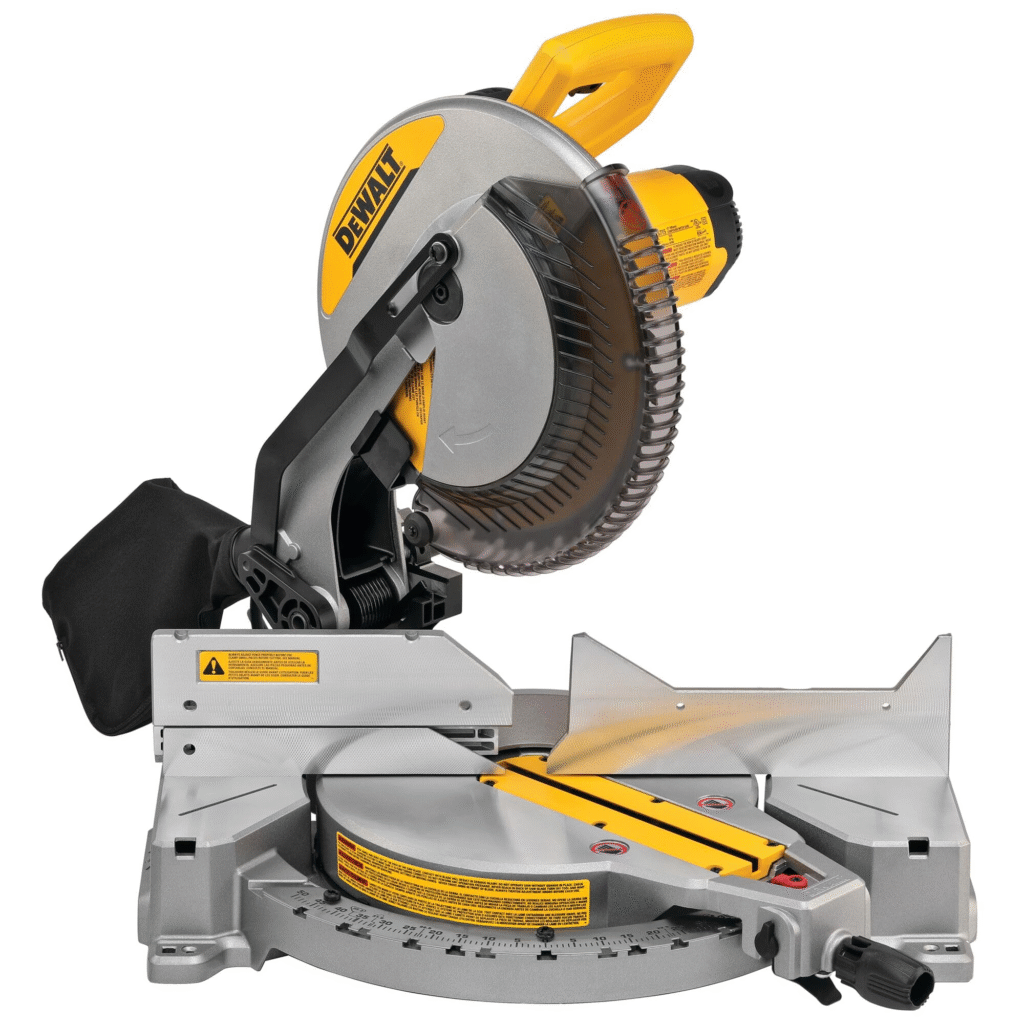
Sometimes you don’t need sliding rails and massive capacity. Sometimes you just need clean, precise chop cuts for molding, trim, and picture frames. The DeWalt DWS715 is that saw—a compact, accurate, no-nonsense compound miter saw that excels at exactly what most homeowners actually do.
“This saw had some of the cleanest, most perfect cuts of any saw I tested,” our head tester noted. The 12-inch blade delivers an 8.1-inch vertical cut depth at 90 degrees—enough for standard lumber and trim. The 14 positive miter stops cover common angles, and the easy calibration process means it stays accurate over time.
At 37.3 pounds, it’s significantly lighter and more compact than sliding models. It fits on smaller workbenches and stores more easily. The blade change mechanism is straightforward, and the build quality is classic DeWalt—solid, reliable, and built to last.
The single-bevel design (48 degrees left only) means you’ll flip workpieces for right-side bevels. The lack of a cut line indicator requires more careful alignment. And the 8-inch horizontal capacity is limiting for wider boards—no 2×12 crosscuts here.
Buy this if: You primarily do trim work, molding, picture frames, and smaller projects where precision matters more than capacity.
Skip this if: You need to cross-cut wide boards, do large framing projects, or want dual-bevel convenience.
Pros
- Some of the cleanest, most precise cuts in our testing
- Compact and relatively lightweight at 37.3 lbs
- Easy calibration and blade changes
- 14 positive miter stops for common angles
- Excellent build quality
- More affordable than sliding models
Cons
- Single bevel only—must flip workpieces
- No cut line indicator
- Limited 8-inch horizontal capacity
- No sliding rails for wide boards
6. Milwaukee M18 FUEL 10-Inch Dual-Bevel Sliding Compound Miter Saw (2734-21)
Price: ~$700 (kit with battery) | Blade: 10 in | Voltage: 18V cordless | Weight: 40.6 lbs | RPM: ~3,700
The Short Review
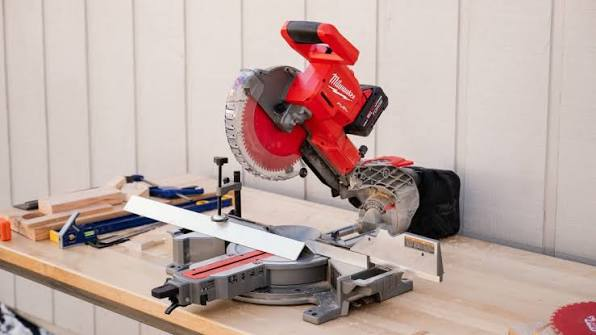
The Milwaukee M18 FUEL is what happens when cordless technology catches up to corded performance. It’s a genuine dual-bevel sliding miter saw that runs on a single battery, cuts through 4×4 lumber completely, and handles 2×12 crosscuts and 2×8 miter cuts with authority.
The shadow cut line indicator is one of our favorites—always accurate and adjustment-free. The aluminum construction and integrated carry handles keep it portable at 40.6 pounds. The ample blade-angle positive stops boost productivity, and the miter lock override adds flexibility for custom angles.
“It’s not the most powerful saw we’ve had our hands on, but we’re still impressed by its cutting capacity while only requiring one battery,” our testers reported. For a cordless saw, that’s high praise.
The dust collection is below average, even with a vacuum connected. This is best suited for outdoor work or unfinished spaces that can be easily cleaned. And at $700, it’s a significant investment—though justified if you value cordless convenience and already own M18 tools.
Buy this if: You need cordless freedom for job sites or outdoor projects, want dual-bevel sliding capability without a cord, or already own Milwaukee M18 batteries.
Skip this if: You work primarily indoors and need clean dust collection, or your budget is under $500.
Pros
- Genuine dual-bevel sliding capability on battery power
- Cuts through 4×4 lumber completely
- Shadow cut line is always accurate
- Portable at 40.6 lbs with carry handles
- Part of the massive M18 battery ecosystem
- Good cutting capacity for a cordless saw
Cons
- Below-average dust collection
- Less powerful than corded alternatives
- Expensive for a cordless saw
- Requires Milwaukee battery investment
7. DeWalt 20V Max 7-1/4-Inch Single Bevel Sliding Compound Miter Saw (DCS361B)
Price: ~$369 (bare tool) | Blade: 7-1/4 in | Voltage: 20V cordless | Weight: 29.4 lbs | RPM: ~3,500
The Short Review
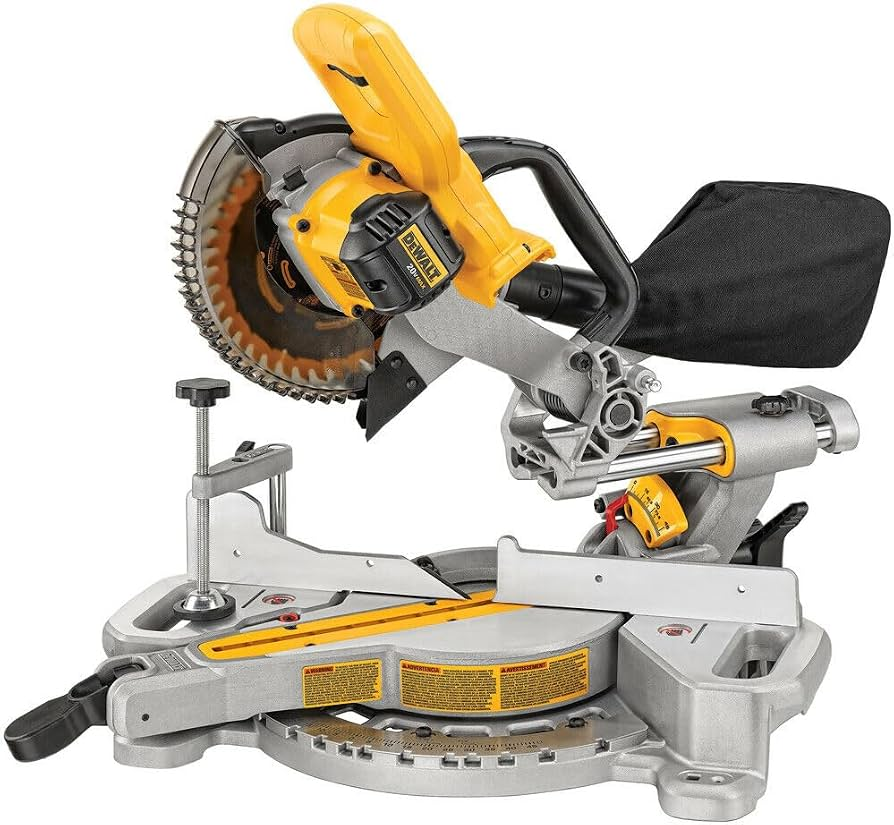
The DeWalt DCS361B proves that compact cordless miter saws can be genuinely useful, not just compromises. At 29.4 pounds, it’s one of the lightest sliding saws we tested, yet it delivers good dust collection, smooth operation, and a shadow cut indicator for precision.
“The guard moves out of the way quickly, so I’m able to line up my cut sooner,” our testers noted. The easy calibration, straightforward miter adjustments, and safety-centric blade changes make it approachable for DIYers who might be intimidated by larger saws.
The 8.2-inch horizontal capacity handles most trim and molding tasks. The saw feels well-built and solid despite its light weight. And the 20V MAX battery platform is enormous—hundreds of tools share these batteries.
The limitations are capacity and power. It struggles with materials larger than 2×8. There’s no blade depth lock, which complicates dado joints and repeatable depth cuts. And like all cordless saws, it moves slower through dense materials than corded alternatives.
Buy this if: You need an ultra-portable saw for trim work, want excellent dust collection in a cordless package, or already own DeWalt 20V tools.
Skip this if: You need to cut wide boards or thick lumber regularly, or want dual-bevel capability.
Pros
- Excellent dust collection for a cordless saw
- Very lightweight and portable at 29.4 lbs
- Shadow cut indicator for accuracy
- Easy calibration and blade changes
- Part of the massive DeWalt 20V MAX ecosystem
- Smooth guard actuation
Cons
- Limited cut capacity—struggles above 2×8
- No blade depth lock
- Less powerful than corded models
- Single bevel only
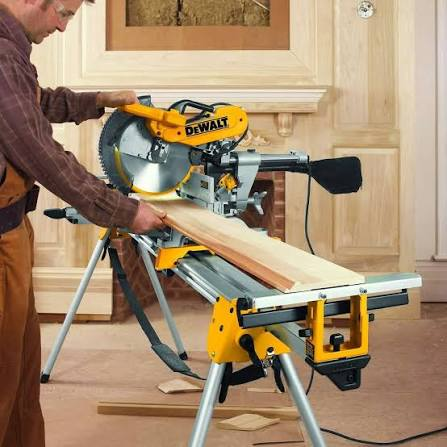
8. DeWalt DWS779 12-Inch Sliding Compound Miter Saw
Price: ~$450 | Blade: 12 in | Motor: 15-amp | Weight: ~56 lbs | RPM: ~3,800
The Short Review
The DWS779 is the DWS780’s slightly less glamorous sibling—and it’s arguably the better value. It makes equally clean, precise, and powerful cuts as the top-rated DWS780. The same 12-inch blade, same sliding rails, same dual-bevel capability, and nearly the same 13.6-inch horizontal capacity.
The only meaningful difference? No XPS shadow cut line indicator. You get a standard laser instead, which works fine but drifts out of alignment over time and can be hard to see in bright light.
If you can live without the shadow system—or plan to add an aftermarket LED later—the DWS779 saves you $150–$200 for essentially identical cutting performance. It’s the “best for the money” pick that Pro Tool Reviews and countless contractors swear by.
Buy this if: You want DWS780 performance without the premium price, don’t mind a standard laser guide, or plan to upgrade the cut line system later.
Skip this if: The shadow cut line is a must-have feature, or you want the absolute best out-of-box experience.
Pros
- Nearly identical performance to the DWS780 at lower cost
- Same massive cut capacity and dual-bevel capability
- Clean, precise, powerful cuts
- Excellent value for a 12-inch sliding saw
- Proven reliability and widespread availability
Cons
- Standard laser instead of shadow cut line
- Laser can drift out of alignment
- Same large footprint and weight as DWS780
- No significant upgrades over older models
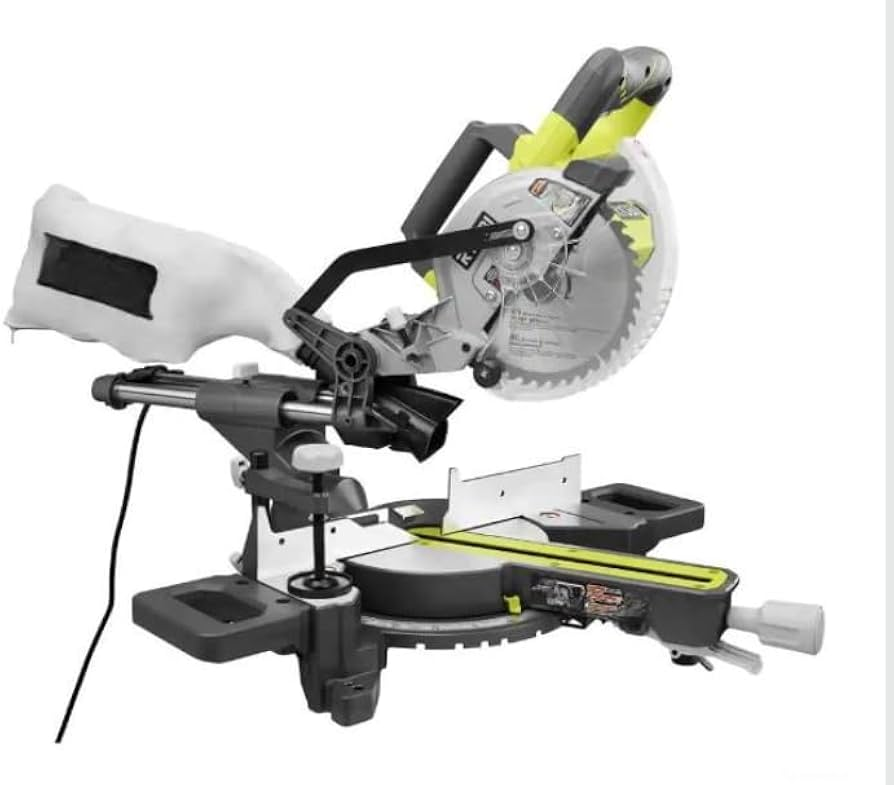
9. Ryobi TSS702 7-1/4-Inch Sliding Miter Saw
Price: ~$150–$180 | Blade: 7-1/4 in | Motor: 15-amp (corded) | Weight: ~25 lbs
The Short Review
The Ryobi TSS702 is the miter saw for homeowners who measure their projects in “weekends per year” rather than “hours per day.” It’s simple, affordable, and perfectly capable of the occasional trim job, picture frame, or small woodworking project.
The 7-1/4-inch blade and sliding rails provide enough capacity for most home tasks. The corded motor delivers consistent power without battery anxiety. And the lightweight design stores easily when not in use.
This is not a saw for serious woodworkers or frequent users. The build quality is adequate but not exceptional. The precision is acceptable for home projects but won’t satisfy fine furniture makers. And the capacity limits you to smaller lumber and trim.
But for under $200, it’s an accessible entry point that gets the job done without requiring a workshop renovation to afford it.
Buy this if: You’re an occasional DIYer, need a saw for basic trim and small projects, or want the most affordable sliding miter saw available.
Skip this if: You do frequent or precision work, need large capacity, or want a tool that will last decades of heavy use.
Pros
- Very affordable entry-level price
- Lightweight and easy to store
- Sliding rails add capacity beyond basic chop saws
- Corded power eliminates battery concerns
- Simple and approachable for beginners
Cons
- Limited build quality and longevity
- Modest precision compared to premium saws
- Small blade limits capacity
- Not suitable for frequent or heavy use
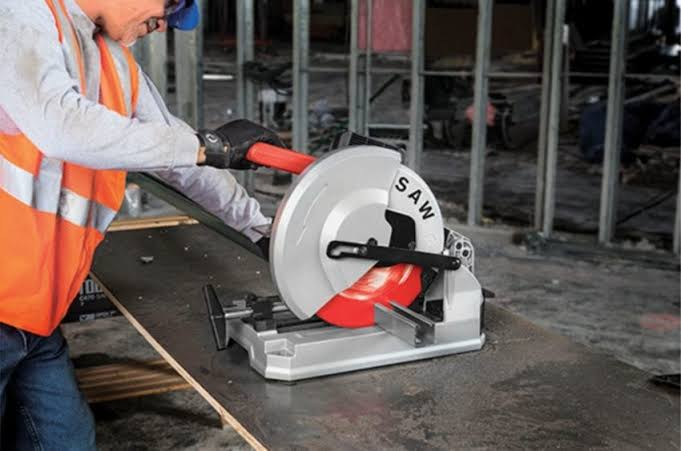
10. Skilsaw SPT62MTC-22 Dry Cut Metal Saw
Price: ~$400 | Blade: 12 in | Motor: 15-amp | Weight: ~35 lbs
The Short Review
This isn’t technically a miter saw—it’s a chop saw with mitering at the clamp rather than pivoting the table. But if your home projects involve metal, it’s a revelation. The Skilsaw SPT62MTC-22 replaces abrasive chop saws with cool, spark-free, low-burr cuts that feel like “a hot knife through butter.”
The soft-start motor and smooth blade guard actuation pair with Diablo’s cold cut blade to create cuts so smooth you have to be careful not to cut too quickly. It’s 20–45% lighter than 14-inch competitors, with a more compact frame and more affordable 12-inch blades.
The 12-inch blade surrenders some capacity versus 14-inch models, but for home metalworking—fencing, railing, pipe, angle iron—it’s more than sufficient. The chip clearing and visibility are excellent, and the cuts require minimal cleanup versus abrasive wheels.
Buy this if: You regularly cut metal for home projects, want to replace an abrasive chop saw, or need spark-free operation for indoor work.
Skip this if: You only cut wood, or need the maximum capacity of 14-inch metal saws.
Pros
- Cool, spark-free, low-burr metal cuts
- Much lighter than 14-inch competitors
- Soft-start motor for smooth operation
- More affordable 12-inch blades
- Excellent visibility and chip clearing
- Faster cutting than abrasive saws
Cons
- Less capacity than 14-inch metal saws
- Blades more expensive than abrasive wheels
- Not a traditional miter saw—mitering happens at clamp
- Specialized for metal, not versatile for wood
Complete Buying Guide: How to Choose the Right Miter Saw
Types of Miter Saws
Standard Miter Saw (Chop Saw)
The blade pivots vertically to make crosscuts and miter cuts (angled cuts across the board width). No bevel capability. Best for simple trim work and picture frames.
Compound Miter Saw
Adds bevel capability—the blade tilts left (and sometimes right) to make angled cuts through the board thickness. Essential for crown molding and complex trim where walls meet at angles other than 90 degrees.
Sliding Compound Miter Saw
Adds horizontal sliding rails that let the blade move forward and backward, dramatically increasing cut capacity. A 10-inch sliding saw can cross-cut a 2×12; a 12-inch can handle a 2×16. Essential for framing, decking, and large lumber.
Dual-Bevel vs. Single-Bevel
- Single-bevel: Blade tilts one direction only. For opposite bevels, you flip the workpiece. Simpler and cheaper.
- Dual-bevel: Blade tilts both left and right. No flipping workpieces for opposite angles. Faster for complex trim, crown molding, and repeat cuts.
Key Specs Explained
Blade Size
- 7-1/4 inch: Compact, portable, affordable. Handles 2×8 and smaller. Best for trim and small projects.
- 10 inch: The sweet spot for most homeowners. Cross-cuts 2×12 lumber, handles crown molding, and balances capacity with portability.
- 12 inch: Maximum capacity for framing, decking, and large lumber. Heavier and more expensive but essential for big projects.
Motor Power
Most quality miter saws use 15-amp motors running 3,500–5,000 RPM. Higher RPM generally means smoother cuts, but blade quality matters more than raw speed. Cordless models trade some power for portability but have improved dramatically.
Cut Capacity
- Horizontal: How wide a board you can cross-cut. Sliding saws offer 12–16 inches; non-sliding offer 6–8 inches.
- Vertical: How tall a board you can cut standing upright. Important for baseboards and crown molding.
- Nested Crown: How much crown molding you can cut lying flat—essential for trim carpenters.
Cut Line Indicator
- Laser: Projects a line onto the workpiece. Can drift out of alignment. Hard to see in bright light.
- Shadow/LED: Casts a shadow of the blade onto the wood. Always accurate, no adjustment needed, visible in all lighting.
- None: You align the blade manually. Fine for experienced users, frustrating for beginners.
What We Learned After Testing 15+ Miter Saws
Calibration matters more than brand. Every saw needs fence squaring and blade alignment out of the box—except the DeWalt DWS780, which came perfect. Budget 30 minutes for setup on any other model.
Dust collection is universally disappointing. Even the best saws capture only a fraction of sawdust. Plan for a shop vacuum, dust extractor, or accept that you’ll be sweeping.
Sliding rails add capacity but complexity. More moving parts mean more maintenance and potential alignment issues. If you only cut trim and small lumber, a non-sliding saw is simpler and more accurate long-term.
Cordless has arrived. The Milwaukee M18 FUEL and DeWalt 20V Max proved that battery-powered miter saws are now genuinely capable—not just compromises for convenience.
Blade quality transforms any saw. A $20 blade makes a $600 saw feel cheap. A $60 quality blade makes a $250 saw feel premium. Budget for a good blade regardless of which saw you buy.
Price Ranges — What to Expect
Budget ($150–$250): Basic 7-1/4 to 10-inch saws with limited features. Fine for occasional trim work and small projects. Examples: Ryobi TSS702, basic Metabo models.
Mid-Range ($250–$450): The sweet spot for most homeowners. 10-inch sliding or 12-inch non-sliding saws with good power and features. Examples: SKIL MS6305-00, DeWalt DWS779, DeWalt DWS715.
Premium ($450–$700): Professional-grade 12-inch sliding saws with dual-bevel, shadow cut lines, and exceptional build quality. Examples: DeWalt DWS780, Milwaukee M18 FUEL.
Ultra-Premium ($700+): Specialized saws for dedicated woodworkers and pros. Examples: Festool Kapex, Makita 40V XGT.
Final Tips Before You Buy
Match the saw to your actual projects. A 12-inch sliding saw is overkill for picture frames. A 7-1/4-inch saw is frustrating for deck building. Be honest about what you’ll actually cut.
Factor in the stand. A miter saw without support is awkward and unsafe. Budget $100–$400 for a stand, or build a dedicated station. The Bosch T4B Gravity Rise is our favorite for portability and stability.
Buy a quality blade immediately. The stock blade on most saws is adequate at best. A 60-tooth or 80-tooth carbide blade transforms cut quality.
Check your electrical setup. A 15-amp motor can trip standard 15-amp household circuits, especially on long extension cords. Use a 20-amp circuit or keep the cord short.
Consider dust management upfront. Miter saws create fine dust that settles everywhere. A shop vacuum with auto-start, a dust extractor, or even a simple dust hood dramatically improves your workspace.
Frequently Asked Questions
Q: Do I need a sliding miter saw, or is a non-sliding compound saw enough?
A: If you primarily cut trim, molding, and lumber up to 6 inches wide, a non-sliding compound saw is sufficient and often more accurate long-term. If you cross-cut wide boards, build decks, frame walls, or work with large lumber, sliding rails are essential. A 10-inch sliding saw cross-cuts a 2×12; a 12-inch non-sliding saw only manages about 8 inches.
Q: What’s the difference between single-bevel and dual-bevel?
A: Single-bevel saws tilt the blade in one direction only (usually left). For a right-side bevel, you flip the workpiece end-for-end. Dual-bevel saws tilt both directions, so you never flip the workpiece. Dual-bevel is faster and more convenient for crown molding and complex trim, but adds $100–$200 to the price.
Q: Are cordless miter saws powerful enough for real work?
A: Yes, finally. The Milwaukee M18 FUEL and DeWalt 20V Max models cut through 4×4 lumber and 2×12 boards with authority. They’re not quite as fast as corded saws, but the gap has closed dramatically. For pros who move between job sites, cordless is now viable. For homeowners with a dedicated shop, corded still offers more power per dollar.
Q: Why does my miter saw leave rough, splintered cuts?
A: Usually it’s the blade, not the saw. Stock blades are coarse (24–32 teeth) designed for speed, not finish. Install a 60-tooth or 80-tooth carbide blade for clean cuts in trim and hardwood. Also check that your blade is sharp, the fence is square to the blade, and you’re feeding at the right speed—too fast causes tearout, too slow burns the wood.
Q: How do I cut crown molding on a miter saw?
A: Crown molding must be cut “nested”—placed upside down and angled against the fence as it sits on the wall. Set the bevel to 33.9 degrees and the miter to 31.6 degrees for standard 38/52 crown. Or use the “flat” method with a compound saw, setting both angles precisely. Practice on scrap pieces first—crown molding is expensive to learn on.
Q: Can I use a miter saw to cut metal?
A: Only with the correct blade. Standard wood blades will destroy themselves and create dangerous sparks. Use a ferrous metal cutting blade (like Diablo’s Steel Demon) for steel, or a non-ferrous blade for aluminum. Better yet, buy the Skilsaw SPT62MTC-22 dry cut saw designed specifically for metal. Never cut metal with the standard wood blade installed.
Q: How often do I need to calibrate my miter saw?
A: Check squareness every few months with a carpenter’s square or the 5-cut squaring method. If you notice cuts that don’t meet perfectly at corners, or the blade drifts from your mark, recalibrate immediately. Most saws need fence and miter table adjustments after moving, dropping, or heavy use.
Q: What’s the best miter saw for a beginner?
A: The SKIL MS6305-00 offers the best balance of capability, ease of use, and price for beginners. It has enough features to grow into but isn’t overwhelming. The Ryobi TSS702 is even cheaper if your projects are small and infrequent. Avoid ultra-premium saws until you know which features you actually use.
Q: Should I buy a miter saw or a table saw first?
A: For most homeowners, a miter saw first. It’s safer, easier to use, and handles the cuts you’ll make most often: crosscuts, miters, and bevels on boards and trim. A table saw excels at ripping long boards and sheet goods, which is more advanced. Start with a miter saw, add a table saw when your projects demand it.
Q: How much space do I need for a miter saw?
A: Plan for at least 3 feet of clearance behind the saw for the sliding rails, plus 2–3 feet on each side for long boards. A 12-inch sliding saw needs roughly 3 feet deep by 5 feet wide. A compact 7-1/4-inch saw fits in about 2 feet by 3 feet. Add more space for infeed and outfeed supports.
Disclosure: We independently research and test products. When you buy through links on our site, we may earn an affiliate commission at no extra cost to you.