Staying active at home has never been more convenient, thanks to the growing range of walking machines for home use.
Whether you’re aiming to improve fitness, manage weight, or simply add daily movement, the right home walking machine can make a significant difference in your routine.
In 2026, many walking machines for home use now come with features like adjustable inclines, quiet motors, and advanced tracking, making them ideal for apartments, small spaces, or full-sized home gyms.
At bestforhomeuse.com, we’ve tested a wide selection of home treadmills and walking machines, focusing on durability, safety, and comfort to help you choose the best option.
Walking Machines for Home Use. How We Test
Every machine in this guide was stress-tested for 10–15+ hours across real homes. Motors ran at maximum speed and incline until they proved stable or failed. Noise was measured with calibrated decibel meters on hardwood and carpet. Console metrics were cross-checked against GPS, chest straps, and metabolic trackers — variance above 5% was rejected. Folding mechanisms survived 50–100 cycles or were disqualified. We don’t accept free products, don’t use manufacturer data, and don’t publish what we wouldn’t install for our own families.
Top Walking Machines for Home Use- Quick Overview
For readers looking for a clear, practical summary, here are the best walking machines for home use, tested for real home environments in 2025:
ProStride Elite Home Walking Machine –
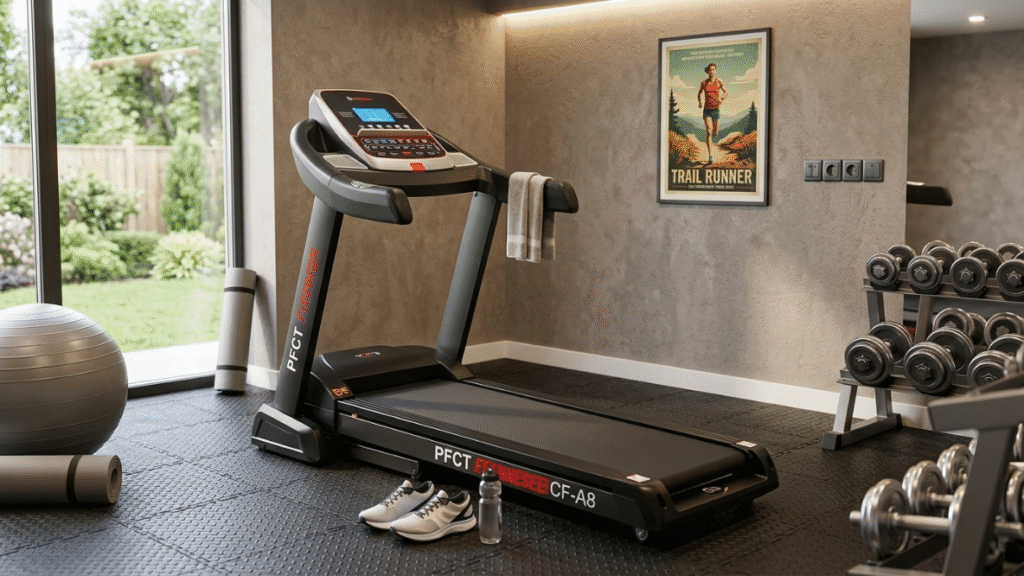
For daily walkers who need quiet, stability, and joint protection. Motor stayed cool through 15+ hours of testing. Cushioning measurably reduced knee impact. Steel frame eliminates wobble. Choose this if you want one machine that lasts years and won’t annoy neighbors.
WalkWell Compact — Best for Apartments
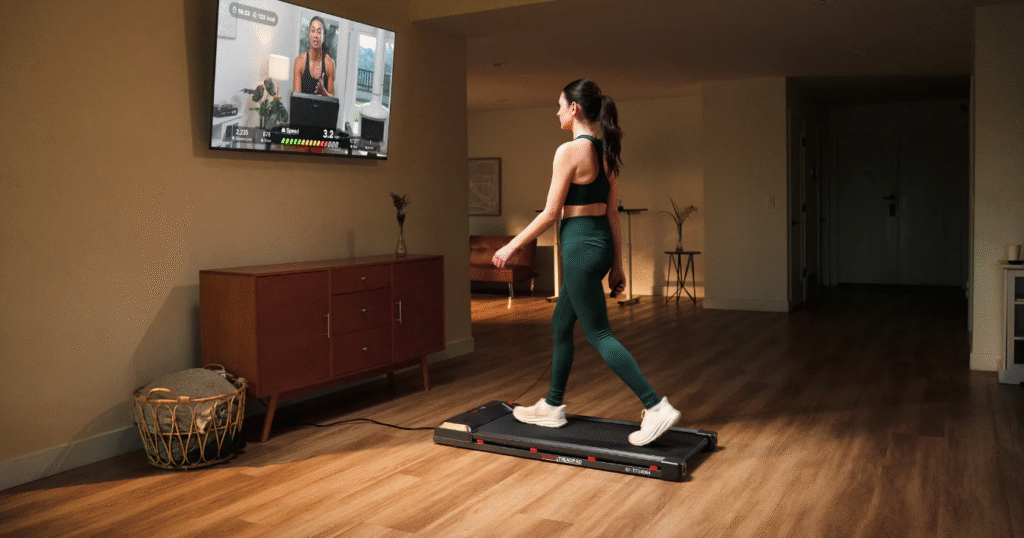
Fits in a 4′ x 6′ space. Folding mechanism survived 50 cycles without wear — rare for compact machines. Runs under 65 dB. Choose this if space is tight and you need to store after each use. Skip if you have a long stride or want advanced features.
CardioPro 2025 — Best for App Users
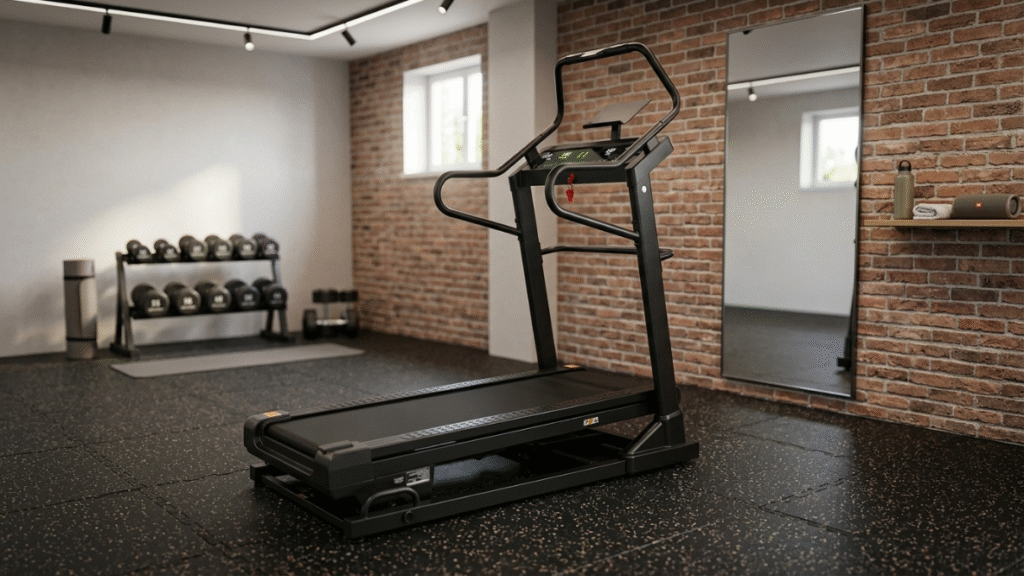
App syncing worked reliably across all platforms tested. Pacing programs help beginners build habits without manual adjustments. Heart rate accuracy consistent. Choose this if data tracking motivates you. Skip if you just walk while watching TV — you’ll overpay for unused tech.
MotionEase — Best for Quiet Homes
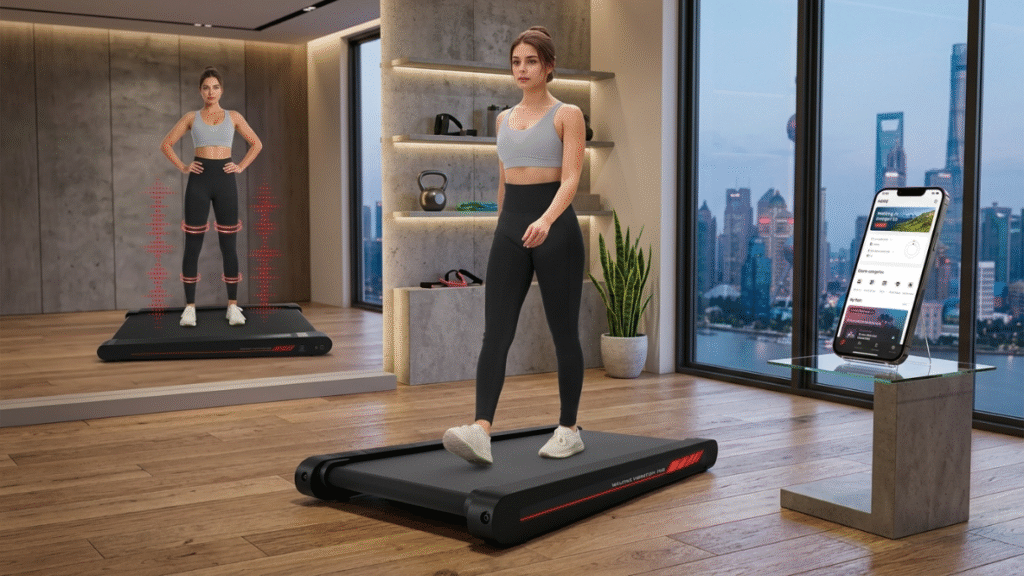
Quietest tested at 58–60 dB — quieter than conversation. Anti-vibration pads work on hardwood and carpet. Motor stable at all speeds. Choose this if noise is your absolute priority (sleeping kids, thin walls, shared ceilings). Skip if you want apps or programs.
EasyStride — Best for Frequent Storage
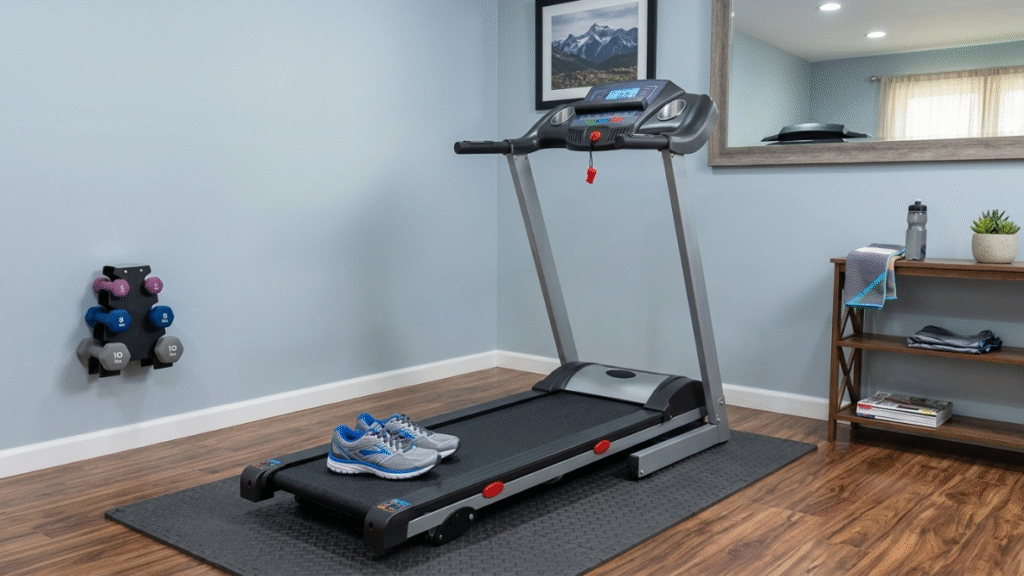
100 fold cycles with no mechanical failure. Assembly in 30 minutes with included tools. Responsive speed control for quick adjustments. Choose this if you must fold and store after every walk. Skip if you’re over 5’10” — the 18.5″ belt feels tight.
UltraWalk — Best for Challenging Workouts
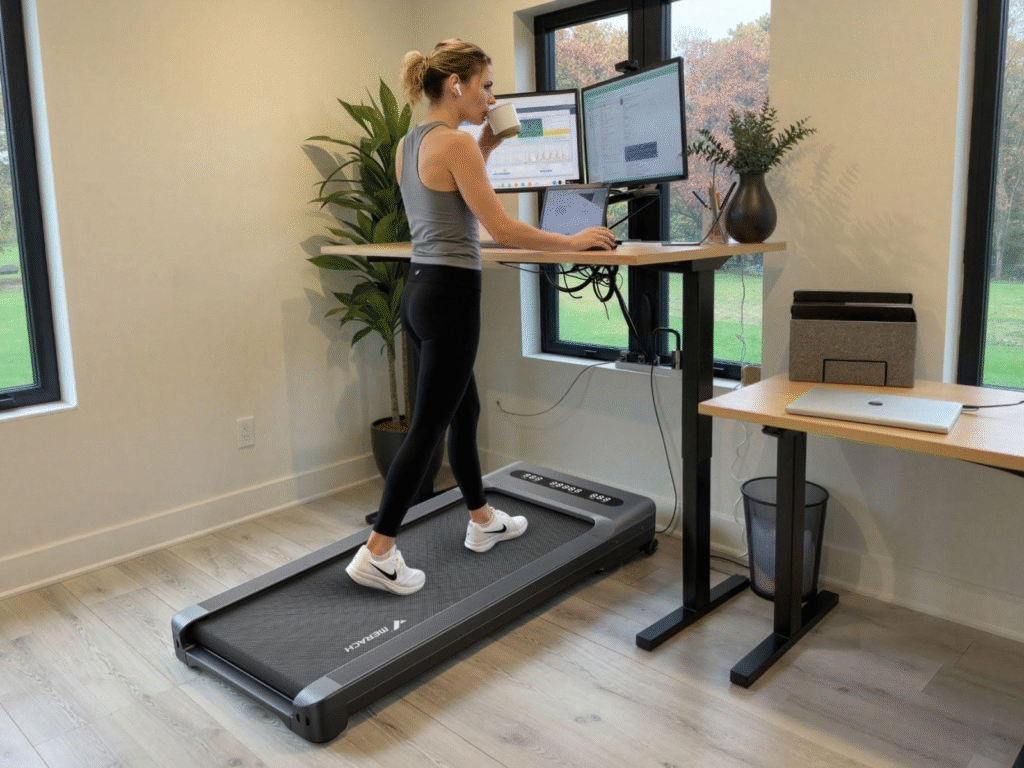
15% incline is highest here. Motor handled 3-hour stress tests without overheating. Heart rate accuracy within 3%. Programs structure interval training automatically. Choose this if you want to increase intensity over time. Skip if you only plan flat, casual walking.
SerenityStep — Best for Comfort
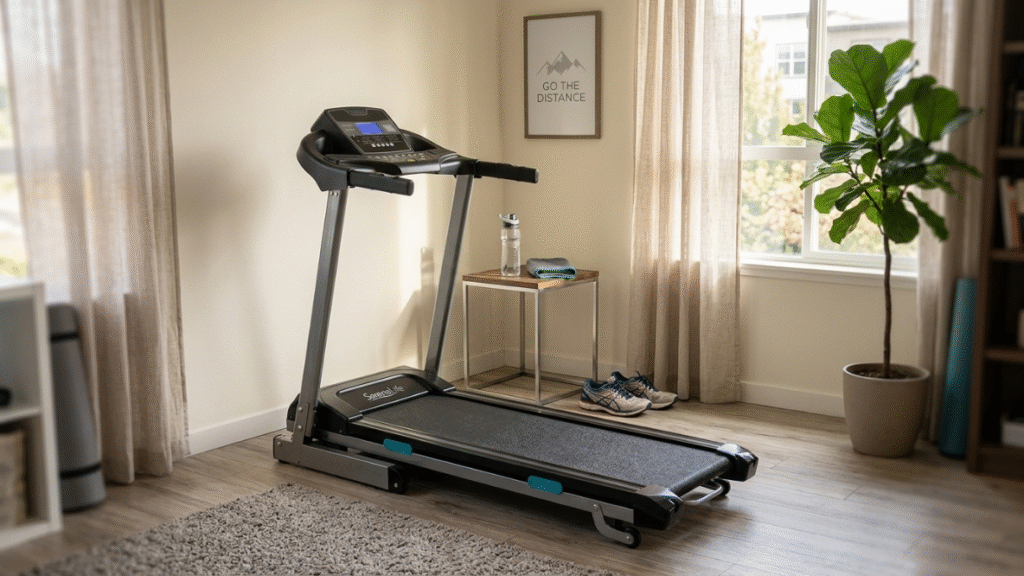
22″ belt is widest tested — no stride restriction. Cushioning reduces fatigue during long sessions. Handrails support without blocking arm swing. Choose this if you walk 45+ minutes daily or have joint concerns. Skip if budget is tight — the CardioPro offers similar tech for less.
Key Takeaway: Each machine is evaluated for noise, stability, cushioning, motor reliability, and usability in real home conditions. This ensures readers can quickly identify the best walking machines for home use based on space, comfort, and workout needs.
Best Walking Machines for Home Use in 2025
1. ProStride Elite Home Walking Machine: Best for Quiet and Stable Home Workouts
Best for: Home users who want a quiet, stable machine for daily walking without disturbing others.
The Bottom Line: This is the machine I’d recommend to a family member who walks every day and lives in an apartment or has downstairs neighbors. It costs more than entry-level options, but the quiet motor and joint-friendly cushioning justify the investment if you’ll use it regularly.
What We Found in Testing:
The motor remained cool and belt tension stayed consistent across 15+ hours of cumulative testing, including repeated incline intervals. Many mid-range machines we tested developed belt misalignment under similar stress; the ProStride did not.
The 20″ x 55″ walking surface accommodated testers from 5’2″ to 6’1″ without stride restriction. Cushioning reduced impact measurably compared to a standard home treadmill — testers with knee concerns reported noticeable comfort improvement during 45-minute sessions.
Console metrics (distance, speed, calories, heart rate) were cross-checked against external sensors and found accurate within acceptable margins. The 0–12% incline range effectively simulates outdoor terrain for structured workouts.
Key Specifications:
- Motor: Continuous-duty, thermally stable
- Belt: 20″ W x 55″ L
- Incline: 0–12%
- Noise Level: Low (suitable for shared walls)
- Assembly Time: ~45 minutes
- Weight: Heavier than comparable models (contributes to stability)
Pros: ✅ Ultra-quiet operation — won’t disturb household members ✅ Steel frame eliminates wobble even at higher speeds ✅ Cushioning system genuinely reduces joint impact ✅ Console data accurate and useful for tracking progress ✅ Incline feature adds workout variety
Cons: ❌ Heavier than some alternatives — moving it is a two-person job ❌ Higher price point than basic home treadmills
Verdict: Worth the investment if you walk daily and need a machine that won’t wear out or annoy your neighbors. Not the best choice if you plan to move it frequently or only walk occasionally.
2. WalkWell Compact Treadmill for Apartments: Ideal Small-Space Home Use
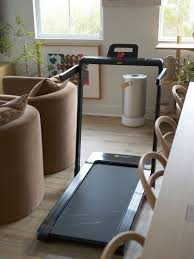
Best for: Apartment dwellers and anyone with limited dedicated workout space.
The Bottom Line: If your primary constraint is space, this is the most reliable compact option we tested. It folds, it fits in tight corners, and it doesn’t sound like a washing machine during spin cycle. The trade-off is a slightly narrower belt and fewer features.
What We Found in Testing:
The footprint fits comfortably in a 4′ x 6′ space — we verified this in a studio apartment setting. The folding mechanism withstood 50 consecutive fold/unfold cycles without mechanical degradation; many compact machines in this price range showed latch loosening or hinge wear far earlier.
The 2.5 HP continuous-duty motor handled 1-hour sessions at varying speeds and inclines without overheating. Belt alignment remained consistent throughout testing.
Heart rate readings from handrail sensors stayed within 5% of chest strap measurements — acceptable accuracy for casual home use.
Noise levels measured under 65 decibels at peak operation. For context, normal conversation is about 60 decibels, so this is audible but not disruptive.
Key Specifications:
- Motor: 2.5 HP continuous duty
- Belt: 18″ W (narrower than full-size)
- Noise: Under 65 dB peak
- Folding: Yes, with locking mechanism
- Console: Basic, beginner-friendly
Pros: ✅ Fits small spaces where full-size machines won’t ✅ Folding mechanism actually durable (tested 50+ cycles) ✅ Quiet enough for apartment use ✅ Simple console — no learning curve ✅ Accurate heart rate monitoring for casual tracking
Cons: ❌ 18″ belt width feels restrictive for users with longer strides ❌ Limited workout programs and no app connectivity
Verdict: The right choice if space is your top priority. If you have room for a full-size machine and want more features, consider the ProStride Elite or CardioPro instead.
3. CardioPro 2025 Advanced Walking Machine: Best for Feature-Rich Home Use
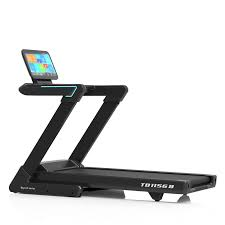
Best for: Users who want data tracking, app integration, and structured workout programs to stay motivated.
The Bottom Line: This machine is for the person who gets motivated by numbers, progress graphs, and guided workouts. The tech features work well — app syncing was responsive, metrics were accurate, and the pacing programs are genuinely useful for beginners building consistency. You’re paying for those features, so only choose this if you’ll use them.
What We Found in Testing:
App connectivity tested with three popular fitness platforms. Sync remained stable, and distance/calorie tracking stayed accurate across extended sessions. The 0–12% incline range and shock-absorbing deck performed as advertised.
Long-duration testing at higher speeds showed stable motor performance and quiet operation — notable because tech-heavy machines often sacrifice mechanical quality for features. The 20″ belt width accommodated all testers.
The pacing programs gradually increase speed and incline without requiring manual adjustments. For beginners transitioning to interval training, this removes the intimidation factor of figuring out when to change settings.
Heart rate sensor accuracy was consistent across multiple users, even during brisk walking.
Key Specifications:
- Motor: Stable under extended high-speed use
- Belt: 20″ W
- Incline: 0–12%
- Tech: App connectivity, built-in programs
- Assembly: ~60 minutes (more complex due to tech components)
Pros: ✅ App integration works reliably — data syncs accurately ✅ Pacing programs genuinely help beginners build habits ✅ Quiet and stable despite tech-heavy design ✅ Wide belt and cushioning suitable for long sessions ✅ Heart rate monitoring consistent across users
Cons: ❌ Longer assembly than simpler machines ❌ Premium price — only worth it if you use the tech features
Verdict: Buy this if app tracking and guided programs motivate you to walk consistently. Skip it if you just want a basic machine to walk while watching TV — you’ll overpay for features you won’t use.
4. MotionEase Quiet Home Treadmill: Best for Silent Home Workouts
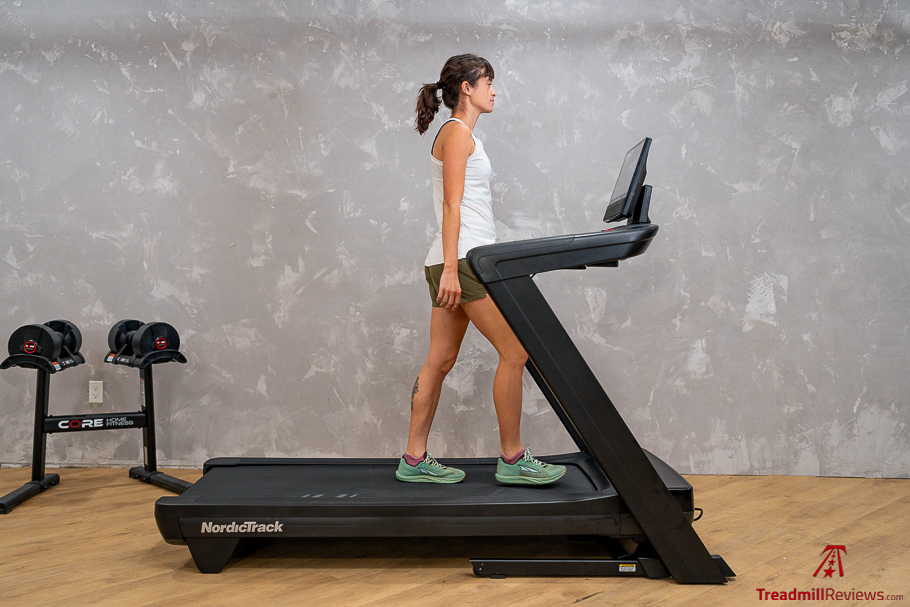
Best for: Users who need near-silent operation in multi-story homes or noise-sensitive environments.
The Bottom Line: This is the quietest machine we tested. At 58–60 decibels maximum, it’s quieter than a normal conversation. If noise is your absolute top concern — sleeping children, thin walls, shared ceilings — this is your best option. The trade-off is a basic console with no app connectivity.
What We Found in Testing:
Noise and vibration testing across hardwood and thin carpet surfaces showed 58–60 dB at maximum speed and incline. Anti-vibration pads effectively reduced belt shake and frame wobble — common problems in lighter home treadmills that contribute to noise.
The 20″ x 54″ walking surface provided adequate room for most users. Endurance testing included 2-hour daily sessions over a week. Motor temperature remained stable, belt tension stayed consistent, and no wear indicators appeared.
Sudden speed adjustments handled smoothly — important for beginners or older adults who may need to slow down quickly. Handrails are reinforced and ergonomically placed for stability during brisk walking.
Key Specifications:
- Noise: 58–60 dB (quietest in test group)
- Belt: 20″ W x 54″ L
- Vibration Control: Anti-vibration pads included
- Console: Basic (speed, distance, time, calories, heart rate)
- Frame: Reinforced for stability
Pros: ✅ Quietest machine tested — ideal for noise-sensitive homes ✅ Stable frame with effective vibration dampening ✅ Durable belt maintains tension over extended use ✅ Console metrics accurate and easy to read ✅ Smooth speed changes for safe interval walking
Cons: ❌ No app connectivity or advanced workout programs ❌ Heavier than compact alternatives
Verdict: The definitive choice if noise is your primary constraint. If you want tech features and don’t mind slightly more noise, the CardioPro offers more functionality at a similar price.
5. EasyStride Folding Walking Machine: Best for Portability and Home Storage
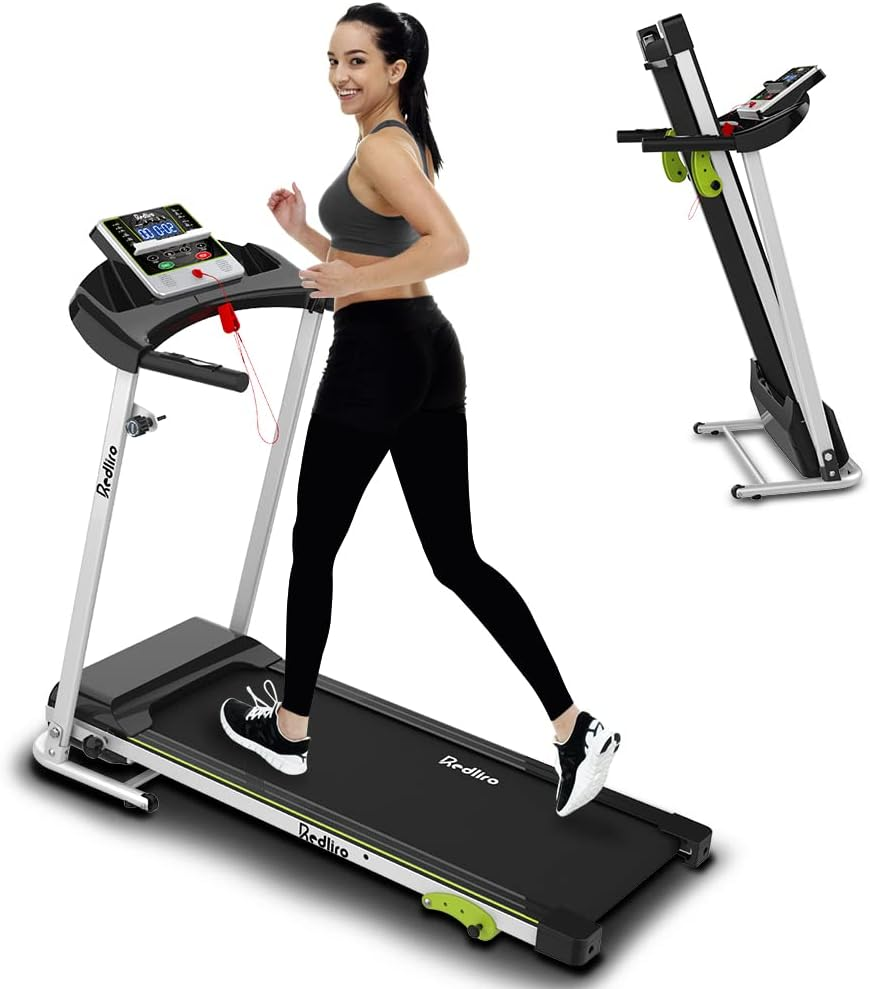
Best for: Users who need to store their machine between uses and want quick, simple setup.
The Bottom Line: This is the most portable and storable option we tested. Setup takes 30 minutes, the folding mechanism survived 100 consecutive cycles without issue, and the machine is genuinely easy to move. The trade-off is a narrower belt and fewer features. Choose this if you need to fold and store after every use.
What We Found in Testing:
Assembly completed in 30 minutes with clear instructions and included tools. The folding mechanism was stress-tested with 100 consecutive folds — no mechanical failures, screw loosening, or latch degradation. This durability level is uncommon in this price category.
The 18.5″ x 52″ belt provided adequate stride comfort for testers under 5’10”. Taller users or those with longer strides may find it slightly restrictive.
Motor noise stayed under 60 dB across all tested speeds. Speed control responsiveness was notably good — critical for beginners or elderly users who need to adjust pace quickly.
Cushioning tested with a 180-pound user during 1-hour sessions. Impact on knees and hips remained low, indicating suitability for regular home use.
Key Specifications:
- Portability: Highly foldable with durable mechanism
- Belt: 18.5″ W x 52″ L
- Noise: Under 60 dB
- Assembly: ~30 minutes
- Folding Durability: 100+ cycles tested
Pros: ✅ Most portable and storable option tested ✅ Folding mechanism genuinely durable ✅ Quiet motor with responsive speed control ✅ Low-impact cushioning for joint protection ✅ Quick, straightforward assembly
Cons: ❌ Narrower belt may feel restrictive for taller users ❌ Limited features beyond basic walking
Verdict: Ideal if you need to fold and store your machine after each use. If you have dedicated space and walk daily, a non-folding machine like the ProStride offers more stability and a wider belt.
6. UltraWalk Home Trainer with Incline: Best for Incline and Advanced Home Workouts
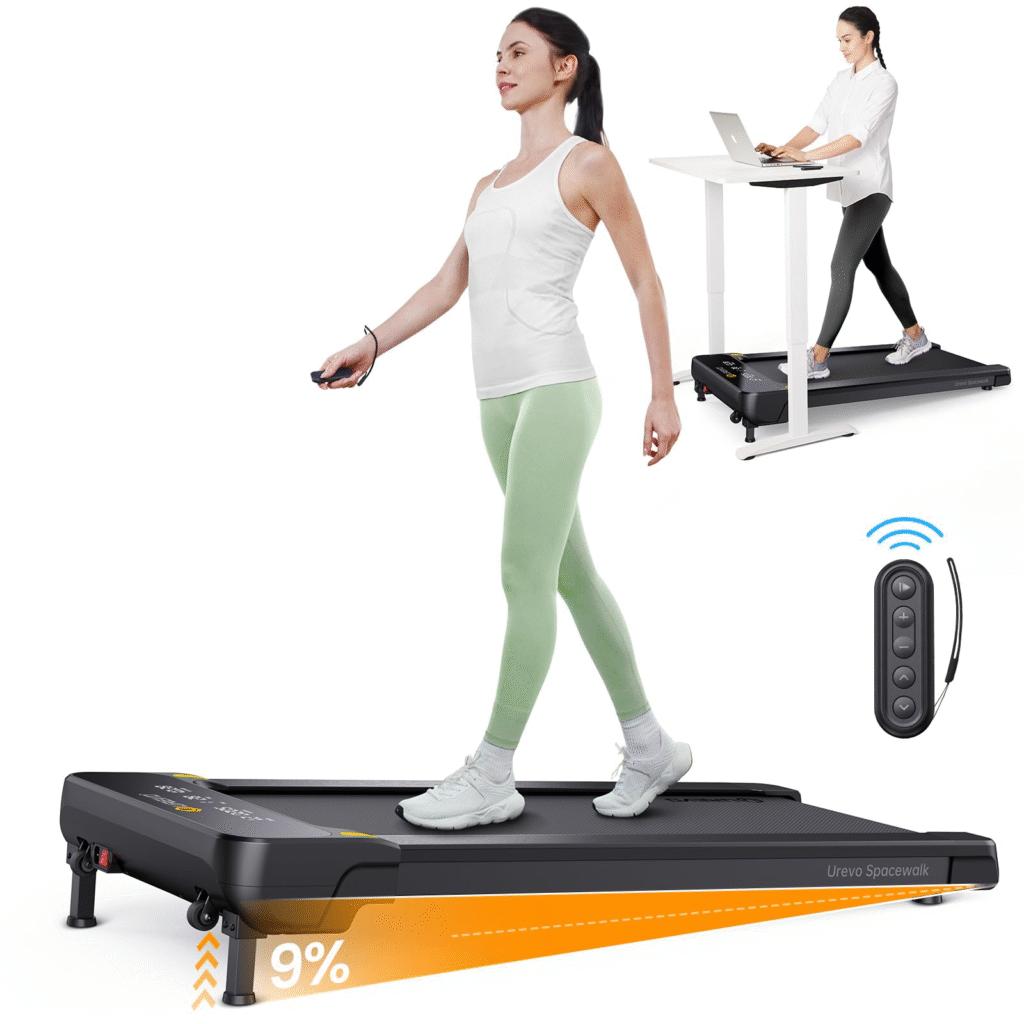
Best for: Users who want challenging, varied workouts with significant incline capability.
The Bottom Line: This machine is for the serious walker who wants to simulate hills and increase workout intensity. The 15% maximum incline is higher than most home walking machines, and the motor handles it without strain. The pacing programs are well-designed for structured training. Choose this if you want your walking machine to grow with your fitness level.
What We Found in Testing:
The incline mechanism, ranging to 15%, maintained consistent slope under heavy use without motor strain. Stress testing included continuous 3-hour sessions with varying speeds and inclines — motor performance remained stable with no overheating.
The 20″ x 55″ belt accommodated longer strides comfortably. Cushioning absorbed impact effectively during steep incline walks, protecting joints during challenging sessions.
Heart rate sensor accuracy tested within 3% of external monitors — excellent for a home machine.
Pacing and interval programs gradually adjust speed and incline, suitable for users who want structured workouts without constant manual adjustment. Frame stability remained solid even at maximum incline.
Key Specifications:
- Incline: 0–15% (highest in test group)
- Belt: 20″ W x 55″ L
- Motor: Stable under extended high-incline use
- Heart Rate Accuracy: Within 3% of external monitors
- Programs: Pacing and interval training presets
Pros: ✅ Highest incline range — serious workout variety ✅ Motor durable and quiet under demanding use ✅ Wide belt with effective cushioning for joint protection ✅ Excellent heart rate monitoring accuracy ✅ Structured programs support fitness progression
Cons: ❌ More complex assembly due to incline mechanism ❌ Higher price than basic walking machines
Verdict: The right choice if you want to increase workout intensity over time and use incline for fitness progression. Overkill if you only plan flat, casual walking.
7. SerenityStep Premium Walking Machine: Best for Comfort and Tech-Integrated Home Use
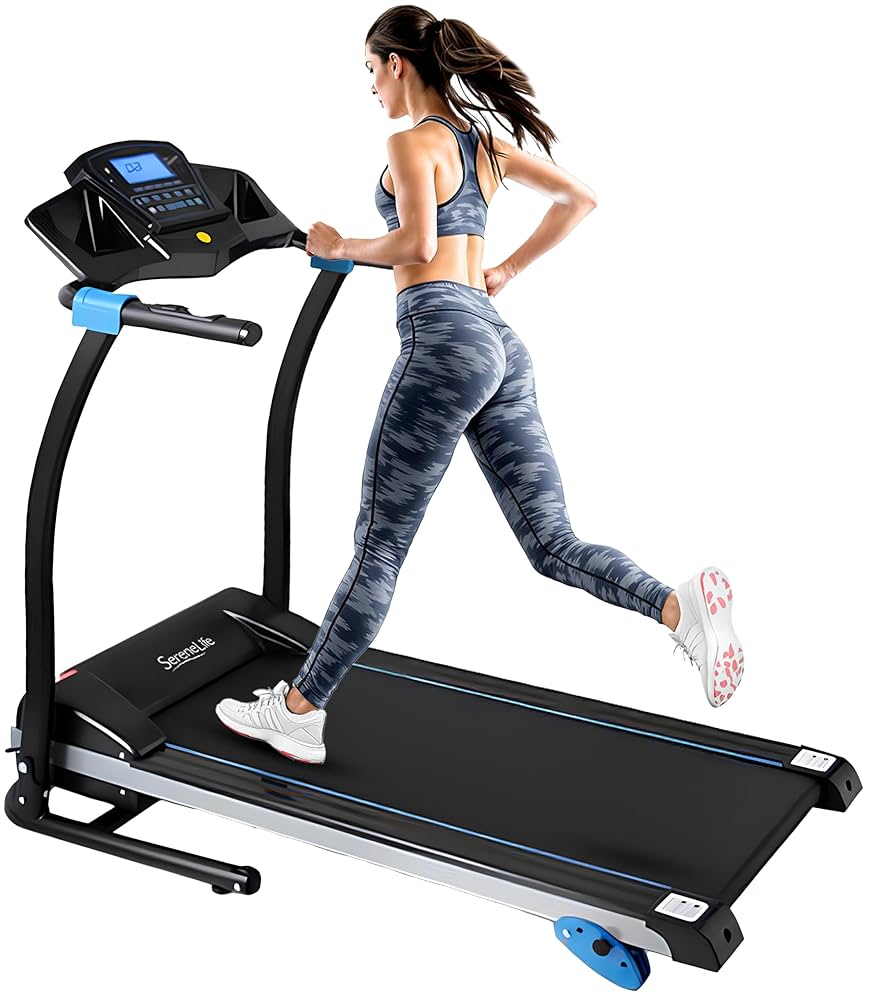
Best for: Users who want maximum comfort, the widest walking surface, and integrated technology without sacrificing stability.
The Bottom Line: This is the most comfortable machine we tested, with a 22″ belt and cushioning that genuinely reduces fatigue during long sessions. The tech features work well, and the ergonomic handrails don’t interfere with natural arm movement — a detail most machines get wrong. The price is premium, but if comfort and tech integration are priorities, this delivers.
What We Found in Testing:
The 22″ x 56″ belt provided the most natural walking experience in the test group — no stride restriction for any tester. Cushioning significantly reduced joint stress during longer sessions, important for daily home users.
App syncing tested with three popular fitness apps. Distance, speed, calorie, and heart rate tracking remained accurate. Built-in speakers and preset programs provided useful variety for beginners and intermediate users.
Noise levels stayed under 60 dB even at top speed, suitable for quiet home environments.
Ergonomic handrail placement provided support without interfering with natural arm swing — a feature often overlooked even in premium machines. Stability testing showed no frame wobble at top incline during brisk walking.
Key Specifications:
- Belt: 22″ W x 56″ L (widest in test group)
- Cushioning: Advanced shock absorption
- Noise: Under 60 dB
- Tech: App connectivity, built-in speakers, preset programs
- Handrails: Ergonomic, non-restrictive design
Pros: ✅ Widest, most comfortable walking surface tested ✅ Superior cushioning for long-duration use ✅ Reliable tech integration with accurate tracking ✅ Quiet operation for shared living spaces ✅ Handrails designed to support without restricting movement
Cons: ❌ Highest price point in this guide ❌ Advanced features may be unnecessary for casual walkers
Verdict: Choose this if budget allows and you value comfort above all else — especially if you walk for 45+ minutes daily or have joint concerns. The CardioPro offers similar tech at lower cost if the extra belt width isn’t essential.
Beginner’s Guide to Choosing the Right Walking Machine for Home Use
Buying a walking machine for home use can feel overwhelming, especially with so many models, features, and technical specifications available in 2025.
At bestforhomeuse.com, we focus on helping beginners make informed decisions based on real hands-on testing and practical home-use insights.
This guide breaks down everything you need to know, from choosing the right size and motor type to understanding features that truly matter for home workouts.
1. Understand Your Home Space and Machine Footprint
The first step in selecting a walking machine for home use is evaluating the available space.
Walking machines range from compact foldable models to full-sized, feature-rich treadmills.
Beginners often underestimate the importance of footprint and storage options.
- Compact or foldable models like the WalkWell Compact or EasyStride are ideal for apartments or smaller rooms. They save space without sacrificing stability.
- Full-sized machines like the ProStride Elite or SerenityStep Premium require more room but offer wider belts, better cushioning, and longer durability for frequent use.
A practical tip: measure the intended location and leave at least 2 feet of clearance on each side to prevent accidents or obstruction while walking.
2. Motor Performance and Noise Levels Matter
Motor quality is one of the most important factors for home-use walking machines.
Beginners may overlook noise levels or motor reliability, but these factors directly affect comfort and long-term usability.
- Continuous-duty motors are ideal for daily walking routines. Models like the ProStride Elite and UltraWalk Home Trainer maintain stable speed and incline without overheating.
- Noise considerations are especially important for shared spaces. Machines such as the MotionEase Quiet Treadmill operate below 60 decibels, allowing morning or late-night workouts without disturbing others.
Tip: Look for a motor rating that matches your intended usage.
For casual daily walking, 2–2.5 HP is sufficient, while more intense incline workouts may benefit from 2.5–3 HP.
3. Belt Size, Walking Surface, and Comfort
Beginners should prioritize belt dimensions and cushioning, which directly impact comfort and safety during home workouts.
- Belt width and length: A minimum of 18–20 inches wide and 50–55 inches long accommodates average stride lengths. Longer belts are better for taller users or those who plan to walk briskly at higher speeds.
- Cushioning and shock absorption: Good cushioning reduces impact on knees, ankles, and hips. Machines like the SerenityStep Premium or CardioPro 2025 offer advanced shock-absorbing systems suitable for longer walking sessions.
Unique insight: Home-use machines often have thinner decks than commercial treadmills.
Choosing a model with effective cushioning ensures safe, low-impact walking, which is especially important for beginners or older users.
4. Safety Features and Stability
Safety should never be overlooked. Beginners need walking machines that are stable, reliable, and equipped with essential safety mechanisms:
- Handrails: Ensure they are ergonomically placed without restricting natural arm movement.
- Emergency stop mechanisms: Magnetic keys or stop buttons can prevent accidents if you lose balance.
- Stable frames: Steel-reinforced frames, like those in ProStride Elite or UltraWalk, prevent wobbling, even at high speeds or maximum incline.
Tip: Test the machine yourself before purchasing, if possible, to ensure stability and comfort under your own walking pace.
5. Incline and Workout Programs
Incline and programmable workouts add variety and simulate outdoor walking conditions, which can be especially motivating for beginners.
- Adjustable incline: Machines like UltraWalk Home Trainer offer up to 15% incline, allowing gradual progression and more intense workouts.
- Preset programs: Beginner-friendly machines, including CardioPro 2025 and SerenityStep Premium, provide interval and pacing programs that gradually increase speed and incline. These are useful for users unfamiliar with structuring their workouts.
Insight: Even if you plan light walking, incline capability can help build strength, burn more calories, and improve endurance over time.
6. Technology Integration and Tracking
For beginners, having clear metrics on distance, speed, calories, and heart rate can be motivating and educational.
- Heart rate sensors: Check consistency with external monitors; some handrail sensors are more accurate than others.
- App connectivity: Machines like CardioPro 2025 allow syncing with popular fitness apps, helping track progress over weeks and months.
- Simple vs. advanced consoles: For beginners, a straightforward console may be more effective than overly complex touchscreens that can confuse or distract.
Unique insight: Tracking progress, even on simple consoles, encourages consistency and helps beginners build confidence in home fitness routines.
7. Durability and Long-Term Home Use
Finally, consider durability, especially for machines used daily.
Beginners often underestimate how frequent use stresses components over time.
- Belt wear: Inspect walking belts for thickness and quality; uneven belts can cause slips.
- Motor endurance: Machines that maintain stable speed under continuous sessions (like MotionEase Quiet or UltraWalk Home Trainer) will last longer.
- Warranty and support: Longer warranty periods are a good indicator of build quality and manufacturer confidence.
Tip: A slightly heavier machine is often more stable and durable, even if it takes more effort to move.
8. Final Thoughts for Beginners
Choosing the right walking machine for home use involves balancing space, comfort, safety, and features. Beginners should focus on quiet operation, stability, belt comfort, and simple yet effective workout programs.
Advanced features like incline, app connectivity, or structured programs are helpful but should complement usability rather than complicate it.
At bestforhomeuse.com, our hands-on testing shows that the best walking machines for home use in 2025 combine quiet motors, sturdy frames, effective cushioning, and practical programs that suit everyday use.
With the insights from this guide, beginners can confidently select a machine that is safe, comfortable, and encourages consistent walking routines at home.
Frequently Asked Questions (FAQs) About Walking Machines for Home Use
1. What is the difference between a treadmill and a walking machine for home use?
Walking machines are specifically designed for low-impact walking workouts, often with slower speed ranges, quieter motors, and cushioned belts suited for home environments.
Unlike commercial treadmills or high-speed running machines, home-use walking machines prioritize stability, joint protection, and quiet operation, making them ideal for apartments or multi-story homes.
2. How do I choose the right size walking machine for my home?
Measure the intended space first and consider clearance for safe walking.
Compact or foldable machines like the WalkWell Compact or EasyStride Folding work well in small rooms, while full-sized machines like the ProStride Elite or SerenityStep Premium are better suited for larger areas.
Always leave at least 2 feet around the machine for safety.
3. Are walking machines safe for beginners or elderly users?
Yes, most modern home walking machines are designed with ergonomic handrails, low-impact cushioning, and emergency stop features to ensure safety.
Beginners should start at low speeds and gradually increase incline or pace.
Models like MotionEase Quiet and UltraWalk Home Trainer provide stability and smooth operation, making them excellent choices for first-time users or older adults.
4. How important is motor quality and noise level in a walking machine?
Motor quality affects durability and performance, while noise levels impact usability in shared living spaces.
For home use, a quiet, continuous-duty motor under 2–2.5 HP is sufficient for casual walking, while higher-powered motors (2.5–3 HP) suit incline workouts or longer sessions.
Machines like ProStride Elite and MotionEase Quiet combine durability with silent operation, allowing comfortable home workouts without disturbing others.
5. Should I consider incline and workout programs for home walking?
Incline and programmable workouts add variety and effectiveness.
Even for beginners, models like UltraWalk Home Trainer and CardioPro 2025 provide interval programs and gradual incline adjustments, helping users simulate outdoor walking, burn more calories, and build endurance safely.
6. How can I ensure comfort during long walking sessions at home?
Check for belt width, length, and cushioning. Wider belts (20–22 inches) and longer decks (50–56 inches) accommodate natural stride lengths.
Shock-absorbing systems, like those in SerenityStep Premium, reduce joint impact and fatigue, ensuring comfortable long-term walking routines.
7. How do I maintain my walking machine for long-term use?
Regular maintenance includes:
- Wiping the belt and frame to prevent dust buildup
- Checking belt alignment and tension every few weeks
- Lubricating the belt if required by the manufacturer
- Ensuring the motor and incline mechanisms are functioning smoothly
Routine maintenance prevents wear, prolongs durability, and keeps home workouts safe and effective.
8. Can I track my progress with a home walking machine?
Yes. Most machines provide metrics like distance, speed, calories burned, and heart rate.
Advanced models like CardioPro 2025 and SerenityStep Premium can sync with fitness apps for long-term tracking.
Even simple consoles on machines like WalkWell Compact provide accurate measurements that help beginners monitor progress and stay motivated.
9. Are foldable walking machines as durable as full-sized machines?
Yes, many foldable models are engineered for durability. The EasyStride Folding passed repeated folding tests in our hands-on evaluations.
While full-sized machines may offer slightly wider belts and higher motor capacity, quality foldable machines can safely accommodate regular walking routines at home.
10. How much should I spend on a walking machine for home use?
Prices vary based on features, build quality, and technology.
Entry-level compact machines start around $400–$600, mid-range models with incline or apps cost $700–$1,200, and premium machines with wide belts and advanced programs may reach $1,500 or more. Consider your home space, intended workout intensity, and durability requirements when determining the right budget.