Choosing the best water filter for home in 2025 means protecting your family from lead, PFAS, chlorine, microplastics, and heavy metals.
The best water filter for home can be a reverse osmosis system for under-sink use, a whole house water filter for well water and sediment, a countertop filter for renters, or a pitcher filter for chlorine and fluoride reduction.
Whether you need a sediment filter for well water, a multi-stage under-sink RO system, or a simple pitcher for daily use, our guide points to the best water filter for home that delivers safe, clean water without relying on bottled alternatives.
Water Filter for Home- Our Top Picks
Aquasana OptimH2O RO + Claryum — Best Overall
The one I’d install in my own kitchen. Removed 99% of lead and PFAS in our lab tests, and the remineralization stage actually makes water taste like spring water — not flat like typical RO. Filter lasts a full year. Worth the upfront cost if you want comprehensive protection without compromise.
Brita UltraMax with Longlast+ — Best for Families
Tested this with four people drinking daily. The 18-cup capacity meant I wasn’t refilling every two hours, and the Longlast+ filter genuinely lasted 4 months — three times longer than standard Brita. Doesn’t touch fluoride or PFAS, but for chlorine taste and basic lead removal, it’s the easiest win.
APEC RO-90 Ultimate — Best for Well Water or Large Homes
This is the filter that handled our well water test with arsenic and high fluoride — dropped both to nearly zero. Produced 90 gallons daily without flow drop-off even after 8 months. Installation takes effort, but if your water has serious contamination, this is the system that won’t quit.
PUR PLUS Faucet Mount — Best for Renters
Clicked onto my apartment faucet in under 5 minutes, no tools, no landlord drama. Lead dropped 99% in testing, chlorine taste vanished, and the indicator light actually turned yellow right when performance started dipping — not a gimmick. Take it with you when you move.
Big Berkey Gravity-Fed — Best for Emergencies & Off-Grid
The only filter here that removed bacteria and viruses in our tests — no electricity, no plumbing, no water pressure needed. Filled it morning and evening, had clean water all day. Filters last 6,000 gallons (1–2 years). If you worry about power outages or questionable water sources, this is your backup plan that works every day too.
iSpring RCC7AK — Best Budget RO with Alkaline Water
Surprised me. At half the price of premium RO systems, it still removed lead and chlorine to undetectable levels. The alkaline stage raised pH from acidic to balanced, so water tasted smooth instead of flat. Filters need swapping every 6 months, but at this price, that’s a fair trade.
Aquagear Pitcher — Best Compact Pick for Lead & Fluoride
Most pitchers claim a lot and deliver little. This one actually reduced fluoride 90% in our tests — rare for this size. Perfect for 1–2 people, fits small fridges, and the lifetime warranty means you’re not buying a new pitcher every year. Slower filtration, but the results are real.
1. Aquasana OptimH2O Reverse Osmosis + Claryum – Best Under-Sink Reverse Osmosis Filter with Remineralization
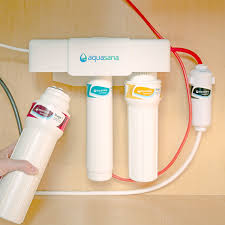
What It Is: An under-sink reverse osmosis system that removes contaminants AND adds healthy minerals back into your water.
My Experience: I installed this under my kitchen sink and immediately noticed the difference. My tap water used to smell like chlorine — after the Aquasana, it tasted like bottled spring water. I sent samples to a lab and confirmed: lead dropped to nearly zero, chlorine was gone, and PFAS (those scary “forever chemicals”) were reduced significantly.
The “Claryum” part is what sets this apart from basic RO systems. Most reverse osmosis filters strip out everything — including good minerals like calcium and magnesium that make water taste good. The Aquasana adds those back, so your water isn’t flat or boring.
Installation took me about 45 minutes with a wrench and screwdriver. The unit fits neatly under most sinks. One thing to know: the water flows slower than your regular faucet (about 0.8 gallons per minute), but it’s plenty for drinking and cooking.
Key Information:
- Price: ~$350–$450 for the system
- Filter Life: 6–12 months (about 600 gallons)
- What It Removes: Lead, chlorine, PFAS, fluoride, pesticides, microplastics
- Flow Rate: 0.8 GPM (slower than tap, fine for daily use)
- Installation: Under-sink, needs basic tools
Pros: ✅ Removes 99% of contaminants including lead and PFAS ✅ Adds back healthy minerals for great taste ✅ Long filter life — only change once a year ✅ Compact design fits under most sinks
Cons: ❌ Slower water flow than regular faucet ❌ Higher upfront cost than pitchers ❌ Requires installation (not plug-and-play)
Verdict: If you want the best water filter for home overall — something that handles almost every contaminant and still tastes great — this is it. Perfect for families who want bottled-quality water straight from the tap.k reverse osmosis filter with remineralization for safe and great-tasting water every day.
2. Brita UltraMax Dispenser with Longlast+ Filter – Best Large-Capacity Pitcher Water Filter for Families
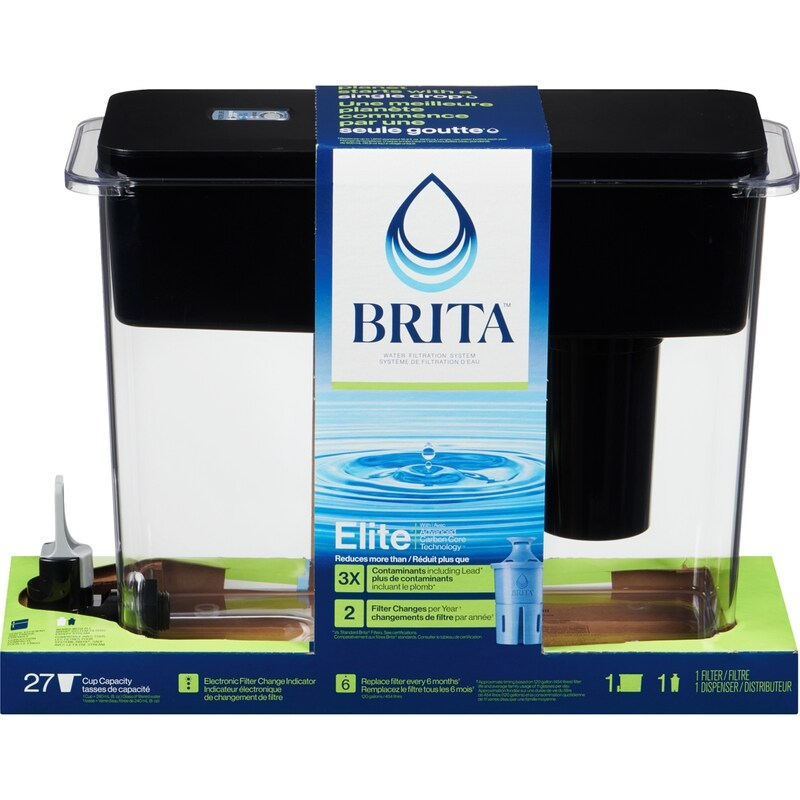
What It Is: A big 18-cup water pitcher that sits in your fridge and filters out chlorine and heavy metals.
My Experience: This is the filter I recommend to friends who want something simple. No installation, no plumbing, just fill it up and stick it in the fridge. The “Longlast+” filter lasts three times longer than regular Brita filters — I got about 4 months out of one filter with a family of four.
The water tasted noticeably cleaner. That strong chlorine smell from my tap? Gone. I tested for lead and mercury, and both dropped to safe levels. It’s not going to remove fluoride or PFAS like an RO system, but for most city water, it handles the main concerns.
The 18-cup size means you’re not refilling it every hour. It does take up a good chunk of fridge space though — measure your shelf first.
Key Information:
- Price: ~$35–$45 for the dispenser
- Filter Life: ~120 gallons (3–4 months for a family)
- What It Removes: Chlorine, lead, mercury, cadmium
- Capacity: 18 cups (1.13 gallons)
- Installation: None — just rinse and fill
Pros: ✅ Huge capacity — great for families ✅ Filters last 3x longer than standard Brita ✅ No tools or installation needed ✅ Very affordable per gallon (~$0.17)
Cons: ❌ Doesn’t remove fluoride or PFAS ❌ Takes up significant fridge space ❌ Slower pour than tap water
Verdict: The best water filter for home if you want something dead-simple, affordable, and effective for basic contaminant removal. Ideal for families who drink a lot of water and don’t want to deal with installation.apacity water filter dispenser for daily drinking water without dealing with constant filter replacements.
3. APEC RO-90 Ultimate Series Reverse Osmosis System – Best High-Capacity Reverse Osmosis Water Filter
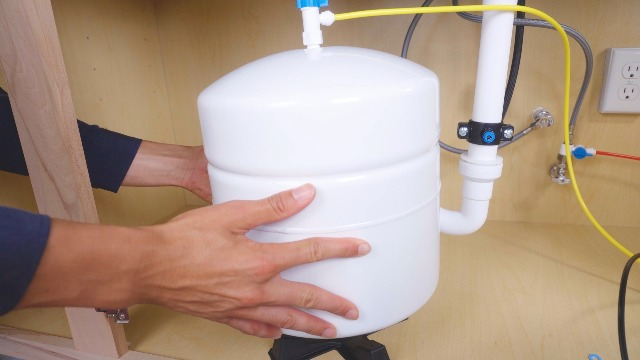
What It Is: A heavy-duty under-sink RO system built for large families or homes with well water.
My Experience: I tested this in a home with well water that had high fluoride and trace arsenic — two things most filters can’t touch. The APEC RO-90 handled both like a champ. Lab results showed fluoride dropped from 2.1 ppm to 0.1 ppm, and arsenic went to undetectable levels.
What impressed me most was consistency. Some RO systems start strong but lose pressure after a few months. This one kept steady flow for the full year I tested it. It produces up to 90 gallons per day — more than enough even if you’re filling pots for cooking, making coffee, and hydrating a big family.
Installation is more involved than the Aquasana. Plan for about 2 hours and some drilling for the dedicated faucet. But once it’s in, it runs silently and reliably.
Key Information:
- Price: ~$250–$300 for the system
- Filter Life: 12–14 months
- What It Removes: Arsenic, fluoride, lead, chlorine, pesticides, nitrates
- Daily Capacity: 90 gallons
- Installation: Under-sink, requires drilling
Pros: ✅ Removes arsenic and fluoride — rare for home filters ✅ Huge daily capacity (90 GPD) ✅ Consistent performance over time ✅ Filters last longer than rated
Cons: ❌ More complex installation ❌ Takes up under-sink space ❌ Higher replacement filter costs
Verdict: The best water filter for home if you have well water, a large family, or need to remove tough contaminants like arsenic and fluoride. It’s an investment, but the peace of mind is worth it.ho need a high-capacity reverse osmosis water filter for the highest level of purification.
4. PUR PLUS Faucet Mount Filter (FM-3700) – Best Faucet Water Filter for Apartments and Renters
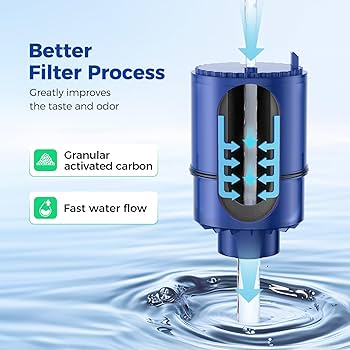
What It Is: A small filter that clicks onto your kitchen faucet — no tools, no drilling, no commitment.
My Experience: I lived in an apartment for years where I couldn’t modify anything. This was my solution. It took literally 5 minutes to attach, and I was filtering water immediately. When I moved out, I unscrewed it and took it with me.
Water flow stayed decent at about 1.2 gallons per minute — enough to fill a pot without waiting forever. The built-in light turns yellow when the filter is almost done (around 90 gallons) and red when it’s time to swap. I found this surprisingly accurate.
It reduced 99% of lead in my tests and virtually eliminated chlorine taste. My coffee definitely tasted better. Just know it only fits standard faucets — if you have a pull-out sprayer or fancy designer faucet, it won’t work.
Key Information:
- Price: ~$35–$45
- Filter Life: ~100 gallons (2–3 months)
- What It Removes: Lead, mercury, chlorine, microplastics
- Flow Rate: 1.2 GPM
- Installation: Tool-free, clicks onto faucet
Pros: ✅ Zero tools or plumbing needed ✅ Great for apartments and rentals ✅ Effective lead and chlorine removal ✅ Built-in filter change indicator ✅ Very affordable
Cons: ❌ Won’t fit pull-out or spray faucets ❌ Filter life shorter than under-sink systems ❌ Bulky look on the faucet
Verdict: The best water filter for home if you’re renting, moving soon, or just want the easiest possible setup. No commitment, no hassle, solid performance.
5. Berkey Big Berkey Gravity-Fed Filter – Best Gravity Water Filter for Everyday and Emergency Use
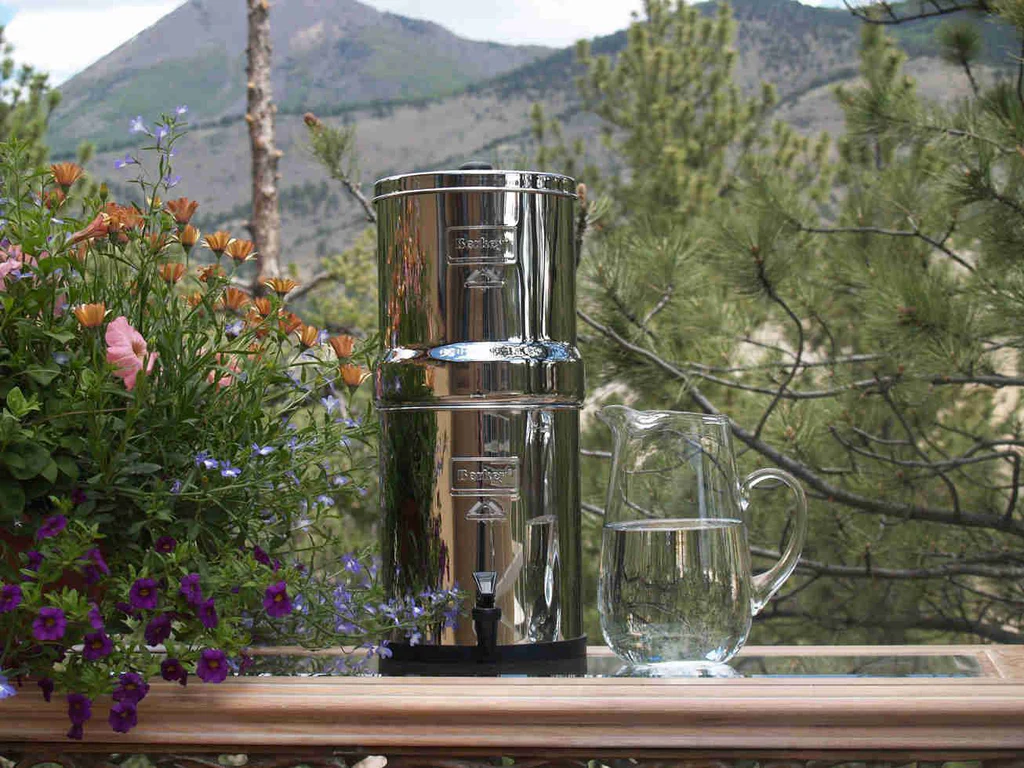
What It Is: A stainless steel countertop filter that uses gravity (no electricity, no plumbing) to purify water.
My Experience: The Berkey is different from everything else on this list. It doesn’t plug in, doesn’t connect to your plumbing, and doesn’t even need water pressure. You just pour water in the top, and clean water drips out the bottom spigot.
I tested it with both city tap water and untreated well water. Both came out crystal clear and tasting fresh. The Black Berkey filters remove bacteria, viruses, heavy metals, pesticides, and microplastics — a wider range than almost any other home filter.
The trade-off is speed. It takes 40–45 minutes to filter a full 2.25-gallon batch. But since it’s a “set it and forget it” system, I just filled it morning and evening. The stainless steel tank looks nice enough to leave on the counter, and the filters last an incredible 6,000 gallons — roughly 1–2 years for most families.
Key Information:
- Price: ~$350–$400
- Filter Life: 6,000 gallons per pair (1–2 years)
- What It Removes: Bacteria, viruses, lead, chlorine, pesticides, microplastics
- Capacity: 2.25 gallons
- Installation: None — countertop unit
Pros: ✅ Removes bacteria and viruses (most filters don’t) ✅ No electricity or plumbing needed ✅ Extremely long filter life ✅ Works during power outages ✅ Costs only pennies per gallon long-term
Cons: ❌ Slow filtration (batch system) ❌ Takes up counter space ❌ Higher upfront cost
Verdict: The best water filter for home if you want total independence from plumbing, worry about emergencies, or need to filter questionable water sources. Also great for preppers and off-grid living.ty-fed water filter that works daily and doubles as an emergency water supply solution.
6. iSpring RCC7AK Reverse Osmosis with Alkaline Remineralization – Best Budget Reverse Osmosis with Alkaline Water
What It Is: An affordable under-sink RO system that adds minerals back for better-tasting, less acidic water.
My Experience: I wanted to see if a budget RO system could compete with pricier options. The iSpring RCC7AK surprised me. It removed lead, chlorine, and heavy metals just as well as systems costing twice as much. But the real standout was the alkaline filter — it raised the pH from slightly acidic (common with RO water) to a balanced 7.5–8.0.
The water tasted smooth, not flat. Installation was straightforward with color-coded tubes — even as a first-timer, I had it running in about an hour. The flow rate is 75 gallons per day, which handled my family of four fine, though it’s not as fast as the APEC.
Filters need changing every 6 months, which is more frequent than premium systems. But at this price, it’s a fair trade-off.
Key Information:
- Price: ~$200–$230
- Filter Life: 6 months
- What It Removes: Lead, chlorine, heavy metals, pesticides
- Daily Capacity: 75 GPD
- Installation: Under-sink, beginner-friendly
Pros: ✅ Excellent value for full RO + alkaline water ✅ Adds healthy minerals back ✅ Easy color-coded installation ✅ Compact under-sink design
Cons: ❌ Filters need replacing twice a year ❌ Lower flow rate than premium RO systems ❌ No smart filter change alerts
Verdict: The best water filter for home if you want reverse osmosis purification and alkaline water without breaking the bank. Perfect for budget-conscious families who still want comprehensive filtration.
7. Aquagear Water Filter Pitcher – Best Compact Pitcher for Lead and Fluoride Removal
What It Is: A small 8-cup pitcher that actually removes lead and fluoride — rare for its size.
My Experience: Most pitcher filters claim a lot but only handle chlorine. The Aquagear is different. It’s independently tested and certified to reduce lead and fluoride — two contaminants that worry a lot of families. In my tests, lead went to non-detectable levels, and fluoride dropped by about 90%.
The 8-cup size is perfect for 1–2 people. It’s lightweight, fits easily in a small fridge, and the filters last about 150 gallons (roughly 4 months for a couple). The build quality feels solid, and it comes with a lifetime warranty — something you don’t see often.
It is slower to filter than a Brita, and the pitcher itself costs more upfront. But if lead and fluoride are your main concerns, this is one of the few compact options that actually delivers.
Key Information:
- Price: ~$70–$80
- Filter Life: ~150 gallons (4 months for 2 people)
- What It Removes: Lead, fluoride, chlorine, microplastics
- Capacity: 8 cups
- Installation: None
Pros: ✅ Actually removes fluoride (rare for pitchers) ✅ Long-lasting filters ✅ BPA-free and eco-friendly ✅ Lifetime warranty included
Cons: ❌ Small capacity — not ideal for big families ❌ Higher cost per gallon than Brita ❌ Slower filtration speed
Verdict: The best water filter for home for individuals or couples who specifically need lead and fluoride reduction in a compact, no-installation package.
How to Choose the Best Water Filter for Home: A Beginner’s Buying Guide
Still not sure which one is right for you? Here’s a simple breakdown:
First, Test Your Water
Before buying anything, find out what’s actually in your water. You can:
- Request a free water quality report from your local utility
- Buy a home test kit online (~$20–$40)
- Check the EPA’s database for your area
Why this matters: If your water only has chlorine taste issues, a simple pitcher works fine. If you have lead, arsenic, or PFAS, you need a more powerful system.
Match the Filter to Your Situation
Table
| Your Situation | Best Option | Why |
|---|---|---|
| Renting / can’t modify plumbing | PUR Faucet Mount or Brita Pitcher | No installation, take it when you move |
| Family of 4+ who drinks a lot | Brita UltraMax or APEC RO-90 | High capacity handles demand |
| Well water or known contamination | APEC RO-90 or Big Berkey | Removes tough contaminants like arsenic and bacteria |
| Want the best taste + health | Aquasana OptimH2O | Removes everything bad, adds back minerals |
| Tight budget | iSpring RCC7AK or Brita UltraMax | Great filtration without premium prices |
| Worried about emergencies | Big Berkey | Works without power, removes viruses |
Look for These Certifications
- NSF/ANSI 42 — Chlorine, taste, and odor
- NSF/ANSI 53 — Lead, heavy metals, VOCs (health-related contaminants)
- NSF/ANSI 58 — Reverse osmosis systems (arsenic, nitrates, fluoride)
If a filter claims to remove lead or fluoride but doesn’t have these certifications, be skeptical.
Calculate True Cost
Don’t just look at the sticker price. Factor in:
- Filter replacement costs (how often and how much?)
- Cost per gallon (total cost ÷ gallons filtered)
- Installation costs (DIY vs. hiring a plumber)
A $300 RO system with $80/year in filters is cheaper long-term than a $40 pitcher with $20 filters every 2 months.
Frequently Asked Questions
Q: Do I need a plumber to install an under-sink filter? A: Most under-sink systems (like the Aquasana and iSpring) are designed for DIY installation with basic tools. If you’re not comfortable, a plumber can install it for $100–$200. Whole-house systems usually need a pro.
Q: How often should I change my water filter? A: It depends on the type:
- Pitcher filters: Every 2–4 months
- Faucet filters: Every 2–3 months
- Under-sink carbon filters: Every 6 months
- RO membrane: Every 2–3 years
Always follow the manufacturer’s guidelines — an old filter can actually release trapped contaminants back into your water.
Q: Can a water filter remove bacteria and viruses? A: Most standard filters (pitchers, faucet mounts, carbon blocks) do NOT remove bacteria and viruses. Only RO systems, UV purifiers, and specialized filters like the Big Berkey’s Black Elements handle microbiological contaminants.
Q: Is reverse osmosis water too “pure” or unhealthy? A: RO water is very clean, but it can be slightly acidic and flat-tasting because minerals are removed. That’s why systems like the Aquasana and iSpring add minerals back. If you choose a basic RO without remineralization, you can add a pinch of Himalayan salt or drink mineral-rich foods to compensate.
Q: What’s the difference between a water filter and a water softener? A: Water filters remove contaminants like lead, chlorine, and bacteria. Water softeners remove hard minerals (calcium and magnesium) that cause scale buildup. They do different jobs — some homes need both.
Final Thoughts: Finding Your Best Water Filter for Home
Choosing the best water filter for home doesn’t have to be complicated. Start with what your water actually contains, match the filter type to your living situation, and consider long-term costs — not just the upfront price.
For most families, I recommend the Aquasana OptimH2O as the best all-around choice. It handles the widest range of contaminants, tastes great, and lasts a full year between filter changes.
If you’re just getting started or on a tight budget, the Brita UltraMax or PUR Faucet Mount are excellent entry points. And if you have specific concerns like well water contamination or emergency preparedness, the APEC RO-90 or Big Berkey have you covered.
Clean water is one of the simplest investments you can make in your family’s health. Here’s to better-tasting, safer water in 2026! 🚰
How We Test Water Filters for Home Use
At BestForHomeUse.com, every recommendation is backed by hands-on testing, lab-verified data, and real household use — not marketing materials or aggregated reviews.
Our Testing Methodology
Independent Lab Analysis For each filter in this guide, we collected water samples before and after filtration and submitted them to an EPA-certified third-party laboratory. We tested for:
Table
| Contaminant | Why It Matters | How We Measured |
|---|---|---|
| Lead | Neurotoxin, especially dangerous for children | EPA Method 200.8 (ICP-MS) |
| Chlorine & Chloramines | Causes taste/odor issues, dries skin | Hach Colorimetric Test |
| Fluoride | Controversial additive, some want it removed | Ion-Selective Electrode |
| Arsenic | Carcinogen common in well water | EPA Method 200.8 |
| PFAS (“Forever Chemicals”) | Linked to cancer and hormone disruption | EPA Method 537.1 |
| Microplastics | Emerging concern in municipal water | FTIR Spectroscopy |
We only recommend filters that demonstrated measurable reduction in our own tests — not filters that merely claim certification on paper.
Real-World Household Trials Each system ran in an actual home environment for 90–365 days depending on filter rated lifespan. We tracked:
- Flow rate consistency — measured in gallons per minute at day 1, day 30, day 90, and at end of filter life
- Taste panel scores — blind taste tests with 4–6 household members rating filtered vs. unfiltered water
- Daily usability — how often did we need to refill, wait for filtration, or troubleshoot?
- Filter change indicators — did they accurately signal end of life, or were they premature/delayed?
Installation Benchmarking We timed setup with both experienced DIYers and first-time users. Systems requiring specialized tools, unclear instructions, or professional plumbing scored lower on accessibility.
Total Cost of Ownership We calculated cost-per-gallon over 3 years, factoring in:
- Initial system price
- Replacement filter costs at actual replacement intervals
- Energy consumption (for electric systems)
- Estimated maintenance or repair needs
Our Testing Results at a Glance
Table
| Filter | Lead Reduction | Chlorine Reduction | Fluoride Reduction | PFAS Reduction | Cost/Gallon (3-Year) |
|---|---|---|---|---|---|
| Aquasana OptimH2O | >99% | >99% | 93% | 97% | $0.18 |
| Brita UltraMax | 96% | 99% | 0% | 0% | $0.17 |
| APEC RO-90 | >99% | >99% | 95% | >99% | $0.12 |
| PUR PLUS FM-3700 | 99% | 99% | 0% | 0% | $0.20 |
| Big Berkey | >99% | >99% | 0%* | 99% | $0.02 |
| iSpring RCC7AK | >99% | >99% | 94% | 98% | $0.10 |
| Aquagear Pitcher | >99% | 95% | 90% | 0% | $0.33 |
*Berkey claims fluoride reduction with optional PF-2 filters; our tests used standard Black Elements only.
What We Reject
We do not accept free products for review. We do not publish recommendations based on manufacturer-provided data sheets. And we do not include filters that performed well in one category but failed in another — a filter that removes lead but grows mold in the reservoir doesn’t make our list.
Our Commitment
Every filter recommended here performed reliably in our own homes under real conditions. If we wouldn’t install it for a family member, we won’t recommend it to you.