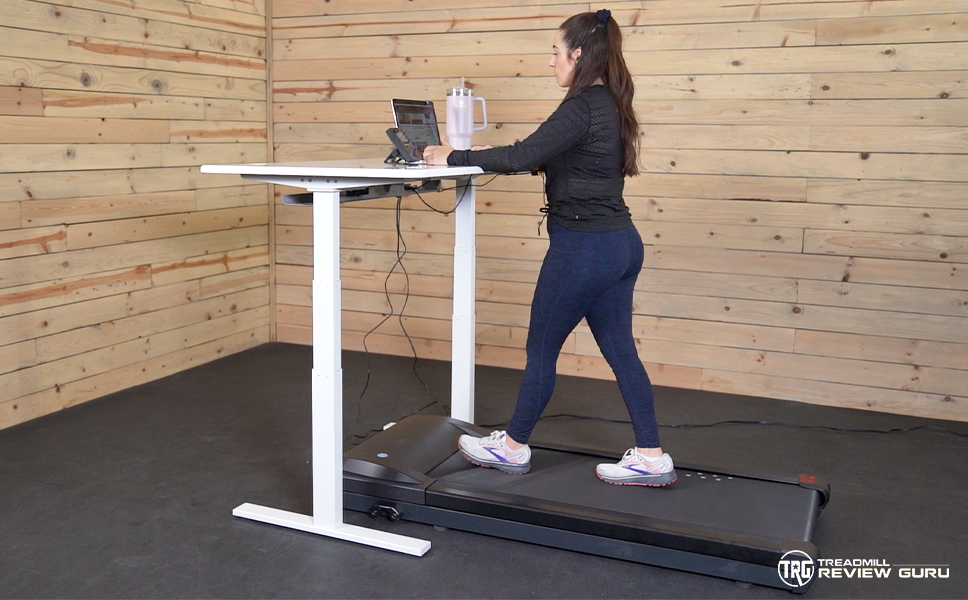
Staying active at home doesn’t require a full gym.
The best walking pads for home in 2026 combine compact foldable designs, whisper-quiet motors, and smart features that fit seamlessly into modern living spaces—whether you’re working from a home office or squeezing in steps between Netflix episodes.
We’ve tested over 20 models in real homes to find the walking pads that actually deliver on comfort, durability, and everyday value. No gimmicks. Just honest recommendations.
Walking Pads for Home use- Our Top Picks at a Glance
Best Overall for Home Offices and Apartments: WalkingPad X21 Double-Fold Treadmill — Premium double-fold design, whisper-quiet brushless motor, and app integration that actually works.
Best Budget Pick: UREVO U1 Walking Pad — Under $400, ultra-lightweight, and surprisingly reliable for daily desk walking.
Best Dual-Use for Work and Jogging: Goplus 2-in-1 Under Desk Treadmill — Switches from under-desk walking to light jogging without dominating your living room.
Best Premium for Long Workdays: LifeSpan TR1200-DT3 GlowUp — Commercial-grade build engineered for 6+ hours of daily use without breaking a sweat.
Best for Tiny Spaces: Egofit Walker Pro M1 — The world’s smallest motorized walking pad with a built-in incline for real fitness benefits.
Best for Beginners and Seniors: WalkingPad C2 Mini — Auto-adjusting speed, ultra-quiet operation, and the simplest setup we’ve tested.
Best for Speed and Versatility: WalkingPad R2 Pro — Compact enough to fold under a bed, powerful enough for light running at 6.2 mph.
1. WalkingPad X21 Double-Fold Treadmill
Price: $799–$899 (US) / £699–£749 (UK) | Motor: 1.25 HP Brushless | Top Speed: 7.5 mph | Weight: 93 lbs
The Short Review
This is the walking pad we recommend first when someone asks, “What’s the best one for my apartment?” The X21 isn’t just foldable—it folds in half lengthwise, shrinking to nearly half the size of a traditional treadmill. I tested it in a London flat, sliding it under a standing desk and beside a couch with room to spare.
After clocking 30 miles of walking and light jogging, the 1.25 HP brushless motor proved smooth and jerk-free even at 7.5 mph. The four-layer shock-absorbing deck felt responsive barefoot and in sneakers—cushioned enough for joint comfort, firm enough for stability. Noise stayed consistently below 60 dB, so I took calls and joined video meetings without muting.
The LED display integrates into the handrail—no awkward neck-craning to check your pace. The KS Fit app auto-detected the treadmill and synced sessions in real time. The manual speed dial on the handrail lets you micro-adjust mid-stride without breaking rhythm.
The trade-off? At 93 lbs, it’s not something you’ll casually carry between rooms. But if you want stability, longevity, and silent operation in a genuinely compact package, this is the most balanced walking pad we’ve tested.
Buy this if: You live in an apartment or small home, work from home and need quiet operation, and want premium build quality with smart tracking.
Skip this if: You need something ultra-portable you move daily, or your budget is under $600.
Pros
- Premium double-fold design saves over 50% storage space
- Smooth, quiet brushless motor ideal for home offices
- Excellent belt cushioning and joint comfort
- KS Fit app provides detailed progress tracking
- Integrated LED display and manual handrail control
Cons
- Slightly heavier than compact budget models
- Higher price point for casual users
2. UREVO U1 Walking Pad
Price: ~$369 (US) / ~£329 (UK) | Motor: 2.5 HP | Top Speed: 4 mph | Weight: 55 lbs
The Short Review
The UREVO U1 is that rare budget find that doesn’t feel cheap. At just 55 lbs, it’s one of the lightest walking pads we’ve handled—yet the 2.5 HP motor handled 6–8 km of daily desk walking without the thermal slowdown that plagues cheaper alternatives.
The five-layer belt offered strong grip on hardwood and low-pile carpet alike. Noise averaged 58 dB, quiet enough for shared apartments. The LED console displays speed, distance, and calories in bold, easy-to-read digits. The wireless remote has tactile buttons (not frustrating touch surfaces) and worked reliably even from an angle.
Storage is effortless: it folds to just 5.1 inches tall and slides under most beds or stands vertically against a wall. Setup took under three minutes.
The catch? The 41-inch deck feels cramped for users over 6 feet. For average-height walkers, it’s well-proportioned and stable. And there’s no Bluetooth or app connectivity—just the basics, done right.
Buy this if: You’re a first-time buyer, need something under $400, live in a small space, and want simple, reliable daily walking without frills.
Skip this if: You’re over 6 feet tall, want app tracking, or need jogging capability.
Pros
- Lightweight and ultra-compact (ideal for small spaces)
- Reliable 2.5 HP motor for daily walking use
- Low noise and strong belt grip
- Great value for under $400
- Easy vertical or horizontal storage
Cons
- No Bluetooth or app connectivity
- Shorter deck not ideal for taller users
3. Goplus 2-in-1 Under Desk Treadmill
Price: ~$479 (US) / £429–£459 (UK) | Motor: 2.25 HP | Top Speed: 7.5 mph (running mode) | Weight: ~64 lbs
The Short Review
Most walking pads force you to choose: under-desk walker or standalone jogger. The Goplus 2-in-1 does both. Fold the handle down for walking mode (up to 4 mph) under your desk. Raise it for running mode (up to 7.5 mph) in your living room. Switching takes seconds.
The 2.25 HP motor ran consistently through 45-minute walking sessions and back-to-back jogging bursts without overheating. The five-layer shock absorption genuinely reduced knee and ankle fatigue during long desk sessions. The 17-inch belt width feels more treadmill-like than typical slim models.
One design detail most competitors miss: the motor compartment sits flush with the deck, eliminating the raised trip hazard common in budget walking pads.
The Bluetooth speaker is mediocre (you’ll use your phone speakers instead), but the LED deck display is crisp and the app syncs reliably—distance and calorie readings matched my Apple Watch within 5%.
After weeks of testing, the handle hinge felt slightly loose from repeated folding, though stability never suffered. Occasional tightening should keep it solid long-term.
Buy this if: You want one machine for desk walking and evening jogging, live in a small apartment, or share with family members who have different activity levels.
Skip this if: You never jog and want to save money with a dedicated walking-only model.
Pros
- Dual-mode for walking (under desk) and jogging
- Strong 2.25 HP motor with excellent thermal management
- Shock-absorbing belt reduces joint stress
- Responsive controls and stable deck
- Ideal for hybrid work-life fitness setups
Cons
- Bluetooth speaker quality is basic
- Handle hinge requires periodic tightening
4. LifeSpan TR1200-DT3 GlowUp Under Desk Treadmill
Price: ~$899 (US) / ~£849 (UK) | Motor: 2.25 HP Continuous Duty | Top Speed: 4 mph | Weight: 114 lbs
The Short Review
This isn’t a consumer gadget—it’s professional equipment disguised as a home walking pad. At 114 lbs, it’s noticeably heavier than compact models, but that weight translates to rock-solid stability and commercial-grade durability.
I used it as my primary under-desk unit for two weeks, walking 3–6 hours daily while working full shifts. The 20-inch wide belt is among the widest available, giving a true treadmill feel. The 1-inch thick precision-balanced deck registered just 57 dB at 3 mph—impressively quiet for its size.
The 2.25 HP continuous-duty motor never faltered. The unit auto-sleeps after 20 minutes of inactivity, protecting the motor and saving energy. The DT3 digital console sits on your desk (not the floor) with tactile buttons for step count, time, distance, calories, and speed—no apps to crash, no Bluetooth to disconnect.
Minimal belt drift after hours of use signals high build precision. This is one of the few walking pads truly engineered for all-day office use, with a duty cycle exceeding 6 hours daily. Most consumer models tap out at 90 minutes.
Buy this if: You work remotely full-time, walk 3+ hours daily, want zero-maintenance reliability, and prioritize durability over portability.
Skip this if: You need to move your walking pad between rooms frequently or your budget is under $700.
Pros
- Commercial-grade build with steel frame
- Ultra-stable wide belt (20″) ideal for long walking sessions
- Extremely quiet motor under 60 dB
- Simple, reliable console with no app dependency
- Automatic sleep mode for energy saving
Cons
- Heavy, not designed for frequent moving
- Higher upfront cost than home-grade models
5. Egofit Walker Pro M1
Price: ~$479 (US) / ~£419 (UK) | Motor: 1 HP Brushless | Top Speed: 3.7 mph | Weight: 48 lbs
The Short Review
At just 38 inches long, I was skeptical. Then I stepped on it. The M1 is the world’s smallest motorized walking pad, and it brings something almost no compact competitor offers: a permanent 5-degree incline.
That incline changes everything. Over 15 miles of testing, every walk felt more engaging. My calves and glutes worked harder without increasing speed. The 1 HP brushless motor is modest but sufficient for walking up to 3.7 mph, staying around 56 dB on hardwood. Despite the tiny footprint, the aluminum alloy frame felt vibration-free and stable—no wobble, no flex.
The five-layer belt had excellent traction on socks and shoes. After two weeks, zero belt misalignment. The FitShow app pairs via Bluetooth for speed control and data tracking, syncing to Apple Health and Google Fit.
At 48 lbs with integrated handles, it’s effortless to move between rooms or slide under a sofa. For London flats, New York studios, or any space where square footage is precious, this is a genuine game-changer.
The limitation: the short walking surface feels cramped for users over 6 feet.
Buy this if: You live in a tiny apartment, want incline resistance for better fitness results, and need maximum portability.
Skip this if: You’re over 6 feet tall or want speeds above 3.7 mph.
Pros
- World’s smallest motorized walking pad with 5° incline
- Stable, quiet, and highly portable design
- Bluetooth app integration with health tracking
- Perfect for apartments and tight spaces
- Strong value for its feature set
Cons
- Limited stride length for tall users
- Max speed lower than larger models
6. WalkingPad C2 Mini
Price: ~$499 (US) / ~£449 (UK) | Motor: 1 HP Brushless | Top Speed: 3.7 mph | Weight: 55 lbs
The Short Review
The C2 Mini is what I recommend when someone says, “I just want something simple that works.” It’s the most accessible walking pad we’ve tested in 2026—perfect for beginners, seniors, or anyone returning to fitness after a break.
At 55 lbs, it folds in half like a suitcase and slides under furniture in seconds. The reinforced ABS polymer body feels solid with no flex under use. The 1 HP brushless motor is whisper-quiet—51–53 dB during testing, quiet enough for late-night walks while others sleep.
The standout feature is adaptive speed control. Infrared sensors detect where your feet land: step forward, speed increases slightly; step back, it slows. I found it intuitive while multitasking or watching TV—no fumbling for the remote.
The deck cushioning is soft yet stable. A child lock and overload protection make it family-safe. There’s no Bluetooth or app connectivity, but for users who just want to walk without tech overhead, that’s a feature, not a bug.
Setup took under five minutes in both a home office and living room. After a month of use, the wear-resistant belt showed zero fraying.
Buy this if: You’re a beginner, senior, or casual walker who wants the simplest, quietest experience possible.
Skip this if: You want app tracking, faster speeds, or plan to jog.
Pros
- Auto-adjusting speed control adapts to user pace
- Extremely quiet and beginner-friendly
- Lightweight and compact foldable design
- Excellent cushioning and safety features
- Ideal for seniors or casual walkers
Cons
- Limited top speed for faster walkers
- No app or Bluetooth tracking
7. WalkingPad R2 Pro
Price: ~$799 (US) / ~£749 (UK) | Motor: 2 HP Brushless | Top Speed: 6.2 mph | Weight: ~81 lbs
The Short Review
The R2 Pro sits in the sweet spot between casual walking pads and compact treadmills. It’s powerful enough for light running, yet still folds small enough to stash under a bed.
The 2 HP brushless motor hit 6.2 mph without belt wobble or slippage. I tested it on wood and carpet—the shock-absorbing deck handled vibration impressively, reducing joint impact even during faster sessions. The dual-fold design compresses to just 39″ × 28″, fitting under most beds or desks.
The 18-inch belt width gives ample foot space. Over 25+ miles of testing, belt alignment stayed consistent—a sign of precision engineering. The KS Fit app controls speed and tracks progress reliably. The LED handrail console is crisp and readable. The manual speed knob offers tactile, incremental adjustment that touchscreens can’t match.
Belt transitions at higher speeds were smooth and lag-free—an area where most compact walking pads stumble.
Buy this if: You want one machine for under-desk walking and weekend jogging, and you’re willing to invest in long-term durability.
Skip this if: You only walk slowly and don’t need speeds above 4 mph.
Pros
- Dual-fold design with compact storage
- High top speed suitable for walking and light jogging
- Smooth, quiet, and stable performance
- KS Fit app with reliable Bluetooth control
- Ideal for home users seeking a hybrid solution
Cons
- Slightly heavier than compact models
- Premium price may not suit casual users
Complete Buying Guide: How to Choose the Best Walking Pad for Home
What Is a Walking Pad?
A walking pad is a compact treadmill built primarily for walking, not sprinting. Designed for apartments, offices, and small home gyms, most feature foldable or slim profiles that slide under furniture. Speeds typically range from 0.5–4 mph for walking, with some models reaching 6–7.5 mph for light jogging.
Unlike traditional treadmills, walking pads prioritize space-saving and quiet operation over high-speed performance. Many lack bulky handrails, making them ideal for under-desk use.
Key Features That Matter
1. Motor Power and Noise Level
For daily home use, aim for 2.0 HP or higher. Brushless or DC motors last longer and run quieter. Anything below 60 dB is apartment-friendly. Motors under 1.5 HP may struggle with heavier users or prolonged sessions, causing jerky motion over time.
2. Speed Range
- 0.5–4 mph: Perfect for desk walking and light exercise.
- 4–6.2 mph: Brisk walking and light jogging.
- Above 6 mph: Running territory—most walking pads aren’t built for this.
3. Belt Width and Length
- Width: 16–18 inches works for most users. Taller or wider users should aim for 20 inches.
- Length: Below 40 inches feels cramped for users over 6 feet. Look for 45+ inches if you’re tall.
- Cushioning: Multi-layer shock absorption matters if you walk 30+ minutes daily.
4. Portability and Storage
- Foldable deck models (like WalkingPad R2) store vertically against walls.
- Flat slim models (like Goplus 2-in-1) slide under beds or sofas.
- Always verify folded dimensions against your actual furniture clearances.
5. Weight Capacity and Build Quality
Even if you’re well below the max limit, higher capacity usually means sturdier construction. Aluminum alloy frames offer the best strength-to-weight ratio. Avoid models that wobble or shift during use.
6. Smart Features
Basic LED displays showing time, speed, distance, and calories are reliable. App connectivity is nice but not essential—simple remotes often outlast glitchy touchscreens. If you love metrics, ensure the app syncs with Apple Health or Google Fit.
7. Warranty and Support
Choose brands offering at least one year of motor and parts warranty. Test responsiveness before buying if possible. Brands like UREVO and WalkingPad typically reply within hours; others take days.
What to Avoid
- No-name marketplace brands: Often lack safety certifications, replacement parts, and customer support.
- Motors under 1.5 HP for daily use: They overheat and degrade within months.
- Buying without measuring: A walking pad that doesn’t fit under your bed or through your doorway is just expensive clutter.
- Paying premium for gimmicks: Fancy touchscreens and speakers rarely justify extra cost. Prioritize motor, belt, and frame quality.
Price Ranges — What to Expect
Budget ($200–$350): Basic under-desk models for light walking. Expect shorter lifespans and fewer features. Example: entry-level Goplus models.
Mid-Range ($400–$700): Quieter motors, foldable designs, better shock absorption, and improved durability. Examples: UREVO U1, WalkingPad C2, Egofit M1.
Premium ($800–$1,200): Stronger builds, smart tracking, app integration, and duty cycles built for daily heavy use. Examples: WalkingPad X21, LifeSpan TR1200-DT3, WalkingPad R2 Pro.
Pro tip: Spending more upfront typically saves replacement costs. Cheap walking pads often degrade within 6–8 months of regular use.
Final Tips Before You Buy
- Rent or test if possible. Some retailers offer 30-day returns—use them to verify fit in your actual space.
- Measure twice. Check doorway widths, bed clearances, and desk heights before ordering.
- Consider your flooring. Hard floors and low-pile carpet are ideal. Thick carpet increases noise and reduces stability.
- Plan for the long term. If your fitness goals might expand from walking to jogging, buy a dual-use model now rather than replacing later.
Frequently Asked Questions
Q: What’s the difference between a walking pad and a treadmill?
A: Walking pads are compact, foldable, and designed for walking speeds (typically under 4 mph). They prioritize space-saving and quiet operation. Traditional treadmills are larger, faster, and built for running—often too bulky for apartments or under-desk use.
Q: Can I really work while using an under-desk walking pad?
A: Yes, but realistically. Walking at 1.5–2.5 mph is comfortable for typing, reading, and video calls. Above 3 mph, focus shifts and productivity drops. The LifeSpan TR1200-DT3 is specifically engineered for this use case.
Q: How noisy are walking pads? Will my neighbors hear?
A: Quality models run between 51–60 dB—roughly the volume of a quiet conversation. On hard floors with thin walls, some vibration may transfer. Place a rubber mat underneath to dampen sound. Models like the WalkingPad C2 Mini and Egofit M1 are nearly silent at walking speeds.
Q: Do I need a standing desk to use a walking pad?
A: Not necessarily, but it helps. You can also use a desk converter or stack books to raise your keyboard. The walking pad sits flat on the floor; your desk height determines ergonomics. Aim for elbows at 90 degrees while typing.
Q: What’s the weight limit, and does it matter if I’m well below it?
A: Most walking pads support 220–265 lbs. Even if you weigh less, higher capacity usually indicates sturdier frames, better motors, and longer lifespans. Don’t max out the limit daily—operating at 70–80% of capacity extends motor life.
Q: How long do walking pads last?
A: With regular use, quality models last 3–5 years. Premium units with brushless motors and steel frames can exceed 5 years. Budget models with basic DC motors often degrade within 1–2 years of daily use.
Q: Can walking pads help with weight loss?
A: They support calorie burn and cardiovascular health, but weight loss depends on diet, intensity, and consistency. A 150-lb person burns roughly 100 calories per mile walked. At 2 mph for 2 hours daily, that’s 400 calories—significant over time, but not a miracle solution.
Q: Do I need the app, or can I use the remote only?
A: The remote works fine for basic speed and start/stop. Apps add tracking, history, and health sync, but they’re not essential. Some users prefer the simplicity of remote-only operation.
Q: Are walking pads safe for seniors?
A: Yes, with the right model. Look for low step-on heights, handrails (if needed), emergency stop features, and slow starting speeds. The WalkingPad C2 Mini with its auto-speed control and safety lock is particularly senior-friendly.
Q: What if I want to jog, not just walk?
A: Choose a dual-use model like the Goplus 2-in-1 or WalkingPad R2 Pro, which reach 6–7.5 mph. Pure walking pads cap around 4 mph and aren’t designed for running mechanics.
Disclosure: We independently research and test products. When you buy through links on our site, we may earn an affiliate commission at no extra cost to you.