You spend a third of your life in bed. Yet most people treat their bedroom like an afterthought—a mattress on a frame, a lamp on a nightstand, and a phone that buzzes all night. Here’s how to turn your bedroom into a sleep-optimized environment using technology that actually works.
Why Your Bedroom Is the Most Important Room in Your Home
Sleep isn’t passive. It’s an active biological process that determines your memory, mood, immune function, weight regulation, and cardiovascular health. Poor sleep doesn’t just make you tired—it increases your risk of diabetes, depression, and heart disease.
The environment you sleep in matters enormously. Temperature, light, sound, air quality, and even your body’s position all influence how deeply and how long you sleep. Most people can’t control these factors precisely because they rely on instinct: opening a window, turning on a fan, pulling a blanket up or kicking it off.
Smart home technology removes the guesswork. These devices measure your environment, learn your patterns, and make automatic adjustments so your bedroom stays in the optimal sleep zone all night—without you waking up to fix anything.
Here are the ten gadgets that actually move the needle on sleep quality.
1. Smart Thermostats That Lower Your Body Temperature for Deeper Sleep
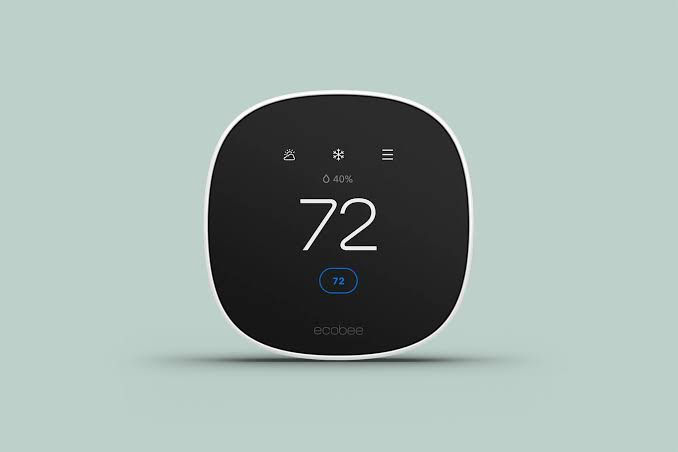
Your core body temperature needs to drop by approximately 1-2 degrees Celsius to initiate and maintain deep sleep. This is why you sleep poorly in hot rooms and why flipping your pillow to the cool side feels so good. A smart thermostat automates this process.
The Ecobee Smart Thermostat Premium includes a remote sensor you place in your bedroom. It measures temperature and occupancy, then adjusts your HVAC system to cool the bedroom specifically—not the whole house—during your sleep window. You can set it to lower the temperature to 65°F at 10:30 PM, hold it there until 5:00 AM, then gradually warm the house before your alarm.
The Nest Learning Thermostat uses similar scheduling but adds humidity sensing. High humidity makes warm temperatures feel hotter, so it can trigger your air conditioning or dehumidifier when humidity rises above 60% overnight.
What to look for: A thermostat with room-specific sensors, not just whole-house averaging. Your living room temperature at 11 PM is irrelevant to your sleep quality.
Real impact: Studies show sleeping in a 65-68°F room increases slow-wave (deep) sleep by up to 15% compared to a 75°F room.
2. Smart Mattresses and Sleep Systems That Track and Adjust
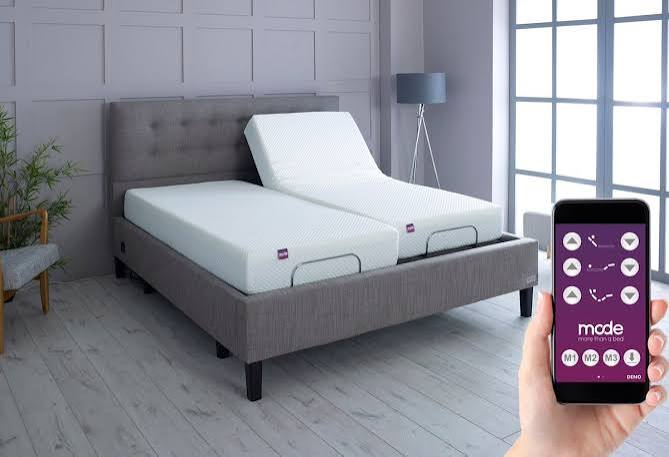
Your mattress is the foundation of sleep quality. Smart mattresses go beyond memory foam by adding sensors and active adjustment.
The Eight Sleep Pod is a cover that fits over any mattress and contains a network of water tubes. It actively heats or cools each side of the bed independently, so if you run hot and your partner runs cold, both of you sleep at your ideal temperature. It tracks your sleep stages, heart rate variability, respiratory rate, and bed exits. Each morning, you get a sleep score and personalized recommendations.
The Sleep Number 360 Smart Bed adjusts firmness automatically throughout the night. If you shift from your back to your side, the bed detects the change and softens the pressure on your shoulders and hips. It also raises your head slightly if it detects snoring, which can reduce airway obstruction.
What to look for: Active temperature regulation is the most impactful feature. Passive sleep tracking alone doesn’t improve your sleep—it just tells you what you already suspect.
Real impact: Users of active-cooling sleep systems report falling asleep 15-20 minutes faster and experiencing fewer nighttime awakenings.
3. Smart Lighting That Mimics the Sun and Protects Your Circadian Rhythm
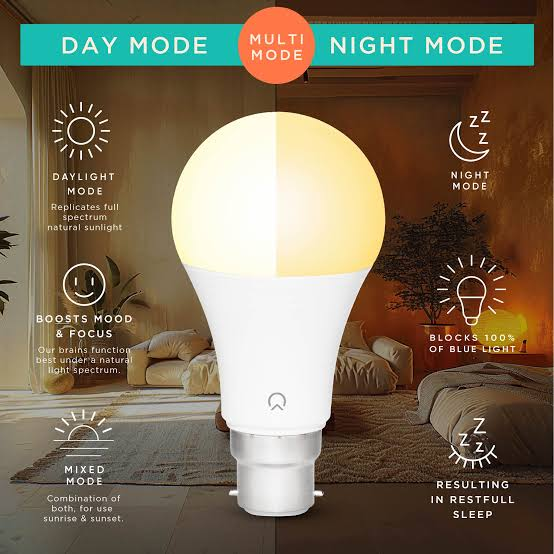
Your brain uses light as the primary signal for when to be awake and when to sleep. Blue-enriched light in the morning suppresses melatonin and promotes alertness. Warm, dim light in the evening allows melatonin to rise and prepares you for sleep. The problem is that modern life floods us with blue light at night—screens, LEDs, and overhead lighting all send the wrong signal.
Smart lighting systems automate the transition.
The Philips Hue White Ambiance bulbs can shift from energizing cool white (6500K) in the morning to relaxing warm amber (2200K) in the evening. You set a schedule, and the bulbs gradually dim and warm over 30 minutes before your target bedtime. The effect is subtle enough that you don’t notice the change, but your brain registers the signal.
The Nanoleaf Essentials line adds Thread and Matter support, meaning the bulbs work with any smart home platform and maintain local control. Their circadian lighting mode automatically adjusts color temperature throughout the day based on your geographic location and the actual sun position.
What to look for: bulbs that go below 2700K in the evening. Many “warm white” bulbs stop at 3000K, which still contains enough blue light to suppress melatonin.
Real impact: Exposure to blue-enriched light before bed delays melatonin onset by up to 90 minutes. Smart lighting that eliminates blue light in the evening can restore normal sleep timing within a week.
4. White Noise and Sound Machines That Mask Disruptive Audio
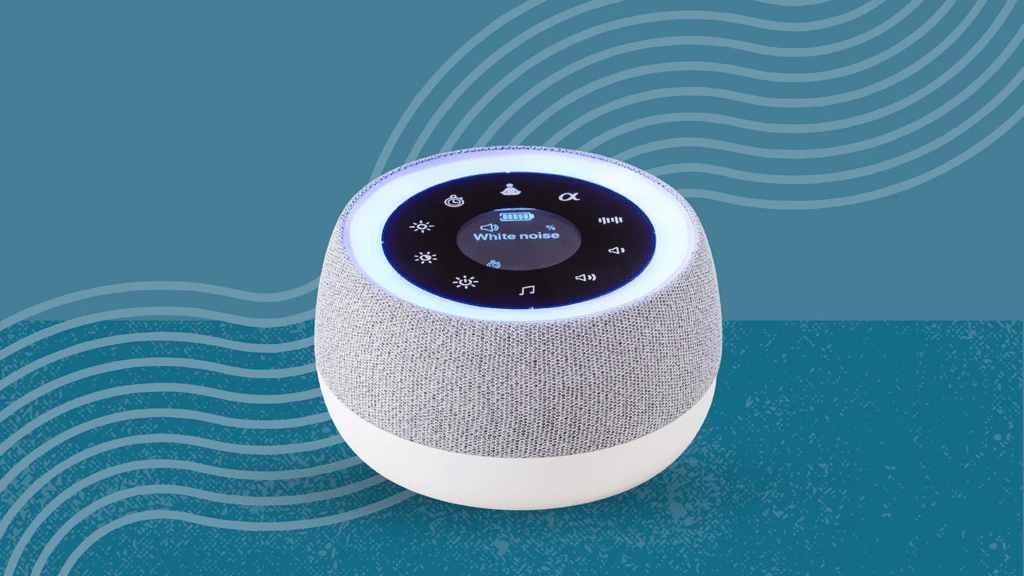
Sudden noises—a car door, a dog bark, a partner’s snort—pull you out of sleep even if you don’t fully wake up. These micro-arousals fragment your sleep architecture and leave you feeling unrefreshed. White noise works by raising the threshold at which external sounds disturb you.
The LectroFan Evo is a dedicated white noise machine with 22 non-looping sounds, including brown noise (deeper than white noise, better for masking low-frequency sounds like traffic) and fan sounds. It’s not “smart” in the connected sense, but it’s reliable, has no WiFi security concerns, and works without an app.
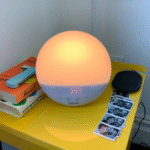
The Hatch Restore combines a sound machine with a sunrise alarm and reading light. It connects to your phone for customization but operates independently once programmed. You can set a wind-down routine: dim warm light at 9 PM, brown noise at 10 PM, gradual sunrise simulation starting 30 minutes before your alarm.
The Amazon Echo Studio or Google Nest Hub can generate white noise through voice command, but dedicated machines are more reliable and don’t require you to speak to a microphone in your bedroom.
What to look for: non-looping sound generation. Machines that loop a 30-second track become noticeable over time and can itself become a sleep disruptor.
Real impact: Consistent white noise reduces the likelihood of nighttime awakenings by 30-40% in urban environments and for people with partners who snore.
5. Smart Curtains and Blinds That Black Out Light Automatically
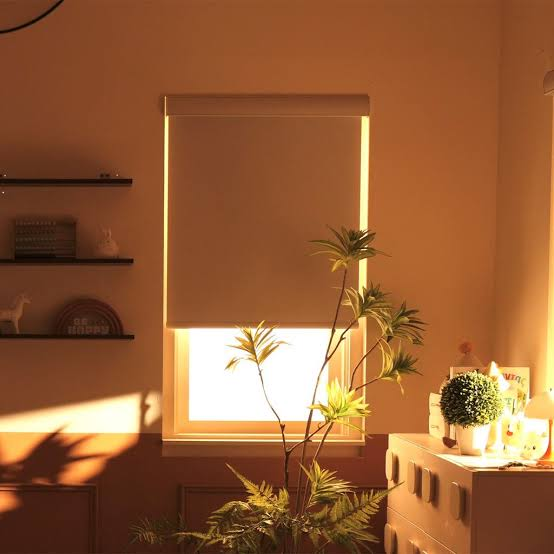
Even small amounts of light at night suppress melatonin. A streetlight through a gap in the curtains, an LED indicator on a smoke detector, early morning sunlight before your alarm—these all fragment sleep. Complete darkness is the goal.
Smart curtains and blinds solve this without you having to remember to close them.
The SwitchBot Curtain is a small motorized device that attaches to your existing curtain rod and physically pulls your curtains open or closed on a schedule. It can close at sunset, open at your alarm time, and respond to voice commands. It doesn’t require replacing your curtains or drilling into walls.
The Lutron Serena Smart Shades are custom-built motorized blinds that integrate with most smart home platforms. They can be programmed to lower to 100% blackout at bedtime and rise gradually with a sunrise simulation, combining light control with the psychological benefit of waking to natural light.
What to look for: true blackout capability, not just “room darkening.” If you can see your hand in front of your face at night, there’s too much light.
Real impact: Sleeping in complete darkness increases melatonin production by up to 50% compared to sleeping with even minimal light exposure.
6. Air Purifiers and Monitors That Keep Your Bedroom Air Clean
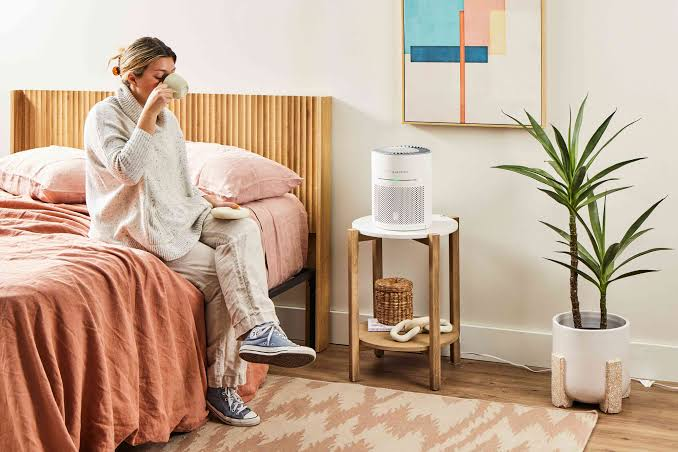
Air quality affects sleep in ways most people don’t realize. High particulate matter (PM2.5) and volatile organic compounds (VOCs) increase inflammation and can trigger nighttime breathing disturbances. Allergens like dust mites and pollen cause nasal congestion, leading to mouth breathing, snoring, and sleep apnea symptoms.
Smart air purifiers monitor and clean automatically.
The Dyson Purifier Cool Formaldehyde detects and destroys formaldehyde, a common indoor pollutant from furniture and building materials, while filtering 99.97% of particles down to 0.3 microns. It displays real-time air quality on an LCD screen and connects to the Dyson app for scheduling and remote monitoring.
The Coway Airmega 400S uses dual HEPA filters and adjusts fan speed automatically based on detected pollution levels. It has a sleep mode that dims the display and runs quietly at 24 decibels—quieter than a whisper.
The Awair Element is a dedicated air quality monitor that tracks temperature, humidity, CO2, VOCs, and PM2.5. It connects to other smart home devices via IFTTT, so you can automatically trigger a purifier when air quality drops or open a smart window vent when CO2 rises.
What to look for: True HEPA filtration (not “HEPA-like”), automatic mode that adjusts to real-time conditions, and quiet operation below 30 dB for sleep mode.
Real impact: Using a HEPA air purifier in the bedroom reduces fine particulate matter by 50-80% and has been shown to improve sleep quality scores in people with allergies and asthma.
7. Smart Alarms That Wake You During Light Sleep
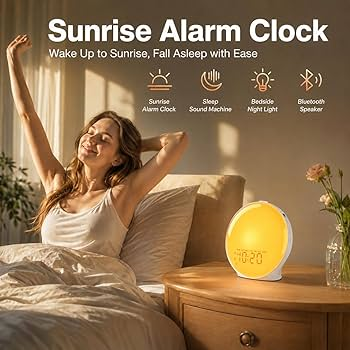
Being jolted awake from deep sleep by a blaring alarm leaves you groggy for hours. This is called sleep inertia, and it’s caused by interrupting the wrong sleep stage.
Smart alarms solve this by monitoring your sleep and waking you during a light sleep phase within a window of your chosen time.
The Philips SmartSleep Connected Sleep and Wake-Up Light includes a headband with sensors that detect your sleep stage. It wakes you with a combination of gradually brightening light and gentle sound during a light sleep phase within 30 minutes of your set alarm time. If you don’t enter light sleep during that window, it wakes you at the latest time with a more assertive alarm.
The Withings Sleep Mat slides under your mattress and tracks sleep stages using ballistocardiography—detecting your heartbeat, breathing, and movement through the mattress. It connects to your phone and can trigger a smart alarm during light sleep.
What to look for: contactless monitoring if you find wearables uncomfortable. Under-mattress sensors are less accurate than headbands but far more convenient for nightly use.
Real impact: Waking during light sleep reduces morning grogginess by up to 40% compared to fixed-time alarms, according to studies on sleep stage-aware alarm clocks.
8. Smart Humidifiers and Dehumidifiers That Maintain Optimal Moisture
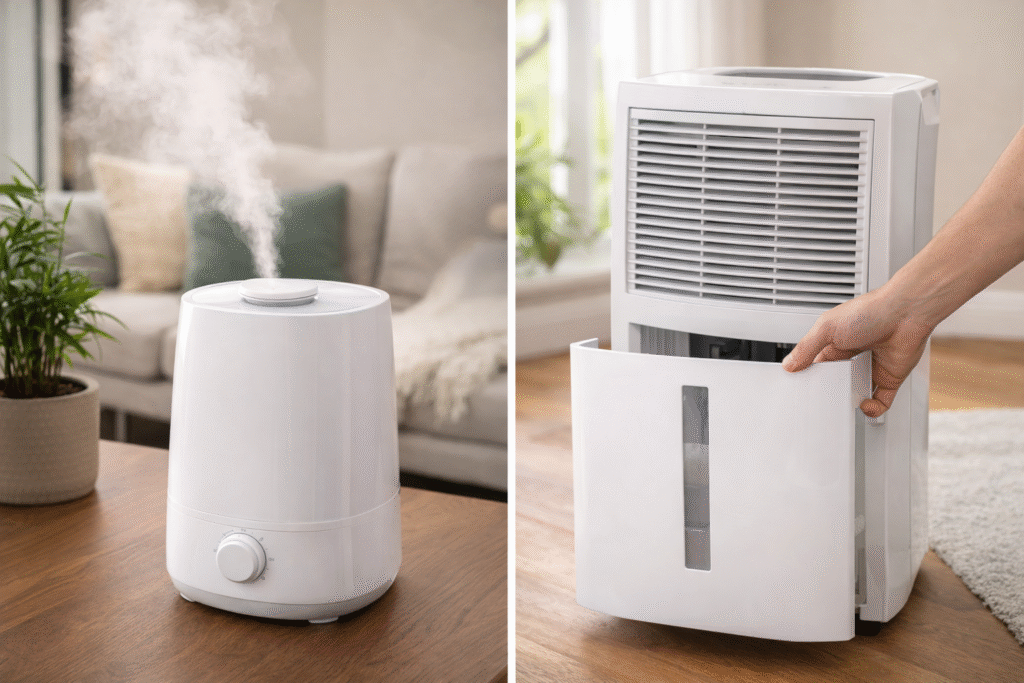
Dry air irritates nasal passages and throats, causing snoring and mouth breathing. Humid air promotes dust mites and mold growth, triggering allergies. The optimal bedroom humidity is 40-50%.
Smart humidifiers and dehumidifiers maintain this range automatically.
The Levoit OasisMist 450S is a smart humidifier with a built-in humidity sensor. It adjusts mist output to maintain your target humidity, has a warm mist option for winter, and runs quietly at 26 dB. It connects to the VeSync app for scheduling and voice control through Alexa or Google.
The Midea Cube 20-Pint Dehumidifier is a smart dehumidifier with a built-in pump that can drain continuously to a sink or window. It maintains humidity within a set range, has a sleep mode that dims the display, and sends alerts when the filter needs cleaning.
What to look for: automatic humidity sensing and adjustment, not just manual settings. A device that runs constantly at one speed will overshoot and create new problems.
Real impact: Maintaining 40-50% humidity reduces nasal congestion by 25% and decreases the likelihood of waking with a dry mouth or sore throat.
9. Smart Pillows and Position Monitors That Reduce Snoring and Apnea
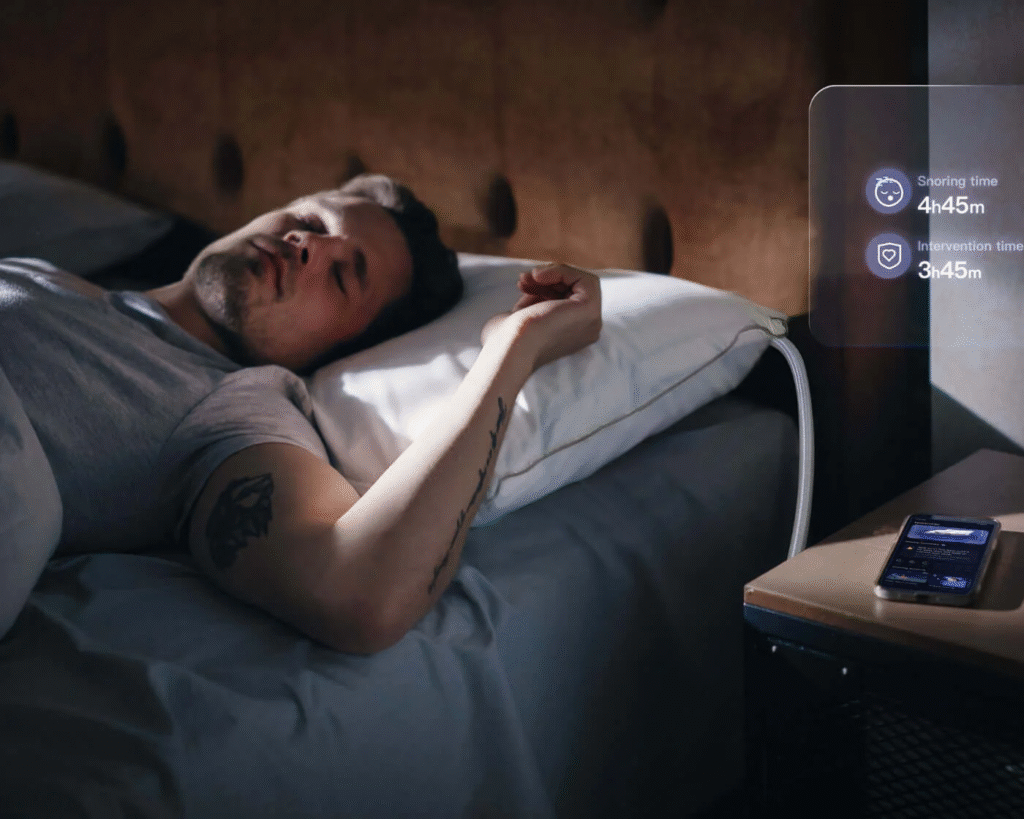
Snoring and sleep apnea are caused by airway collapse during sleep, often worsened by sleeping on your back. Smart pillows and position monitors detect when you’re snoring or in a problematic position and make subtle adjustments.
The Motion Pillow by 10minds contains air chambers that gently inflate to turn your head when snoring is detected. It doesn’t wake you—just enough movement to open the airway. It tracks snoring duration and intensity over time.
The SleepOn Go2Sleep ring is a wearable that monitors blood oxygen, heart rate, and sleep position. It vibrates gently when it detects you’re on your back and experiencing oxygen drops, prompting you to roll to your side without waking fully.
What to look for: non-invasive solutions that don’t require masks or straps. CPAP machines are the gold standard for diagnosed sleep apnea, but smart pillows can help with mild snoring and positional apnea.
Real impact: Positional therapy can reduce snoring frequency by 50-70% in people whose snoring is primarily back-dependent.
10. Smart Sleep Trackers That Give You Actionable Data
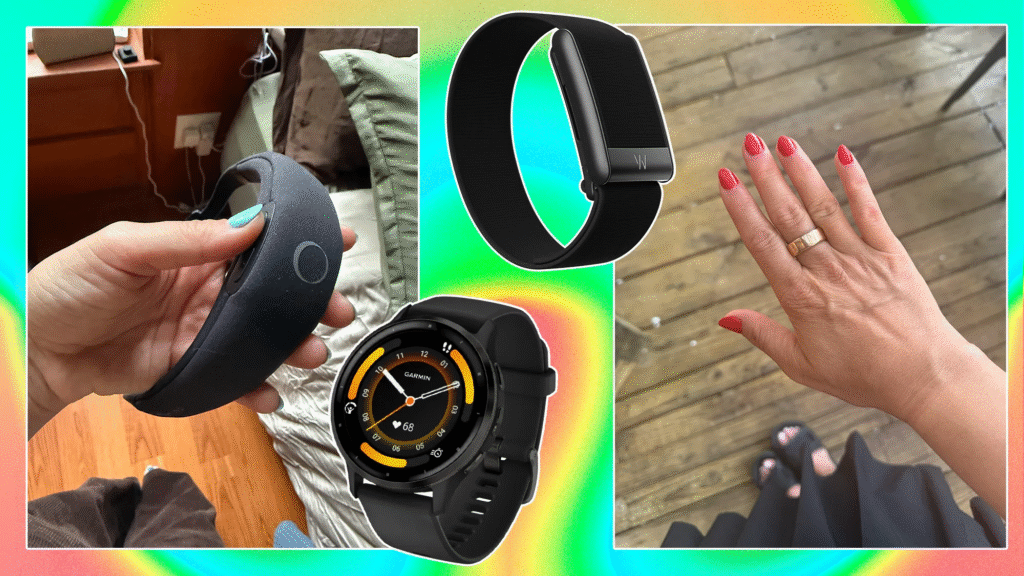
You can’t improve what you don’t measure. Sleep trackers provide the feedback loop that tells you whether your other gadgets are actually working.
The Oura Ring is the most comfortable dedicated sleep tracker. It measures heart rate, heart rate variability, skin temperature, and movement to estimate sleep stages, sleep efficiency, and readiness score. It’s waterproof, has a 7-day battery life, and doesn’t require wearing a watch to bed.
The Withings Sleep Mat mentioned earlier provides similar data without any wearable. It tracks sleep cycles, heart rate, snoring, and breathing disturbances. It can also detect signs of sleep apnea and generate reports you can share with your doctor.
The Apple Watch Series 9 and later includes sleep stage tracking, wrist temperature monitoring, and sleep apnea detection (pending FDA clearance in some regions). It requires daily charging but integrates tightly with Apple Health for trend analysis.
What to look for: consistency over accuracy. Consumer sleep trackers aren’t medical devices, but their relative measurements—showing whether last night was better or worse than average—are reliable and actionable.
Real impact: People who track their sleep and review weekly trends make more consistent improvements to their sleep habits than those who don’t track at all.
How to Build Your Sleep-Optimized Bedroom Without Overwhelm
You don’t need all ten gadgets. Start with the two or three that address your specific sleep problem.
If you sleep hot: Start with a smart thermostat (or a dedicated bed cooling system like Eight Sleep) and breathable bedding.
If you wake up groggy: Start with smart lighting for evening wind-down and a smart alarm that wakes you during light sleep.
If you snore or have allergies: Start with an air purifier and a humidifier or dehumidifier to maintain optimal air quality.
If noise wakes you: Start with a white noise machine and smart curtains for blocking both sound and light.
Add one gadget at a time, track your sleep for two weeks, and evaluate whether it made a measurable difference. Sleep improvement is cumulative—each layer builds on the last.
The Bottom Line
Technology can’t fix a sleep schedule that’s inconsistent or a lifestyle that treats sleep as optional. But if you’re already prioritizing sleep—going to bed at a reasonable hour, limiting caffeine, putting your phone away—and still waking up tired, your environment is likely the problem.
These ten smart home gadgets address the environmental factors that silently sabotage sleep: temperature, light, sound, air quality, and position. Used together, they create a bedroom that actively works to keep you asleep rather than passively hoping you stay asleep.
Start with one. Measure the change. Build from there. Better sleep is worth the investment.
Which sleep problem are you trying to solve? Drop it in the comments and I’ll tell you which gadget to try first.