Water leaks cause more home damage than fires, burglaries, and earthquakes combined. A single burst pipe can destroy $50,000 of your property in hours. These 15 smart home gadgets for home security stop leaks before they become disasters—and most cost less than your monthly coffee budget.
Why Water Leak Prevention Belongs in Your Home Security Strategy
When people think of home security, they picture cameras, alarms, and smart locks. They imagine intruders breaking windows in the night.
But the most likely threat to your home isn’t a stranger with a crowbar. It’s a washing machine hose that splits while you’re at work.
It’s a water heater that rusts through on a holiday weekend. It’s a toilet supply line that fails at 2 AM while you’re sleeping upstairs.
Water damage costs American homeowners $13 billion annually. The average insurance claim for water damage is $11,098. And here’s what your insurance company won’t advertise: many policies don’t cover gradual leaks, only sudden catastrophic failures.
That slow drip behind your dishwasher that warped your hardwood over six months? That’s likely coming out of your pocket.
Smart home gadgets for home security have evolved beyond intrusion detection. Modern water leak prevention systems monitor, alert, and automatically shut off your water supply before a leak becomes a flood.
They work while you sleep, while you vacation, while you’re distracted by life. They don’t replace vigilance—they extend it to the places you can’t see and the hours you can’t watch.
This guide covers 15 devices across three categories: detection sensors that alert you to moisture, automatic shutoff valves that stop water flow, and integrated systems that do both.
Each recommendation emphasizes the details that matter for real homes: installation complexity, sensor accuracy, connectivity reliability, and whether the device works when your internet fails.
Smart Home Gadgets for Home Security: Water Leak Detection Sensors
These devices sit near potential leak points and alert you when moisture appears. They’re your first line of defense—the canary in the coal mine that gives you time to act before damage spreads.
1. Govee Water Leak Detector 2
Price: ~$30 for a 3-pack
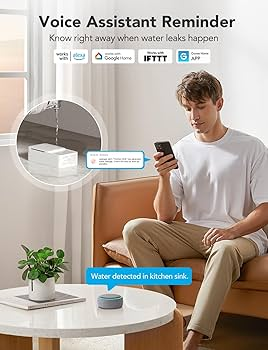
What makes it essential: The Govee Water Leak Detector 2 combines loud local alarms with instant smartphone notifications at a price that lets you blanket your entire home. Each sensor emits a 100dB siren—loud enough to hear across a house and through closed doors. Simultaneously, it pushes alerts through the Govee Home app via WiFi.
Key details that matter: The sensor uses two metal contact points on its base. When water bridges these contacts, the circuit completes and triggers the alarm. This design is simple, reliable, and doesn’t require floating mechanisms that can jam or degrade. The CR2032 battery lasts approximately two years under normal conditions, and the app tracks battery levels for all sensors in one view.
Where to place it: Under washing machines, behind toilets, beneath water heaters, under kitchen sinks, and near sump pumps. The compact size (2.6 x 2.6 x 0.9 inches) fits in tight spaces where leaks actually start.
What to watch: The sensor requires a 2.4GHz WiFi connection. It doesn’t support 5GHz networks. If your router broadcasts both bands under one name, you may need to temporarily separate them during setup. The sensor is water-resistant but not waterproof—submerge it briefly, but don’t leave it sitting in standing water indefinitely.
Real-world performance: A homeowner places three sensors: under the washing machine, behind the water heater, and under the kitchen sink. Six months later, the washing machine sensor triggers during a failed inlet valve seal. The homeowner receives the phone alert while at work, calls a neighbor who shuts off the water main, and prevents what would have been $8,000 in flooring and cabinetry damage.
2. Aqara Water Leak Sensor
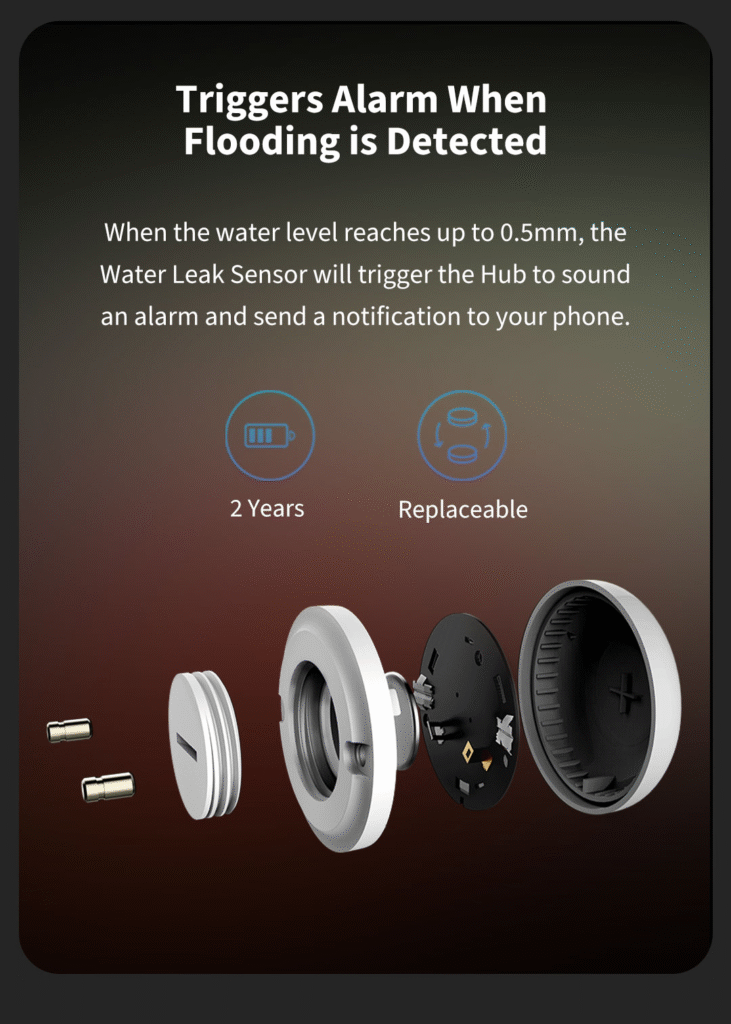
Price: ~$15 per sensor (requires Aqara Hub, ~$60)
What makes it essential: The Aqara Water Leak Sensor offers faster, more reliable alerts than WiFi-dependent sensors by using Zigbee mesh networking. Instead of connecting directly to your router, it communicates through the Aqara Hub, which then relays alerts via your internet connection. This local-first architecture means alerts still trigger even if your internet is temporarily down—the hub stores events and forwards them when connectivity returns.
Key details that matter: The sensor has two detection mechanisms: the contact points on its base for standing water, and probe wires that extend up to 6.5 feet for monitoring sump pits, drain pans, or areas where water accumulates before reaching floor level. This dual-mode detection catches leaks earlier than floor-only sensors.
Where to place it: The probe wires make this ideal for sump pump pits, air conditioner drain pans, and water heater drip pans where water collects before spilling onto the floor.
What to watch: The Aqara ecosystem requires the Hub for full functionality. While this adds upfront cost, it enables local automation that doesn’t depend on cloud services. The sensor is IP67 rated—fully dust-tight and protected against temporary immersion. It survives the damp, dirty environments where leaks occur.
Real-world performance: A homeowner installs the Aqara sensor with probe wires in their sump pump pit. During a spring storm, the pump fails. The sensor detects rising water levels before the basement floods, triggering both the local siren and a phone notification. The homeowner replaces the pump the same day, avoiding a flooded basement and mold remediation that would have cost $15,000.
3. Ring Flood and Freeze Sensor
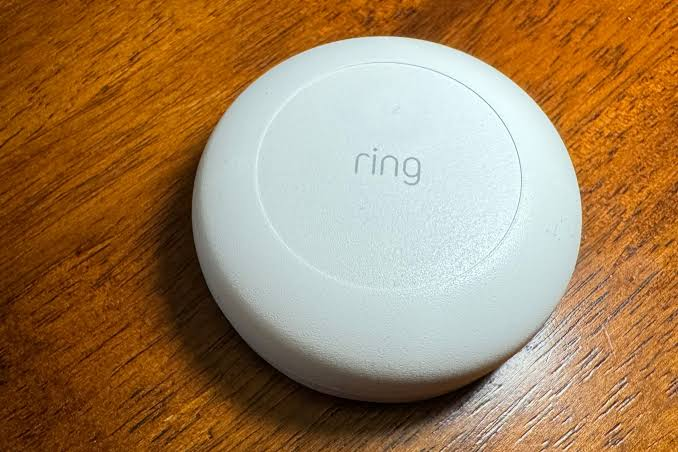
Price: ~$35 per sensor (requires Ring Alarm Base Station)
What makes it essential: The Ring Flood and Freeze Sensor adds temperature monitoring to standard leak detection. It alerts you not just to water, but to temperatures approaching freezing—giving you warning before pipes burst. This dual function is critical for homes in cold climates, vacation properties, and areas with unreliable heating.
Key details that matter: The freeze alert triggers at 40°F, giving you time to intervene before water freezes in pipes at 32°F. The sensor integrates with the full Ring ecosystem, meaning a freeze alert can trigger your Ring thermostat to raise heat, turn on smart plugs connected to space heaters, or activate cameras to visually verify conditions.
Where to place it: Basements, crawl spaces, attics, garages, and vacation homes where heating failures threaten frozen pipes.
What to watch: This sensor requires a Ring Alarm Base Station and Ring Protect subscription ($3.99–$20/month) for smartphone notifications. Without the subscription, you only get local alerts from the base station siren. This ongoing cost is the tradeoff for ecosystem integration.
Real-world performance: A family leaves their vacation cabin for the winter. The heating system fails during a cold snap. The Ring sensor detects the temperature drop to 40°F and sends an alert. A local contact receives the notification, drives to the cabin, and restores heat before pipes freeze. The alternative would have been a spring discovery of burst pipes and extensive water damage.
4. YoLink Water Leak Sensor
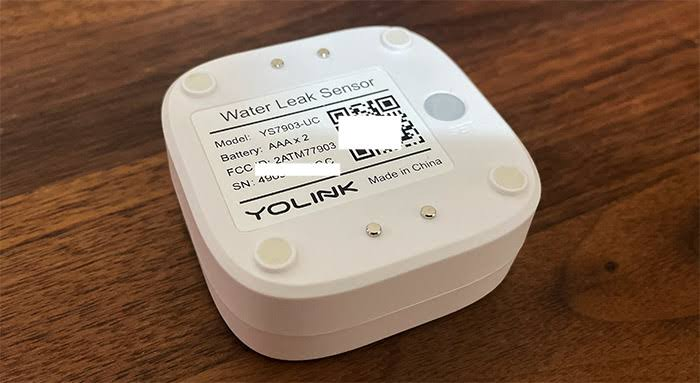
Price: ~$20 per sensor (requires YoLink Hub, ~$40)
What makes it essential: The YoLink system uses LoRa (Long Range) wireless technology instead of WiFi or Zigbee. LoRa transmits up to 1/4 mile in open air and penetrates walls, floors, and basements far better than standard home wireless protocols. This makes it uniquely suited for large properties, detached garages, outbuildings, and homes with thick walls that block other signals.
Key details that matter: The sensors achieve up to 10-year battery life—far exceeding WiFi alternatives. The Hub connects to your internet via Ethernet or WiFi and handles all sensor communication. The system supports up to 300 sensors per hub, making it scalable to estate-sized properties.
Where to place it: Large homes, farms, properties with detached structures, and anywhere standard wireless signals fail to reach.
What to watch: The LoRa protocol is excellent for range and battery life but has lower data bandwidth than WiFi or Zigbee. Sensor alerts transmit instantly, but firmware updates take longer. The ecosystem is less widely compatible than Zigbee or Z-Wave devices.
Real-world performance: A homeowner with a 5-acre property installs YoLink sensors in the main house, detached garage, barn, and well pump house. When a pipe bursts in the barn 200 yards from the house, the sensor triggers immediately. The homeowner receives the alert and shuts off the barn’s water supply before the leak reaches the main house’s foundation.
5. D-Link DCH-S161 Wi-Fi Water Sensor
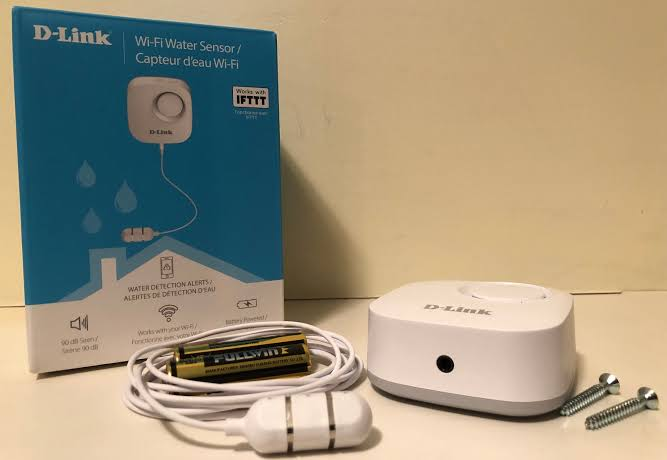
Price: ~$35
What makes it essential: The D-Link DCH-S161 includes a built-in 90dB siren and LED strobe light, making it audible and visible even for hearing-impaired residents or in noisy environments. The integrated alert eliminates dependence on phone notifications that might be missed or delayed.
Key details that matter: The sensor has a 1.8-meter (6-foot) probe cable that extends its detection range. This allows placement on a shelf or wall with the probe reaching down to floor level, keeping the main electronics above potential floodwater. The siren and strobe are powered by the main unit; they don’t depend on a separate hub or internet connection.
Where to place it: Locations where immediate local alerting matters: near elderly residents’ bedrooms, in loud mechanical rooms, and in areas where phone notifications might be missed.
What to watch: The sensor connects directly to WiFi—no hub required—but this means it depends on your internet for phone notifications. If your WiFi fails, you still get the local siren, but not the remote alert. The probe cable is not replaceable; if damaged, the entire unit needs replacement.
Real-world performance: An adult child installs the D-Link sensor with probe cable behind their elderly parent’s washing machine. When a hose fails, the 90dB siren wakes the parent immediately. The adult child simultaneously receives a phone alert and calls emergency services. The fast local response prevents the parent from slipping on accumulating water while trying to find the source.
Smart Home Gadgets for Home Security: Automatic Water Shutoff Valves
Detection alone isn’t enough if you’re hours away from home. These devices monitor your plumbing system and automatically stop water flow when leaks are detected—preventing damage regardless of whether you receive the alert in time.
6. Moen Flo Smart Water Shutoff
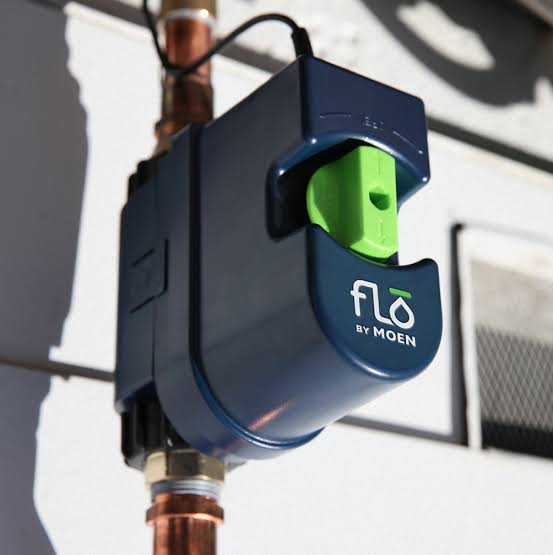
Price: ~$500 (professional installation recommended)
What makes it essential: The Moen Flo is the most comprehensive water security system available. It installs on your main water line and uses ultrasonic technology to monitor flow rate, pressure, and temperature throughout your plumbing. It learns your normal usage patterns and detects anomalies—a running toilet, a dripping faucet, a burst pipe—and can automatically shut off water before significant damage occurs.
Key details that matter: The Flo performs nightly “health tests” by briefly pressurizing your plumbing and measuring pressure decay. A significant pressure drop indicates a leak, even one too small to trigger flow-based detection. The system categorizes alerts as “critical” (automatic shutoff) or “warning” (notification only), and you can customize these thresholds.
Where to install it: The main water supply line, immediately after the meter. This position allows it to protect your entire home.
What to watch: Installation requires cutting into your main water line and should be performed by a licensed plumber. The device requires AC power and includes a battery backup for brief outages. The Flo by Moen subscription ($5–$15/month) adds enhanced features like extended water usage history and advanced analytics, but core shutoff functionality works without it.
Real-world performance: A family leaves for a two-week vacation. Three days in, the Flo detects a pressure drop during its nightly health test. It automatically shuts off the water supply and sends an alert. Upon return, the homeowners discover a failed toilet supply line that would have released hundreds of gallons daily. The automatic shutoff prevented an estimated $40,000 in damage to hardwood floors, drywall, and electrical systems.
7. Phyn Plus Smart Water Assistant
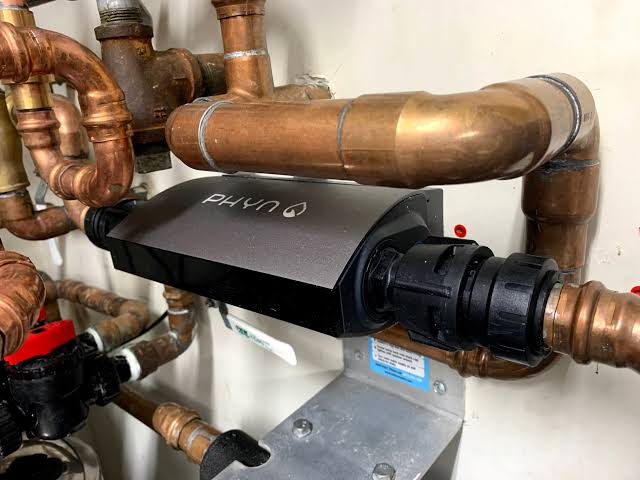
Price: ~$700 (professional installation recommended)
What makes it essential: The Phyn Plus offers more granular leak detection than competitors by measuring pressure changes 240 times per second. This high-frequency sampling detects micro-leaks—a dripping faucet, a running toilet, a pinhole pipe leak—that other systems miss. It also provides detailed water usage by fixture type, helping you identify waste and optimize consumption.
Key details that matter: The Phyn Plus uses two pressure sensors (one on each side of the shutoff valve) to create a differential pressure signature for each fixture in your home. It learns that “toilet flush upstairs” has a different signature than “dishwasher filling” or “shower running.” This allows it to pinpoint leak locations with surprising accuracy.
Where to install it: The main water line, typically in a basement, utility room, or crawl space near the meter.
What to watch: The Phyn Plus is the most expensive consumer option and requires professional installation. It needs a strong WiFi signal at the installation location; a WiFi extender may be necessary. The Phyn app provides detailed analytics but has a learning curve.
Real-world performance: A homeowner receives a Phyn alert indicating a “toilet flapper leak” in the guest bathroom—a leak so small it produced no visible water. The homeowner replaces the $5 flapper, eliminating a leak that was wasting 200 gallons daily and would have eventually damaged the subfloor.
8. Dome Home Automation Water Main Shut-Off
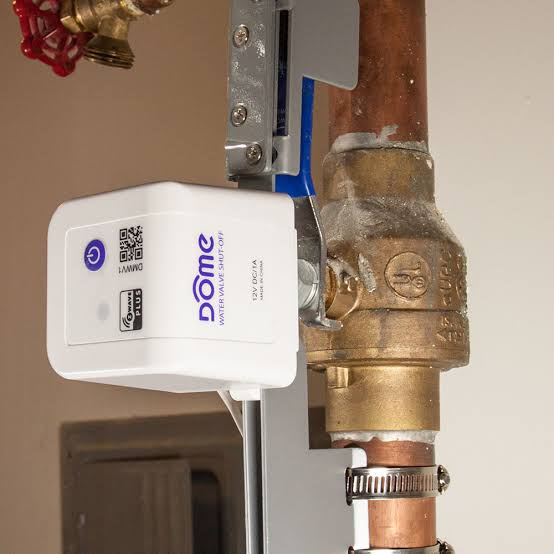
Price: ~$100 (DIY installation with existing motorized valve)
What makes it essential: The Dome Shut-Off is the budget-friendly entry point for automatic water shutoff. It doesn’t include its own valve; instead, it motorizes your existing ball valve, adding smart control to standard plumbing without replacing infrastructure. This dramatically reduces cost and simplifies installation for homes with accessible valves.
Key details that matter: The device clamps onto your existing ball valve handle and physically turns it when triggered. It integrates with Z-Wave hubs like SmartThings, Hubitat, and Ring Alarm. When paired with water leak sensors, it creates a complete automatic shutoff system for under $200 total.
Where to install it: Any home with an accessible ball valve on the main water line. Not compatible with gate valves or globe valves.
What to watch: Installation requires sufficient clearance around the valve for the motor housing. The device is battery-powered (2-year life) but also accepts USB power for permanent installation. It requires a Z-Wave hub for smart functionality; it won’t work standalone.
Real-world performance: A homeowner with a Ring Alarm system adds the Dome Shut-Off and three Aqara water sensors. Total cost: $180. When a washing machine hose fails, the sensor triggers within seconds, the Ring system commands the Dome to close the valve, and water flow stops before the homeowner even receives the phone alert. The entire event—from leak to shutoff—takes under 30 seconds.
9. Guardian Leak Prevention System
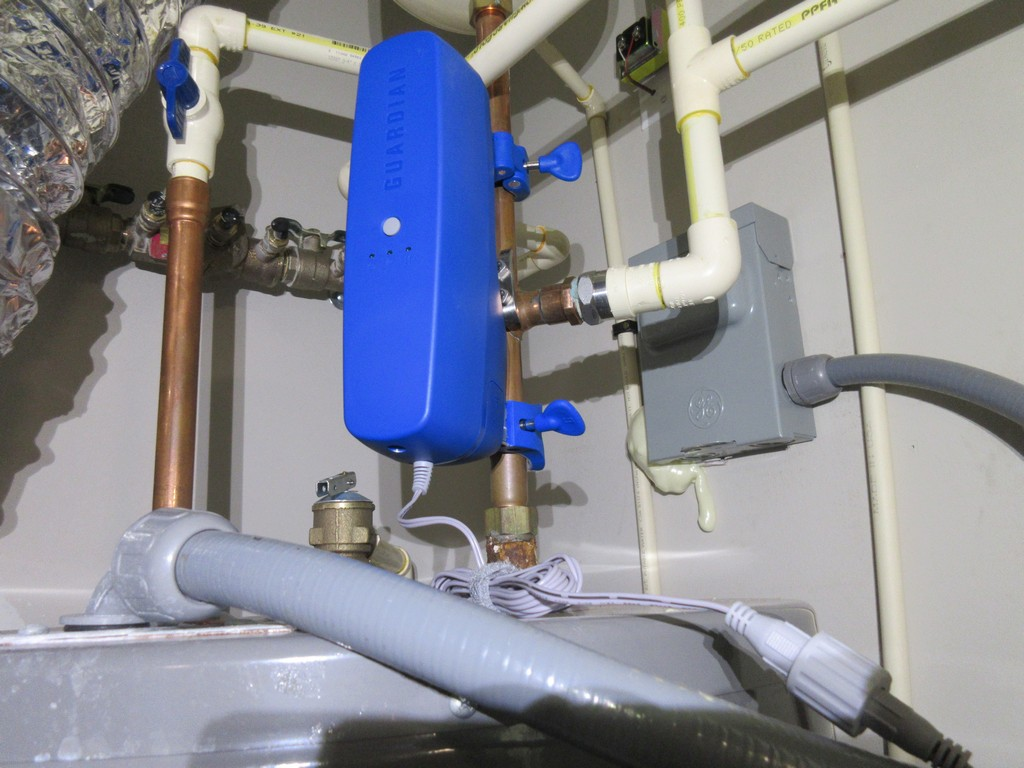
Price: ~$400 (DIY installation)
What makes it essential: The Guardian system takes a different approach: instead of monitoring the main line, it places wireless sensors near individual appliances and installs motorized shutoff valves on each appliance’s supply line. This allows targeted protection—you can shut off the washing machine without cutting water to the entire house.
Key details that matter: The system includes a central controller and up to six wireless sensors. Each appliance valve connects to the controller via radio frequency. When a sensor detects water, the controller closes only the valve serving that appliance. This is ideal for homes where complete water shutoff would cause problems—such as houses with aquariums, hydroponic systems, or medical equipment requiring continuous water.
Where to install it: Homes with specific high-risk appliances (washing machines, water heaters, dishwashers) where targeted shutoff is preferable to whole-house shutoff.
What to watch: The system requires accessible supply lines with ball valves for each protected appliance. Installation is DIY-friendly but requires basic plumbing comfort. The controller needs AC power and includes battery backup.
Real-world performance: A homeowner with a reef aquarium installs the Guardian system on the washing machine and water heater only. When the washing machine inlet valve fails, the Guardian closes just the washing machine valve. The aquarium’s water supply continues uninterrupted, saving $3,000 in livestock and coral that would have died from a whole-house shutoff.
Smart Home Gadgets for Home Security: Integrated Leak Prevention Systems
These devices combine detection and response into single, purpose-built units. They’re ideal for specific appliances and locations where a complete monitoring-plus-shutoff solution is needed without piecing together separate components.
10. GoveeLife Smart Water Leak Detector with Shutoff Valve
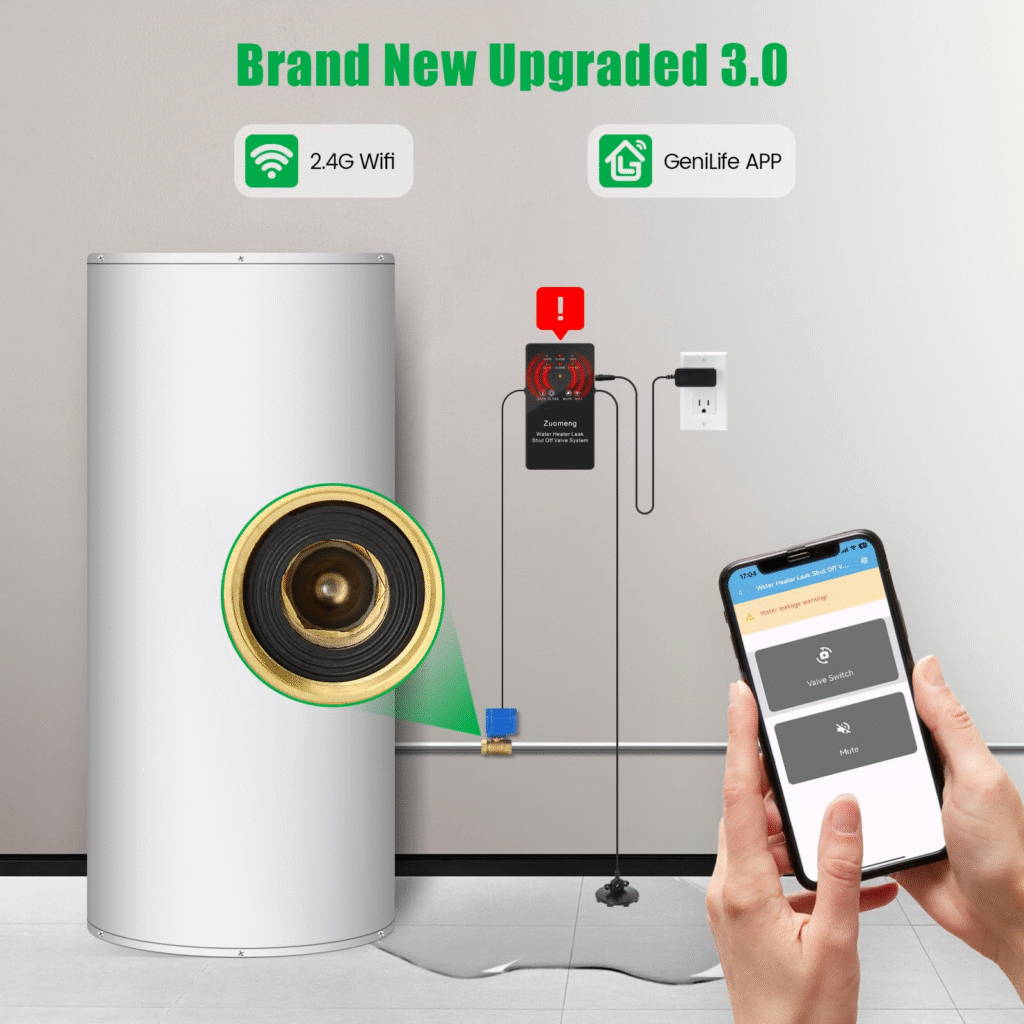
Price: ~$80
What makes it essential: This integrated system combines a water sensor with a motorized shutoff valve in one package designed for washing machines, dishwashers, and toilets. The sensor sits on the floor; the valve installs on the appliance’s supply line. When water is detected, the valve closes automatically within seconds.
Key details that matter: The valve is battery-powered and requires no wiring or hub. It communicates with the sensor via radio frequency, so it works even during internet outages. The sensor includes both contact and probe detection, catching leaks at floor level and in drain pans.
Where to install it: Washing machines, dishwashers, and toilets—any appliance with a single supply line where localized shutoff is sufficient.
What to watch: The valve fits standard 3/4-inch hose connections. Verify your appliance’s fitting size before purchasing. The battery lasts approximately one year under normal conditions. The system doesn’t integrate with broader smart home platforms—it’s a standalone solution.
Real-world performance: A renter installs the GoveeLife system on their washing machine without modifying the building’s plumbing. When the machine’s internal hose fails during a load, the sensor detects the leak and the valve closes before water reaches the apartment below. The renter avoids liability for downstairs damage and preserves their security deposit.
11. StreamLabs Smart Home Water Monitor
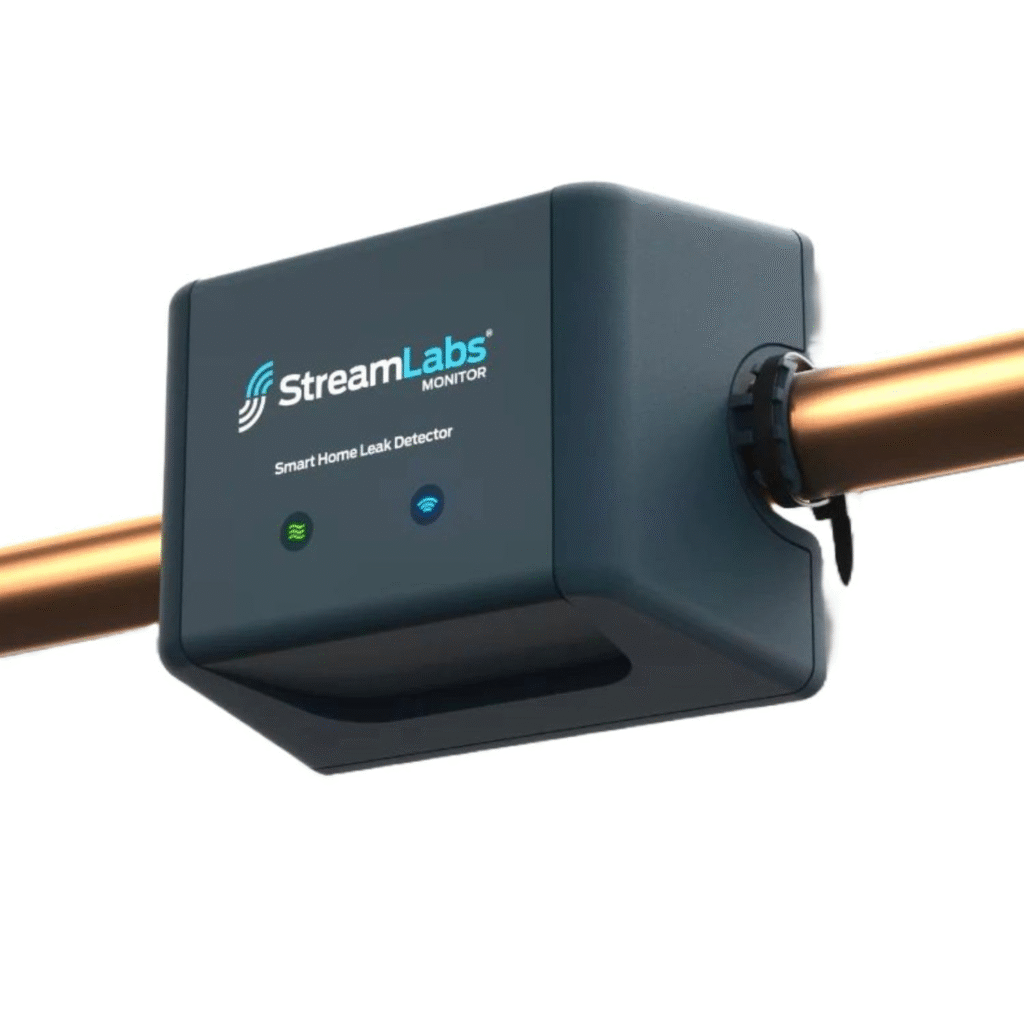
Price: ~$200 (DIY installation)
What makes it essential: The StreamLabs monitor clamps onto your main water pipe—no cutting, no plumbing modifications required. It uses ultrasonic sensors to detect flow and leaks through the pipe wall, making it ideal for renters, condos, and anyone who can’t modify plumbing.
Key details that matter: The clamp-on installation takes under five minutes and requires no tools beyond a screwdriver. The device learns your usage patterns over two weeks and then alerts you to anomalies. It doesn’t shut off water itself, but it integrates with shutoff valves from other manufacturers and provides the earliest possible leak detection.
Where to install it: Any accessible water pipe, typically in a utility room, basement, or under a sink. Ideal for renters who can’t modify plumbing.
What to watch: The clamp-on design limits accuracy compared to inline sensors. Very small leaks may not register immediately. The device requires a strong WiFi signal and AC power. It works best as an early warning system paired with manual or automatic shutoff capability.
Real-world performance: A condo owner in a high-rise installs StreamLabs on their unit’s incoming water line. The device detects anomalous flow indicating a leak in the wall between their unit and the neighbor’s. The alert allows early intervention before the leak damages both units’ drywall and flooring, avoiding a $12,000 repair and insurance dispute.
12. Flume 2 Smart Home Water Monitor
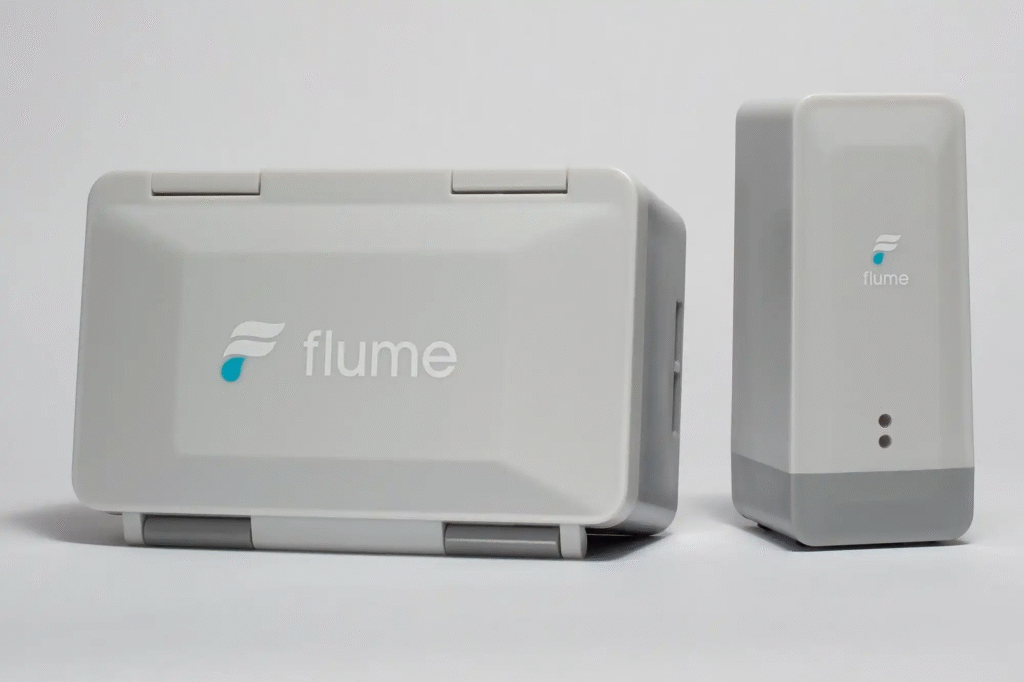
Price: ~$200 (DIY installation)
What makes it essential: Like StreamLabs, the Flume 2 clamps onto your water meter without plumbing modifications. But it adds detailed water usage tracking that helps you identify waste, optimize consumption, and detect leaks so small they don’t trigger flow-based systems.
Key details that matter: The Flume 2 straps to your water meter and reads the magnetic field generated by water flow. It measures usage in real-time with gallon-level precision. The app shows hourly, daily, and monthly usage patterns, and alerts you to continuous flow that indicates leaks.
Where to install it: Any home with an accessible water meter, typically in a basement, utility room, or meter pit.
What to watch: The Flume 2 detects leaks but doesn’t shut off water. It must be paired with a separate shutoff valve for automatic protection. The device requires a bridge unit that connects to your WiFi; placement must allow communication between the meter sensor and the bridge.
Real-world performance: A homeowner notices their daily water usage has crept up by 40 gallons despite no change in habits. The Flume 2 data shows continuous overnight flow of 2 gallons per hour. Investigation reveals a leaking toilet flapper that would have eventually damaged the subfloor and wasted 17,000 gallons annually.
13. Eve Water Guard
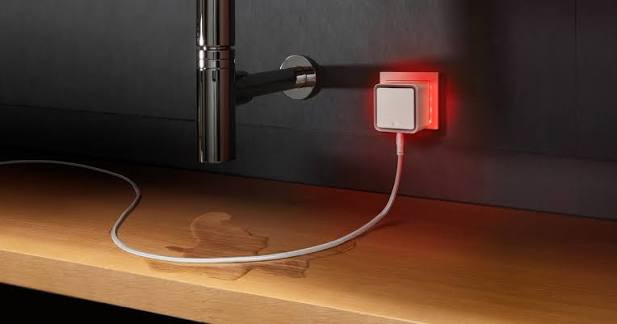
Price: ~$100
What makes it essential: The Eve Water Guard is designed for Apple HomeKit users who prioritize privacy. It connects directly to your iPhone or HomeKit hub via Thread or Bluetooth—no cloud service, no account creation, no data leaving your home. All processing is local.
Key details that matter: The sensor includes a 6.5-foot sensing cable that detects water along its entire length, not just at a single point. This makes it ideal for protecting baseboards, perimeters of rooms, and long runs of pipe. The cable is replaceable if damaged, extending the device’s lifespan.
Where to place it: Along baseboards in finished basements, behind appliances with long water lines, and along the perimeter of rooms where flooding would spread.
What to watch: The Eve Water Guard requires an Apple HomeKit hub (HomePod, Apple TV, or iPad) for remote notifications. Without the hub, you only get local alerts when your iPhone is in Bluetooth range. The Thread connectivity requires a Thread border router (HomePod Mini or Apple TV 4K).
Real-world performance: A privacy-conscious homeowner installs Eve Water Guards along the baseboards of their finished basement. When a foundation crack allows water intrusion during heavy rain, the sensing cable detects moisture at multiple points along the wall. The HomeKit automation triggers the sump pump, sends notifications, and activates basement lights for visual inspection. No cloud service processes the alert.
14. Resideo Wi-Fi Water Leak and Freeze Detector
Price: ~$70
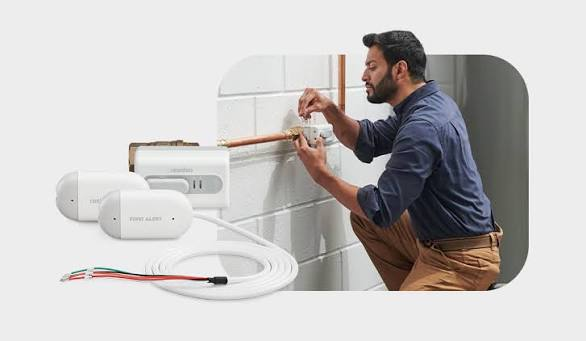
What makes it essential: The Resideo detector (formerly Honeywell Home) combines water, temperature, and humidity monitoring in one device. The humidity sensor is particularly valuable—it detects conditions that promote mold growth even before visible water appears, and it can indicate leaks hidden inside walls where moisture evaporates into the air before reaching the floor.
Key details that matter: The device connects directly to WiFi and integrates with Resideo’s broader home comfort ecosystem. The humidity alert triggers at 70% relative humidity—a threshold where mold growth accelerates. The temperature alert triggers at 41°F, providing freeze warnings. The app shows historical graphs of all three measurements, helping you identify gradual changes that indicate developing problems.
Where to place it: Basements, crawl spaces, and areas where hidden leaks and humidity are concerns. The humidity detection makes it ideal for finished basements where mold would damage drywall and flooring before water ever reaches the floor.
What to watch: The Resideo device is larger than competitors (3.5 x 3.5 x 1.2 inches), limiting placement options in tight spaces. It requires AC power with battery backup—there’s no battery-only mode. The WiFi dependency means no alerts during internet outages.
Real-world performance: A homeowner places the Resideo detector in a finished basement after noticing a musty smell. The humidity graph shows a gradual rise from 55% to 72% over three weeks. Investigation reveals a leaking foundation wall behind drywall that would have caused $15,000 in mold remediation if left undetected.
15. Kangaroo Water + Climate Sensor
Price: ~$30
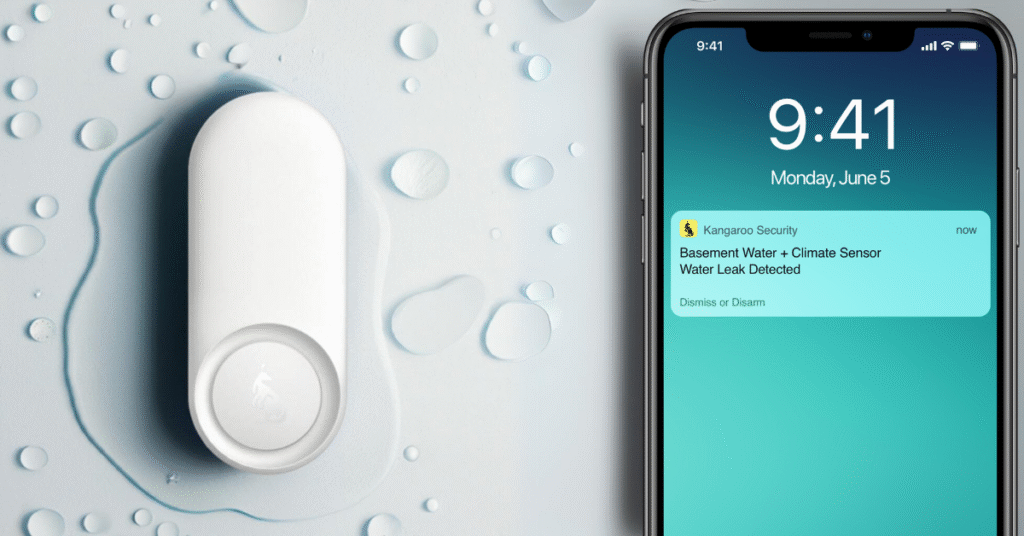
What makes it essential: The Kangaroo sensor is the most affordable entry point for water, temperature, and humidity monitoring. It sacrifices some features of premium options but delivers core protection at a price that allows comprehensive coverage even on tight budgets.
Key details that matter: The sensor detects water through contact points on its base and monitors temperature and humidity through internal sensors. It connects directly to WiFi without a hub. The Kangaroo app allows unlimited sensors at no additional cost—there’s no subscription tier limiting device count.
Where to place it: Budget-conscious homes where maximum sensor coverage matters more than premium features. Ideal for rental properties, vacation homes, and first-time smart home users.
What to watch: The sensor is smaller and less robust than premium alternatives. The battery lasts approximately one year—shorter than the two-year life of competitors. The app is functional but lacks the detailed analytics of Moen, Phyn, or Flume. Temperature and humidity alerts are basic threshold-based, not trend-analyzing.
Real-world performance: A landlord installs Kangaroo sensors under sinks and behind toilets in six rental units. Total cost: $180. When a tenant’s dishwasher fails during a holiday weekend, the sensor alerts immediately. The landlord’s maintenance team responds before the leak damages the unit below, preserving tenant relationships and avoiding a $5,000 insurance claim that would have raised premiums.
Building Your Water Leak Prevention System: A Practical Approach
You don’t need all 15 devices. Start with your highest-risk areas and expand based on your home’s specific vulnerabilities.
Phase 1: Detection Foundation ($100–$200)
- Place 3–5 water leak sensors at critical points: washing machine, water heater, kitchen sink, basement sump pit, and behind toilets.
- Choose based on your ecosystem: Govee for standalone simplicity, Aqara for local hub-based reliability, or Eve for Apple privacy.
Phase 2: Automatic Response ($300–$800)
- Add an automatic shutoff valve at the main line (Moen Flo or Phyn Plus for whole-house protection, or Dome for budget-friendly integration).
- Connect sensors to the shutoff system so leaks trigger automatic response without requiring your intervention.
Phase 3: Comprehensive Monitoring ($200–$400)
- Add a whole-house flow monitor (StreamLabs or Flume 2) for early leak detection and usage optimization.
- Expand sensor coverage to secondary locations: second bathrooms, utility sinks, refrigerator water lines, and HVAC drain pans.
Phase 4: Integration and Automation ($100–$200)
- Connect all devices to your smart home platform for unified alerts and automated responses.
- Create routines: leak detected → lights turn on → cameras activate → shutoff valve closes → family receives notification.
The Bottom Line
Water damage is the most likely and most expensive threat to your home. Smart home gadgets for home security have evolved to address this threat directly, affordably, and automatically. A $30 sensor can prevent $30,000 in damage. A $500 shutoff valve can save your home while you’re on vacation.
The question isn’t whether you can afford water leak prevention. It’s whether you can afford to skip it.
Start with detection. Add automation. Build confidence. Your future self—facing a 2 AM alert about a washing machine hose—will be grateful you did.
Have you experienced a water leak that smart technology could have prevented? Or have you installed a system that’s already paid for itself? Share your story in the comments—real experiences help others understand what’s truly at stake.