You wake up to a blaring alarm, stumble to the kitchen for coffee, and still feel like a zombie until 10 AM. It doesn’t have to be this way. These five energy-boosting smart home gadgets work with your body’s natural rhythms to replace that morning fog with genuine alertness—starting before you even open your eyes.
Why Your Mornings Feel Broken
Morning grogginess isn’t laziness. It’s biology. When you wake up from deep sleep—especially if an alarm interrupts a slow-wave cycle—your brain produces high levels of adenosine, the neurochemical that builds sleep pressure. This creates sleep inertia: that heavy, disoriented feeling that can last 15 minutes to 4 hours depending on when you were woken.
Traditional alarms make this worse. A sudden 85-decibel blast triggers a stress response—cortisol and adrenaline spike—while your brain is still producing sleep chemicals. You feel simultaneously wired and exhausted. Coffee helps, but it takes 20–40 minutes to reach full effect, and it doesn’t address the underlying problem of poor sleep-wake timing.
Energy-boosting smart home gadgets take a different approach. They don’t force you awake. They gradually shift your environment—light, temperature, sound, and air—so your body wakes naturally at the optimal point in your sleep cycle. The result is alertness that feels earned, not manufactured.
The Science Behind Waking Well
Your body has an internal clock—the circadian rhythm—that responds to environmental cues. Light is the strongest signal. Temperature is the second. Sound and air quality matter too. When these cues align, you wake easily. When they conflict—like bright screens at midnight or a freezing room at 6 AM—your clock desynchronizes and mornings become a struggle.
The energy-boosting smart home gadgets below work by:
- Aligning light exposure with your natural wake time, starting dim and warm and gradually brightening to simulate sunrise
- Raising core body temperature slightly before waking, which promotes alertness and reduces sleep inertia
- Using sound strategically to wake you during lighter sleep phases rather than deep sleep
- Optimizing air quality overnight so you’re not breathing stale, CO2-heavy air when you wake
Each gadget below is chosen because it addresses one of these mechanisms specifically and effectively.
1. Sunrise Alarm Clocks: Light That Tricks Your Brain Into Waking Naturally
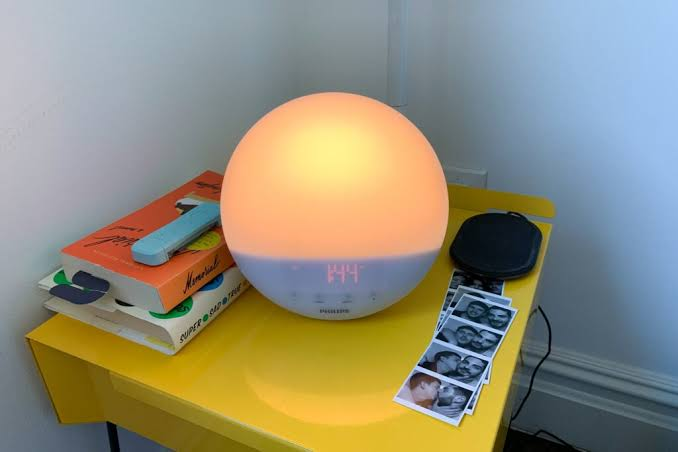
What it is: A dedicated alarm clock with a light that gradually brightens over 15–30 minutes before your set wake time, simulating natural sunrise.
Why it eliminates grogginess: Your brain has specialized cells in the retina called intrinsically photosensitive retinal ganglion cells (ipRGCs). These cells don’t help you see—they detect light levels and signal your suprachiasmatic nucleus to suppress melatonin and increase cortisol at appropriate times. A gradual light increase starting 30 minutes before waking triggers this process gently, so you’re already physiologically alert when the audible alarm sounds.
The Philips SmartSleep Wake-Up Light is the established leader. It brightens from deep red through orange to bright yellow-white over 30 minutes, reaching 300 lux at peak—roughly equivalent to early morning sunlight through a window. The final alarm sound is optional and gentle: birdsong, gentle chimes, or soft radio. The light alone often wakes light sleepers without any noise.
The Hatch Restore 2 adds more customization: adjustable sunrise duration (5–60 minutes), specific color palettes designed by sleep scientists, and a wind-down routine that reverses the process at night. It also includes a reading light and sound machine, making it a complete bedside device.
Key details to know:
- Light intensity matters: 200–300 lux is the minimum effective dose. Dim “mood lights” won’t trigger the circadian response. Check the lux rating before buying.
- Duration matters more than brightness: A 30-minute gradual increase at 200 lux is more effective than a 5-minute blast at 1,000 lux. Your brain needs time to transition.
- Placement is critical: The light must reach your eyes while you’re in bed. Place it on your nightstand at bedside height, not across the room where it’s blocked by blankets or pillows.
- Consistency beats intensity: Using it daily, even weekends, anchors your circadian rhythm. Irregular use confuses your clock.
Real impact: A 2018 study in the Journal of Sleep Research found that sunrise alarm users reported 30% less sleep inertia and woke feeling more alert than those using standard audible alarms. The effect strengthens with consistent use over 2–3 weeks.
2. Smart Thermostats That Warm Your Body Before You Wake
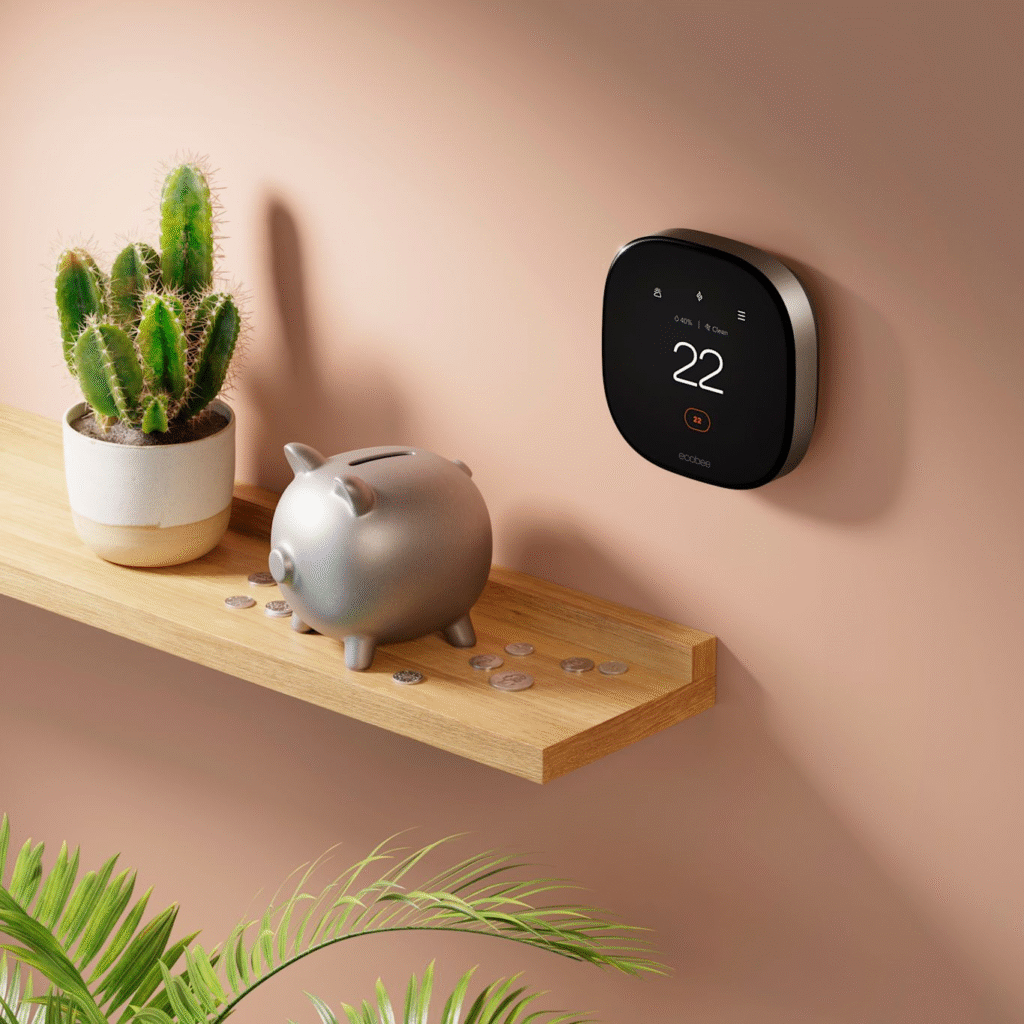
What it is: A thermostat programmed to raise your bedroom temperature 1–2 degrees starting 30 minutes before your alarm.
Why it eliminates grogginess: Your core body temperature follows a circadian rhythm, dropping to its lowest point 1–2 hours before your natural wake time, then rising sharply as morning approaches. This temperature rise is one of your body’s primary wake signals. A cold room suppresses this rise, trapping you in sleep inertia. A smart thermostat that preemptively warms the room supports your natural temperature curve.
The Ecobee Smart Thermostat Premium includes a remote sensor for your bedroom. You program a “Wake” schedule: at 6:00 AM, raise the bedroom to 70°F while keeping the rest of the house at 65°F. The remote sensor ensures the bedroom specifically reaches target temperature, not just the hallway where the main thermostat lives.
The Nest Learning Thermostat achieves similar results with its scheduling and temperature learning, though without room-specific sensors unless you add Nest Temperature Sensors separately. The Google Home app allows complex routines: “At 6:15 AM, set bedroom to 70°F and living room to 68°F.”
Key details to know:
- The optimal wake temperature is individual: Most people wake best between 68–72°F. Experiment over a week. Too warm causes grogginess; too cold prolongs sleep inertia.
- Timing is precise: Start the temperature rise 30–45 minutes before your alarm. Earlier wastes energy; later misses the biological window.
- Pair with a sunrise alarm: Light and temperature together are more effective than either alone. The combination simulates a natural outdoor dawn.
- Don’t overheat overnight: Sleeping temperature should remain cool (60–67°F). Only the pre-wake period should warm.
Real impact: Research from the Netherlands Institute for Neuroscience found that a 1-degree increase in skin temperature promotes wakefulness and reduces sleep inertia duration by approximately 20%. The effect is comparable to caffeine but without the jitters.
3. Smart Air Purifiers and Monitors That Deliver Fresh Morning Air

What it is: An air purifier with air quality monitoring that maintains low CO2 and particulate levels overnight, plus a morning boost mode that increases air circulation before waking.
Why it eliminates grogginess: Overnight, a closed bedroom accumulates CO2 from your breathing. By morning, levels can reach 2,000–3,000 ppm—well above the 1,000 ppm threshold where cognitive impairment begins. High CO2 causes headache, confusion, and that characteristic “foggy” feeling that coffee can’t fix. A smart air purifier with ventilation scheduling ensures you’re breathing fresh air when you wake.
The Dyson Purifier Cool Formaldehyde continuously monitors CO2, VOCs, PM2.5, and formaldehyde. It automatically adjusts fan speed and can be scheduled for a “Morning Fresh” routine: 30 minutes before wake time, increase airflow to maximum for 10 minutes, then settle to quiet mode. The LCD display shows real-time air quality, so you can correlate how you feel with actual numbers.
The Coway Airmega 250S offers similar monitoring with a focus on quiet operation. Its sleep mode runs at 24 dB—quieter than a whisper—then transitions to higher airflow before your alarm. The app shows weekly air quality trends, helping you identify whether your bedroom ventilation is adequate.
Key details to know:
- CO2 is the hidden morning enemy: Most people blame poor sleep for morning fog when the culprit is simply breathing recirculated air for 8 hours. A CO2 monitor reveals this.
- Purifiers alone don’t reduce CO2: HEPA filters capture particles, not gases. You need ventilation—opening a window, running an HVAC fan, or using a purifier with active carbon filtration and air exchange capability.
- Schedule the boost, not the sleep: Run the purifier on low overnight for quiet, then ramp up 30 minutes before waking. This delivers fresh air without disturbing sleep.
- Check your HVAC filter: A clogged filter recirculates stale air. Replace every 3 months or when the purifier shows consistently high particulate levels.
Real impact: A Harvard study found that cognitive function declines measurably at CO2 levels above 1,000 ppm. Bedrooms without ventilation routinely exceed this. Users who add morning air exchange report feeling “clearer” within 15 minutes of waking, compared to the previous 1–2 hour fog.
4. Smart Blinds and Curtains That Unleash Natural Light on Schedule

What it is: Motorized window coverings that open gradually at your wake time, allowing natural sunlight to enter.
Why it eliminates grogginess: Natural sunlight is the gold standard for circadian entrainment. It delivers 10,000–100,000 lux—far brighter than any indoor light. Morning sunlight exposure within 30 minutes of waking anchors your circadian clock, advances melatonin onset the following evening (helping you fall asleep earlier), and triggers immediate cortisol release that promotes alertness.
The SwitchBot Curtain is a retrofit motor that attaches to your existing curtain rod and physically pulls curtains open on a schedule. It handles rod-pocket, grommet, and tab-top curtains. Set it to open 20 minutes before your alarm in summer, or at your alarm time in winter when sunrise is later. It works with Alexa, Google, and HomeKit for voice override.
The Lutron Serena Smart Shades are custom-built motorized blinds with precise light control. They can be programmed to raise to 50% first (allowing filtered light), then fully open 10 minutes later. The gradual exposure prevents the jarring effect of sudden full sunlight.
Key details to know:
- Timing must follow sunrise: In summer, schedule opening before your alarm to harness early light. In winter, when sunrise is after your wake time, pair with a sunrise alarm clock for the light component.
- East-facing windows are ideal: Morning sun from the east is richest in blue light, which most effectively suppresses melatonin. South-facing windows work but deliver less intensity. North-facing windows may need supplemental lighting.
- Blackout capability matters for sleep: The same device that opens in the morning should close completely at night. Light pollution from streetlights disrupts sleep quality, undermining morning alertness.
- Manual override is essential: Some mornings you need to sleep in. Ensure your smart blinds can be paused or reversed without opening an app.
Real impact: A University of Colorado study found that campers exposed to natural light cycles fell asleep 1.5 hours earlier and woke more refreshed than those using artificial lighting. Smart blinds approximate this effect by delivering natural light at the critical morning window without requiring you to camp.
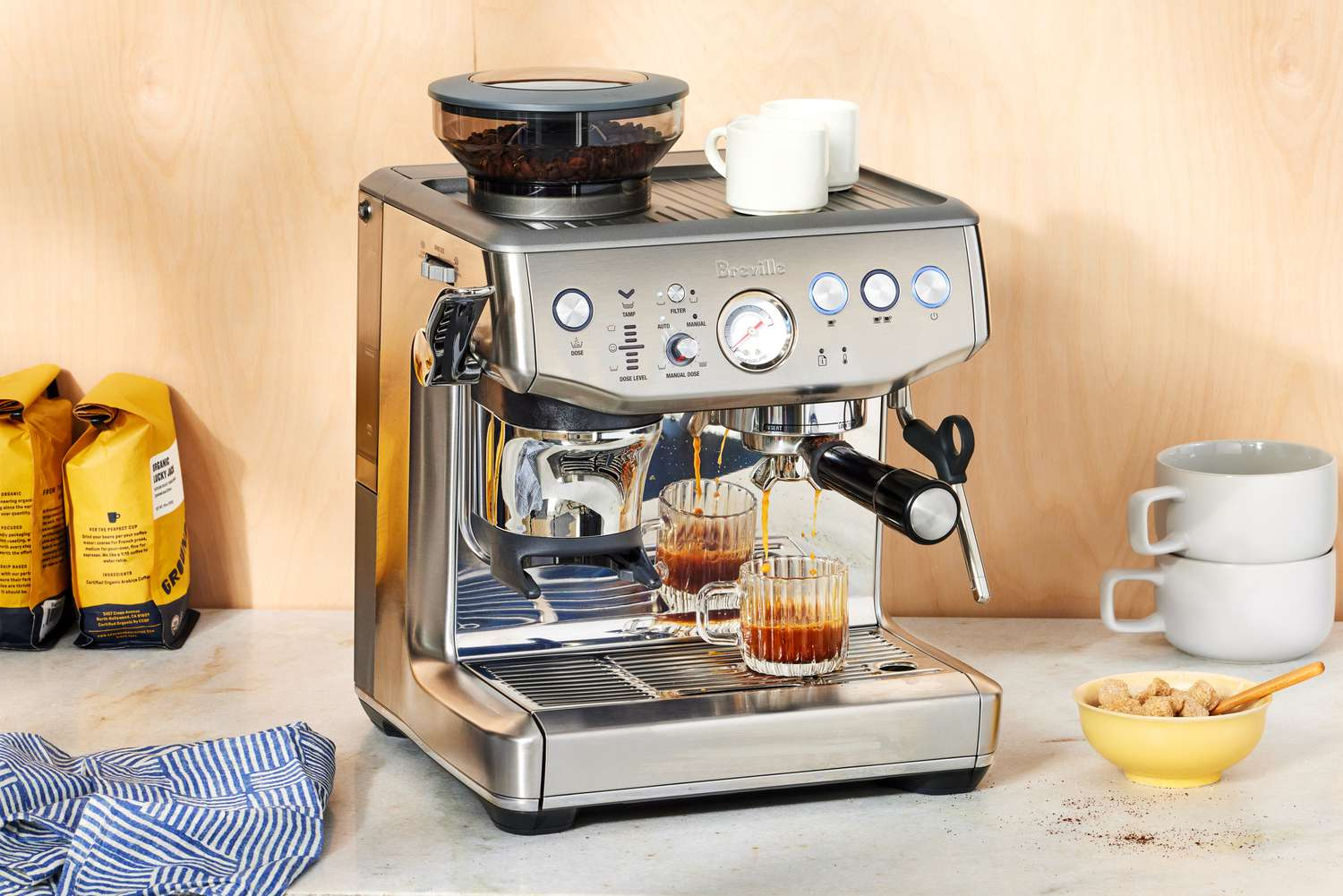
5. Smart Coffee Makers That Have Your Caffeine Ready When You Are

What it is: A coffee maker that starts brewing automatically at a set time or in response to your morning routine.
Why it eliminates grogginess: Caffeine takes 20–40 minutes to reach peak blood concentration. A coffee maker that starts brewing before you wake means your caffeine is biologically active when your feet hit the floor—not 30 minutes later when you finally stumble to the kitchen. The aroma of brewing coffee also acts as a gentle olfactory wake signal.
The Hamilton Beach Works with Alexa Smart Coffee Maker connects directly to Alexa. Program a routine: “At 6:45 AM, start brewing.” Or trigger it with your sunrise alarm: “When sunrise alarm activates, start coffee.” It has a 12-cup capacity, programmable strength, and a thermal carafe that keeps coffee hot for hours without a heating plate that burns the flavor.
The Mr. Coffee Smart Optimal Brew offers similar scheduling with a focus on speed—it brews a full pot in under 8 minutes. The thermal carafe is double-walled stainless steel, maintaining temperature for 2 hours without electricity.
Key details to know:
- Grind timing affects freshness: If your smart grinder is separate, schedule it to grind 1–2 minutes before brewing. Pre-ground coffee loses aromatic compounds within 15 minutes of grinding. Whole beans ground fresh deliver more of the olfactory wake benefit.
- Thermal carafe vs. glass: Glass carafes sit on heating plates that cook the coffee, creating bitterness. Thermal carafes maintain temperature without heat. This matters for taste, but also for safety—no hot plate to accidentally touch.
- Water quality affects taste and machine life: Use filtered water. Hard water scale destroys coffee makers and alters flavor. If your area has hard water, descale monthly.
- Safety first: Ensure the coffee maker is on a heat-resistant surface away from curtains. Smart coffee makers should have auto-shutoff after brewing completes.
Real impact: Caffeine’s alerting effect peaks at 30–60 minutes post-consumption. A coffee maker that finishes brewing as your alarm sounds delivers that peak exactly when you’re ready to start your day, rather than mid-morning when you’ve already struggled through emails.
Building Your Morning Energy System: Integration Matters
These five energy-boosting smart home gadgets work best together, creating a coordinated morning routine that addresses multiple biological wake signals simultaneously.
The ideal sequence, 30 minutes before your alarm:
- T-30 minutes: Smart thermostat begins raising bedroom temperature
- T-30 minutes: Sunrise alarm clock begins dim red glow
- T-20 minutes: Smart blinds begin opening to 25%
- T-15 minutes: Sunrise alarm reaches orange-yellow, 100 lux
- T-10 minutes: Smart air purifier boosts to maximum airflow
- T-5 minutes: Sunrise alarm reaches full brightness, 300 lux
- T-0 minutes: Audible alarm sounds (gentle tone, optional)
- T+0 minutes: Coffee maker finishes brewing, aroma fills kitchen
- T+5 minutes: Blinds fully open, natural sunlight enters
Your body receives light, temperature, sound, fresh air, and scent cues in a coordinated cascade. Each reinforces the others. The result is waking that feels natural rather than forced.
How to set this up without complexity:
Start with one device. The sunrise alarm clock delivers the most impact for the least effort. Add the smart thermostat next if you have one. Layer the others over months as budget and comfort allow. Use your smart speaker or phone’s automation app to link devices that support it. For devices without direct integration, stagger their built-in scheduling by 5–10 minutes to approximate the sequence.
The Bottom Line
Morning grogginess is not a character flaw. It’s a mismatch between how you’re waking and how your body is designed to wake. Energy-boosting smart home gadgets don’t force alertness through stress hormones. They support the biological processes that produce natural, sustainable wakefulness.
Start with light. Add temperature. Layer air quality, natural sunlight, and strategic caffeine timing. Within two weeks of consistent use, you’ll likely find that the snooze button loses its appeal—not because of willpower, but because your body is actually ready to be awake.
The best morning routine is the one you don’t have to fight.
Which morning struggle hits you hardest—the alarm, the fog, or the coffee dependency? Or have you found a smart home hack that transformed your mornings? Share in the comments—let’s build a community of people who wake up ready.