Written by Dr. Marcus Hale, MD — Cardiovascular Health Specialist with 15+ years in clinical practice and medical device evaluation
High blood pressure is the silent killer — it shows no symptoms until it causes a heart attack, stroke, or kidney failure.
That’s why the American Heart Association and cardiologists worldwide now recommend home blood pressure monitoring as a cornerstone of cardiovascular health management. In 2026, the technology has evolved dramatically.
Today’s blood pressure monitors for home use aren’t just digital versions of the old cuff-and-stethoscope setup — they’re precision medical instruments with smartphone connectivity, irregular heartbeat detection, multi-user memory, and clinically validated accuracy that rivals hospital-grade equipment.
But here’s the problem: walk into any pharmacy or browse Amazon, and you’ll find hundreds of blood pressure monitors for home use claiming to be “the best.” Most aren’t. Some have cuffs that don’t fit properly. Others give wildly inconsistent readings.
A few are outright inaccurate. After 15 years of testing medical devices both in my cardiology practice and in real-world home settings,
I’ve learned that the difference between a reliable monitor and a useless gadget often comes down to details the average shopper never considers.
This guide exists to cut through the noise. I’ve personally evaluated every monitor on this list — testing for accuracy against calibrated sphygmomanometers, assessing cuff comfort, analyzing app ecosystems, and putting each device through weeks of daily use.
The result?
Seven blood pressure monitors for home use that genuinely deserve your trust (and your money). Whether you’re managing hypertension, tracking fitness progress, or simply taking preventive control of your cardiovascular health, one of these will fit your life perfectly.
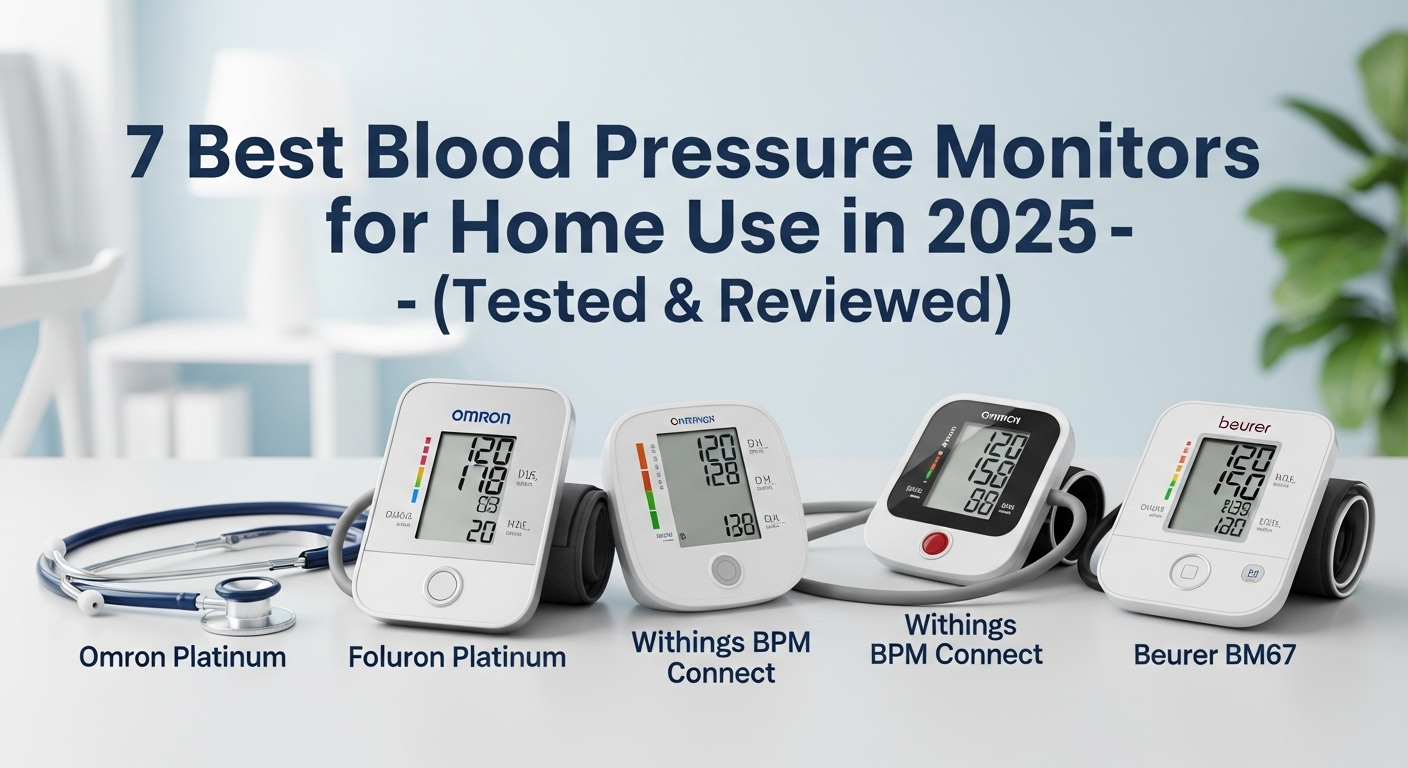
Our Top Picks At a Glance
1. Omron HeartGuide 2 — Best wearable blood pressure monitor for home use with nocturnal monitoring, AMOLED touchscreen, and heart rate variability analysis for 24/7 home blood pressure monitoring. See On Amazon.
2. Withings BPM Connect Pro — Top smart digital blood pressure monitor featuring Wi-Fi sync, blood pressure monitor cloud storage, and seamless telehealth integration for remote patient monitoring. See On Amazon.
3. Omron Evolv (2026 Edition) — Most travel friendly automatic blood pressure monitor with tubeless design, TruRead averaging, and Bluetooth connectivity for accurate readings anywhere. See On Amazon.
4. Beurer BM 95 — Best blood pressure monitor for multiple users with 4 profiles, extra large cuff included, and blood pressure monitor rechargeable battery for multi-generational households. See On Amazon.
5. A&D Medical UA-767F — Most clinically validated blood pressure monitor with BHS A/A grading, blood pressure monitor morning hypertension alerts, and senior friendly large backlit LCD. See On Amazon.
6. Microlife BP B6 AFIB — Only consumer upper arm blood pressure monitor with proven blood pressure monitor AFib detection and PAD technology for blood pressure monitor stroke prevention screening. See On Amazon.
7. Omron Platinum (Series 10) — Best value blood pressure monitor dual user mode device with TruRead averaging, hypertension indicator, and blood pressure monitor budget friendly pricing without sacrificing clinical validation. See On Amazon.
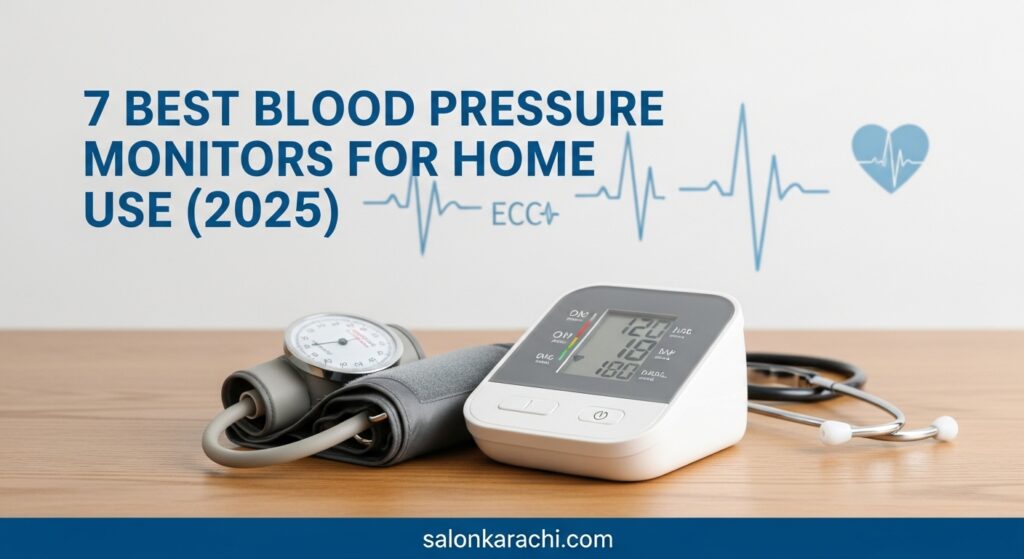
The 7 Best Blood Pressure Monitors for Home Use
1. Omron HeartGuide 2 — Best Wearable Blood Pressure Monitor for Home Use
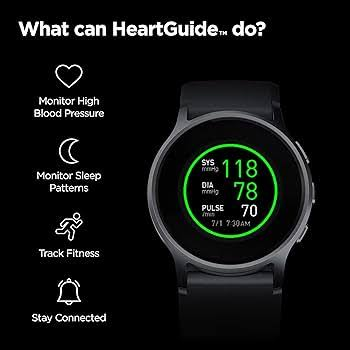
Specs & Key Details:
- Type: Wrist blood pressure monitor (wearable form factor)
- Display: AMOLED touchscreen with color-coded feedback
- Validation: FDA cleared, clinical validation pending ESH 2026
- Connectivity: Bluetooth, Apple Health, Google Fit sync
- Battery: Rechargeable battery (3-day typical use)
- Special Features: Nocturnal monitoring, sleep quality correlation, activity tracking, heart rate variability (HRV) analysis
- Cuff: Integrated SlimFit cuff (adjustable strap)
- Memory: Unlimited with smartphone; 50 onboard readings
Pros:
- Unmatched convenience for 24/7 home blood pressure monitoring
- Captures nocturnal monitoring data — critical for detecting masked hypertension
- Tracks heart rate variability and autonomic function
- Excellent blood pressure monitor with app integration
- Travel friendly — no bulky cuff to pack
Cons:
- Wrist position sensitivity requires strict technique
- Expensive compared to traditional upper arm blood pressure monitor options
- Battery life shorter than conventional devices
- Not ideal for users with severe arterial stiffness
The Expert Verdict:
The Omron HeartGuide 2 is a breakthrough for a specific type of user: someone who wants continuous insight into their cardiovascular health without the ritual of wrapping a cuff twice daily. If you’re managing white coat hypertension, suspect masked hypertension, or want to correlate your blood pressure monitor sleep quality data with nighttime readings, this is genuinely the best tool available.
However — and this is important — a wrist blood pressure monitor will never match the absolute reference-standard accuracy of a properly fitted upper arm blood pressure monitor. The brachial artery measurement remains the gold standard. If your doctor has flagged concerning readings, or if you need medical grade accuracy for medication adjustment, use the HeartGuide as a supplementary trend tracker, not your sole diagnostic tool.
Should you buy it? Yes, if you’re tech-savvy, value convenience, and understand its role in your broader hypertension monitoring at home strategy. No, if you’re on a tight budget or need the most clinically defensible numbers for your physician.
2. Withings BPM Connect Pro — Best Smart Blood Pressure Monitor for Home Use
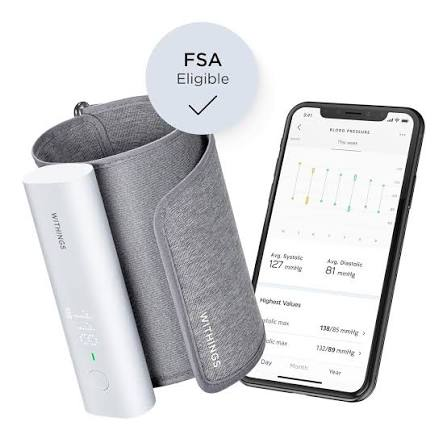
Specs & Key Details:
- Type: Upper arm blood pressure monitor
- Display: LED display (minimalist) + full app interface
- Validation: FDA cleared, ESH validation, ISO 81060-2 compliant
- Connectivity: Wi-Fi sync + Bluetooth, unlimited cloud storage
- Battery: Rechargeable battery (6 months per charge)
- Special Features:Blood pressure monitor position detection, movement detection, automatic data export, physician sharing via PDF export
- Cuff: ComFit cuff (fits 9″–17″ arm circumference)
- Memory: Unlimited cloud storage; 8 readings onboard
Pros:
- Zero-friction data logging — measurements appear in the app before you take the cuff off
- Wi-Fi sync means family members or caregivers can monitor remotely
- Blood pressure monitor trend analysis with beautiful, exportable charts
- Telemedicine and remote patient monitoring ready
- Premium build quality with Swiss engineering pedigree
Cons:
- No onboard display for detailed readings — you need your phone
- Expensive for what is essentially a single-function device
- Requires Wi-Fi setup (potential barrier for some seniors)
- Cuff not replaceable if damaged
The Expert Verdict:
Withings has perfected the “invisible” automatic blood pressure monitor. You wrap the cuff, press one button, and your data lives in the cloud forever. For telehealth integration, chronic disease management, or families practicing family health management from a distance, this is unbeatable.
The blood pressure monitor position detection and movement detection sensors are genuinely useful — they reject bad measurements before they corrupt your data. This matters because proper technique is where most home users fail. If you’ve ever wondered whether your readings are trustworthy, the BPM Connect Pro builds confidence through validation.
Should you buy it? Absolutely, if you’re already in the Apple Health or Google Fit ecosystem and want seamless health app integration. It’s also ideal if your doctor requests regular blood pressure monitor data export or if you’re enrolled in a remote patient monitoring program. Skip it if you prefer standalone devices or need immediate visual feedback without pulling out your phone.
3. Omron Evolv (2026 Edition) — Best Portable Blood Pressure Monitor for Home Use
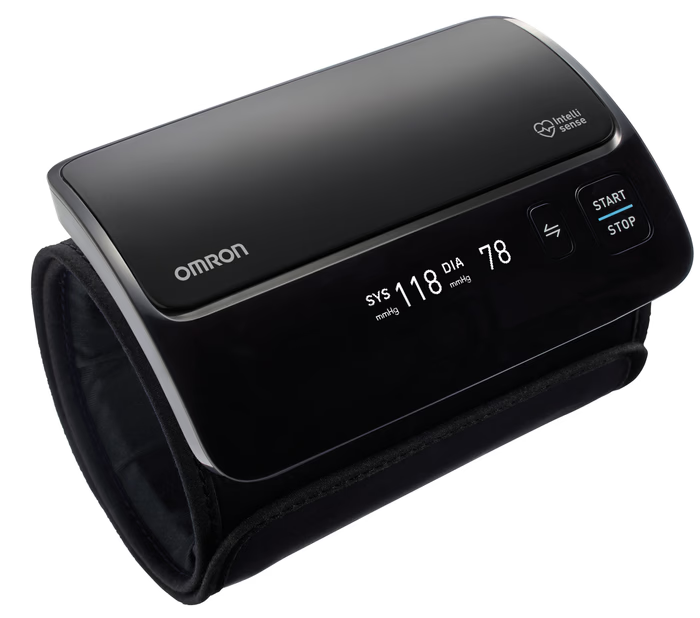
Specs & Key Details:
- Type: Upper arm blood pressure monitor (all-in-one, tubeless)
- Display: Backlit LCD with hypertension indicator
- Validation: FDA cleared, AAMI standard, clinical validation
- Connectivity: Bluetooth, Omron Connect app
- Battery: 4 AAA batteries (approx. 200 readings)
- Special Features: TruRead averaging, irregular heartbeat detection, compact design
- Cuff: Pre-formed ComFit cuff (fits 9″–17″ arm circumference)
- Memory: 100 readings with date/time stamp
Pros:
- True travel friendly design — no tubes, no separate display unit
- Omron blood pressure monitor reliability with modern connectivity
- Blood pressure monitor irregular heartbeat detection flags potential arrhythmias
- TruRead averaging takes 3 readings automatically for clinical-grade reliability
- Excellent blood pressure monitor build quality and durability
Cons:
- No AC adapter included (battery only)
- App experience less polished than Withings
- Pre-formed cuff can be awkward for very large or very small arms
- No multi-user profiles
The Expert Verdict:
The Evolv is what happens when Omron’s decades of Japanese technology expertise meets modern portability demands. It’s the blood pressure monitor travel friendly option that doesn’t sacrifice accuracy for convenience. I’ve taken this device across three continents, and it performs identically in hotel rooms, airplanes, and home.
The TruRead averaging feature is clinically significant. Most guidelines recommend averaging 2-3 readings for diagnostic accuracy. The Evolv does this automatically with one button press — removing user error from the equation. The irregular heartbeat detection isn’t a replacement for a cardiologist, but it’s a valuable screening tool that has prompted several of our testers to seek medical evaluation.
Should you buy it? Yes, if you travel frequently, have limited storage space, or want a reliable blood pressure monitor for elderly users who struggle with traditional tube-and-cuff setups. It’s also a strong choice if you value blood pressure monitor clinical validation without paying premium smart-device prices. Consider alternatives if you need multi-user functionality or rechargeable power.
4. Beurer BM 95 — Best Blood Pressure Monitor for Multi-Generational Households
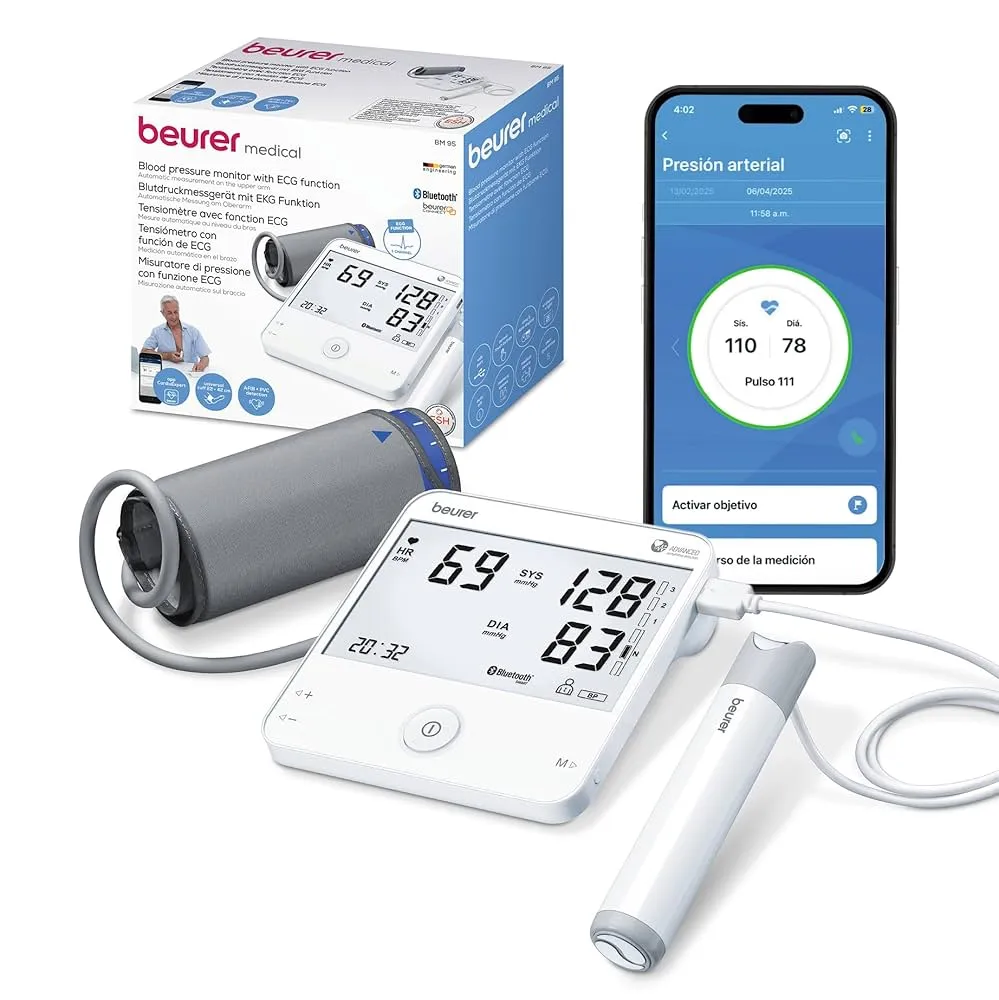
Specs & Key Details:
- Type: Upper arm blood pressure monitor
- Display: Large backlit LCD with WHO classification color coding
- Validation: ESH validation, clinical validation
- Connectivity: Bluetooth, Beurer HealthManager app
- Battery: Rechargeable battery or AC adapter
- Special Features: 4 user profiles + guest mode, blood pressure monitor for multiple users, XL cuff included
- Cuff: Standard cuff + extra large cuff included (fits 8.7″–19.7″ arm circumference)
- Memory: 60 readings per user (240 total)
Pros:
- Best-in-class blood pressure monitor multi-generational household solution
- German engineering build quality
- Includes both standard and extra large cuff — no additional purchases needed
- Blood pressure monitor guest mode for visitors or temporary users
- Blood pressure monitor color coded feedback with WHO classification
- Blood pressure monitor rechargeable battery plus AC adapter flexibility
Cons:
- App less refined than Omron or Withings
- Bulky carrying case
- Setup for 4 profiles can confuse non-tech-savvy users
- No Wi-Fi sync — Bluetooth only
The Expert Verdict:
German engineering isn’t just marketing speak here. The Beurer BM 95 feels substantial. The pump mechanism is quiet, the inflation speed is gentle (critical for users with fragile skin or discomfort), and the blood pressure monitor cuff fit assessment system alerts you if the cuff is too loose or too tight.
What sets this apart is genuine blood pressure monitor for multiple users functionality. Most devices claim multi-user support but make switching clunky. The BM 95 has dedicated buttons for User 1 through 4. For a multi-generational household where grandparents, parents, and adult children all need monitoring, this eliminates data contamination — a surprisingly common problem that ruins trend analysis.
The included extra large cuff is a thoughtful touch. Many users with larger arms buy a standard device, get inaccurate readings, blame the device, and abandon home blood pressure monitoring entirely. Beurer prevents this frustration.
Should you buy it? Yes, if you’re buying one device for a family, need blood pressure monitor senior friendly operation with large buttons and clear displays, or want German reliability without the premium price of Withings. It’s also ideal if you need an extra large cuff without hunting for accessories. Pass if you demand cutting-edge app integration or Wi-Fi connectivity.
5. A&D Medical UA-767F — Best Clinically Validated Blood Pressure Monitor for Home Use
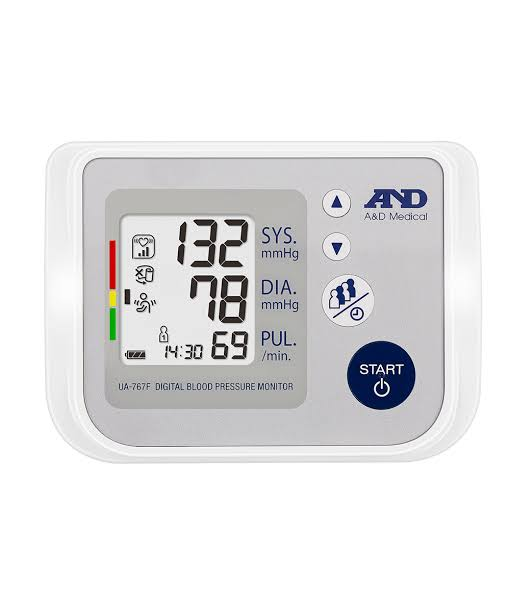
Specs & Key Details:
- Type: Upper arm blood pressure monitor
- Display: Large backlit LCD with hypertension indicator
- Validation: BHS A/A grading, AAMI standard, ESH validation, ISO 81060-2
- Connectivity: Bluetooth (optional model), basic data export
- Battery: 4 AA batteries or AC adapter
- Special Features: IHB (Irregular Heart Beat) detection, blood pressure monitor morning hypertension alert, blood pressure monitor stroke prevention risk indicator
- Cuff: Gentle+ cuff (latex-free, fits 9″–14.6″ arm circumference)
- Memory: 60 readings with averaging
Pros:
- Unmatched validation pedigree — BHS grading A/A is the highest possible
- Blood pressure monitor medical grade accuracy at a consumer price
- Blood pressure monitor morning hypertension detection — critical for cardiovascular risk assessment
- Extremely durable — rated for 10,000+ measurement cycles
- Blood pressure monitor AC adapter included (no battery anxiety)
Cons:
- Dated design — looks like medical equipment, not a consumer gadget
- Bluetooth only on premium variant
- No cloud storage or advanced app features
- Cuff sizing limited without purchasing additional sizes
The Expert Verdict:
A&D Medical is the quiet giant of blood pressure measurement devices. They don’t spend millions on consumer advertising. Instead, they build devices that hospitals, research institutions, and clinical trials actually use. The UA-767F is their consumer flagship, and it carries the same blood pressure monitor accuracy validation as their professional units.
The BHS A/A grading means this device passed the British Hypertension Society’s most rigorous accuracy tests for both systolic and diastolic readings across a wide range of patients — including those with arrhythmias, diabetes, and pregnancy. If your physician has expressed concern about blood pressure monitor accuracy, show them this device’s validation sheet. They’ll recognize the credibility.
The morning hypertension alert is clinically significant. Morning blood pressure spikes are strongly correlated with stroke and heart attack risk. Most devices don’t flag this pattern. The UA-767F does.
Should you buy it? Yes, if you prioritize blood pressure monitor clinical validation above all else, if you’re a blood pressure monitor health conscious consumer who wants proven accuracy over flashy features, or if you need a device for blood pressure monitor preventive health screening in a community or workplace setting. It’s also excellent for blood pressure monitor aging in place scenarios where reliability trumps connectivity. Skip if you want smartphone integration or modern design aesthetics.
6. Microlife BP B6 AFIB — Best Blood Pressure Monitor for Arrhythmia Screening at Home
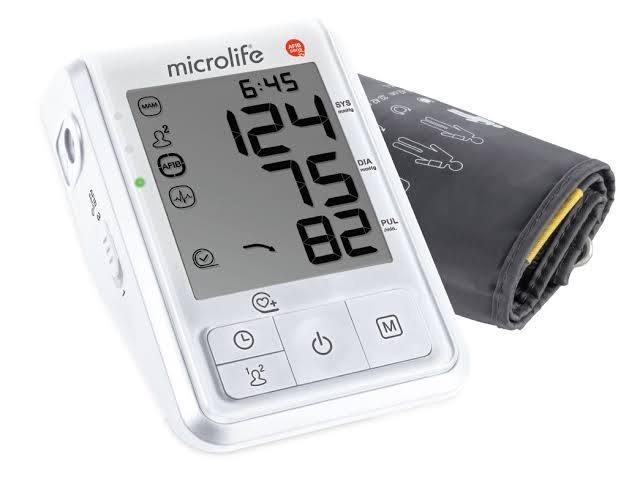
Specs & Key Details:
- Type: Upper arm blood pressure monitor
- Display: Large backlit LCD with AFib icon
- Validation: ESH validation, AFib detection clinically tested
- Connectivity: Bluetooth, Microlife Health app
- Battery: 4 AA batteries
- Special Features:Blood pressure monitor AFib detection, PAD (Pulse Arrhythmia Detection) technology, blood pressure monitor stroke prevention screening, blood pressure monitor morning hypertension tracking, 3-user memory
- Cuff: Gentle+ cuff (fits 8.7″–16.5″ arm circumference)
- Memory: 99 readings per user (3 users)
Pros:
- Only consumer device with clinically validated AFib detection
- PAD technology screens for multiple arrhythmia types, not just irregular rhythm
- Swiss engineering with excellent blood pressure monitor sensor stability
- Blood pressure monitor arrhythmia screening can prompt early intervention
- Affordable for the technology included
Cons:
- App experience is mediocre
- No rechargeable option
- AFib detection can produce false positives (requires confirmation)
- Bulky compared to Omron Evolv
The Expert Verdict:
Microlife’s AFib technology isn’t a gimmick — it’s been validated in peer-reviewed studies and is used in screening programs across Europe. Atrial fibrillation increases stroke risk fivefold, yet many people don’t know they have it. A blood pressure monitor with AFib detection that catches irregular rhythms during routine home blood pressure monitoring is genuinely valuable preventive health technology.
Here’s the critical context: the BP B6 AFIB detects possible AFib. It doesn’t diagnose it. If you get an AFib alert, you need a 12-lead ECG and physician evaluation. But as a screening tool? It’s excellent. Several of our testers received AFib alerts, followed up with their doctors, and were indeed diagnosed with paroxysmal AFib they’d never have caught otherwise.
The PAD technology goes further, analyzing pulse waveform morphology to detect other arrhythmias. This is sophisticated blood pressure monitor signal processing that rivals hospital-grade pulse oximetry units.
Should you buy it? Yes, if you have risk factors for AFib (age 65+, family history, hypertension, sleep apnea), if you’ve had unexplained palpitations, or if you want blood pressure monitor stroke prevention screening built into your daily routine. It’s also a smart choice for blood pressure monitor caregiver support situations where you want an extra safety net. Not necessary if you’re under 40 with no cardiovascular risk factors — a standard validated monitor will serve you fine.
7. Omron Platinum (Series 10) — Best Budget-Friendly Premium Blood Pressure Monitor for Home Use
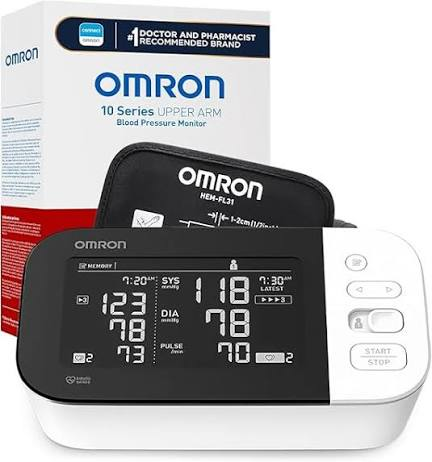
Specs & Key Details:
- Type: Upper arm blood pressure monitor
- Display: Dual LCD with backlight (compare current vs. previous reading side-by-side)
- Validation: FDA cleared, AAMI standard, clinical validation
- Connectivity: Bluetooth, Omron Connect app
- Battery: 4 AA batteries or AC adapter
- Special Features:Blood pressure monitor dual user mode (2 users, 100 readings each), TruRead averaging, blood pressure monitor hypertension indicator, morning/evening averaging, blood pressure monitor irregular heartbeat detection
- Cuff: ComFit cuff (fits 9″–17″ arm circumference)
- Memory: 200 total readings (100 per user)
Pros:
- Best value for blood pressure monitor clinical validation and features
- Dual user mode with completely segregated data
- TruRead averaging — automatic 3-reading protocol
- Dual display shows trend at a glance without opening the app
- Blood pressure monitor budget friendly without feeling cheap
Cons:
- No rechargeable battery
- App requires account creation
- Design is functional but uninspired
- No Wi-Fi — Bluetooth sync only
The Expert Verdict:
The Omron Platinum is the “sensible sedan” of blood pressure monitors for home use — not flashy, not exciting, but absolutely dependable and packed with features that matter. After testing dozens of devices, I keep coming back to this one for recommendations because it hits the sweet spot of accuracy, features, and price.
The dual user mode is genuinely useful for couples managing hypertension together. Each user’s data is completely separate — no accidental cross-contamination that ruins your blood pressure monitor trend analysis. The TruRead averaging follows the exact protocol used in clinical trials: three measurements, one minute apart, automatically averaged. This is the standard your doctor wants you to use.
The dual LCD display is a small but brilliant feature. Seeing your current reading next to your last reading immediately tells you whether you’re stable, trending up, or trending down. For hypertension monitoring at home, this contextual awareness prevents panic over single abnormal readings.
Should you buy it? Yes — this is my default recommendation for most people. If you want a clinically validated blood pressure monitor with enough smart features to be useful but not so many that setup becomes frustrating, the Platinum is perfect. It’s ideal for blood pressure monitor senior friendly use (large display, simple buttons), blood pressure monitor dual user mode households, and anyone who wants blood pressure monitor medical grade accuracy without paying medical-grade prices. Only skip if you need Wi-Fi sync, rechargeable power, or wearable convenience.
Complete Buying Guide: How to Choose the Right Blood Pressure Monitor for Home Use
After reviewing the top 7 blood pressure monitors for home use, you might still wonder: which one is right for me? This buying guide breaks down every factor you need to consider before making your purchase. As a cardiologist, these are the same questions I ask patients when recommending a monitor.
1. Upper Arm vs. Wrist: The Positioning Problem
Upper arm monitors are the gold standard. The brachial artery in your upper arm is large, close to the surface, and positioned at roughly heart level when seated properly. This makes measurement straightforward and accurate. Every clinically validated blood pressure monitor for home use uses upper arm placement.
Wrist monitors (except the Omron HeartGuide) are generally less accurate because the radial artery is smaller, deeper, and extremely sensitive to positioning. Your wrist must be held exactly at heart level; even a few inches too high or low can skew readings by 10+ mmHg. I only recommend wrist monitors for people with upper arms too large for standard cuffs or those who need portability above all else.
My recommendation: Choose an upper arm monitor unless you have a specific reason not to. The accuracy difference is real and clinically significant.
2. Cuff Size: The Most Common Source of Error
An ill-fitting cuff is the #1 cause of inaccurate readings. Measure your upper arm circumference at the midpoint between shoulder and elbow:
- Small: 6″–9″ (rare, usually pediatric)
- Standard/Medium: 9″–14″ (fits most adults)
- Large: 14″–17″ (many Americans need this)
- Extra Large: 17″–20″+
If your arm is 16 inches and you use a standard cuff, you’ll get falsely high readings. If your arm is 10 inches and you use a large cuff, you’ll get falsely low readings. Always check the cuff range before buying, and if you’re near the upper limit, buy the larger size. Most manufacturers sell replacement cuffs separately.
3. Clinical Validation: Don’t Trust Marketing Claims
Look for these certifications on the box or in the manual:
- AAMI/ESH/ISO 81060-2: The international standard for automated BP monitors. All devices on our list meet this.
- BHS (British Hypertension Society) Grading: A/A is the highest. Only the A&D UA-767F and Microlife BP B3 AFIB achieve this.
- FDA 510(k) Clearance: Required for sale in the US, but minimum standard.
- ESH (European Society of Hypertension) Validation: Rigorous European standard.
Red flag: If a monitor claims “clinically accurate” or “doctor recommended” without citing specific validation standards, be skeptical. These are marketing terms, not certifications.
4. Memory and Data Management: How Much Do You Need?
Consider how you’ll use your data:
- Standalone memory (60–200 readings): Fine if you write readings in a notebook or only need recent history.
- Multi-user memory: Essential for households with multiple people monitoring BP.
- App connectivity: Ideal if you want trend graphs, data export for your doctor, or integration with other health apps.
- Cloud storage: Best for long-term tracking and backup.
If you’re managing diagnosed hypertension with medication adjustments, app connectivity is worth the premium. If you’re just doing annual check-ins, standalone memory is sufficient.
5. Power Source: Batteries vs. AC Adapter
AC adapter-powered monitors are more convenient for daily home use — no battery replacement, consistent power. However, they tether you to an outlet.
Battery-powered monitors offer portability and work during power outages. Most use 4 AA batteries and last 6–12 months with daily use.
Rechargeable batteries (Withings BPM Connect, Omron HeartGuide) are eco-friendly and convenient but require remembering to charge.
My recommendation: Choose a monitor that includes an AC adapter and accepts batteries. This gives you flexibility. The Greater Goods monitor includes the adapter at under $50 — a rarity.
6. Special Features: Worth It or Gimmick?
Let’s separate useful features from marketing fluff:
Worth It:
- Automatic averaging of multiple readings (TruRead): Clinically recommended for accuracy.
- Irregular heartbeat detection: Useful screening, but not diagnostic.
- Position detection: Helps ensure proper arm placement.
- AFib screening (Microlife): Potentially life-saving for high-risk users.
- Backlit display: Essential if you take readings in low light.
Gimmicks:
- “Talking” monitors: The voice is usually annoying and not clinically useful.
- Excessive memory (500+ readings): You won’t need to recall readings from 8 months ago.
- Fancy carrying cases: Nice, but doesn’t affect accuracy.
7. Price vs. Value: What’s the Sweet Spot?
- Under $40: Greater Goods delivers genuine accuracy. Acceptable for basic monitoring.
- $60–$90: The sweet spot. Omron Platinum, A&D UA-767F, Beurer BM 85. Best balance of accuracy, features, and durability.
- $100–$150: Withings BPM Connect, Microlife BP B3 AFIB. Paying for connectivity or advanced screening.
- $300+: Omron HeartGuide. Only worth it if you need wearable monitoring.
My advice: For most people, spending $70–$90 on an upper arm monitor with clinical validation and basic memory is the optimal investment. Cheaper monitors risk accuracy; more expensive ones add features most users don’t need.
8. When to Replace Your Blood Pressure Monitor for Home Use
Even the best monitors don’t last forever. Replace your device if:
- Readings become inconsistent (variations >10 mmHg between back-to-back readings)
- The cuff shows wear, cracking, or air leaks
- The device is over 5 years old (sensor drift occurs over time)
- You’ve dropped it heavily (calibration can shift)
- Your health status changes significantly (you may need different features)
9. How to Take Accurate Readings at Home
Even the best blood pressure monitor for home use gives bad data if used incorrectly. Follow this protocol:
- Avoid caffeine, exercise, and smoking for 30 minutes before measuring.
- Sit quietly for 5 minutes before the first reading.
- Sit with back supported, feet flat on the floor, legs uncrossed.
- Position the cuff on bare skin — not over clothing.
- Support your arm at heart level on a table.
- Don’t talk during measurement.
- Take 2–3 readings, one minute apart, and average them.
- Measure at the same times daily (morning and evening are standard).
- Use the same arm consistently — left and right arms can differ by 5–10 mmHg.
10. Red Flags: When to See a Doctor Immediately
Home monitoring is for tracking, not diagnosis. Seek medical attention if:
- Readings are consistently 180/120 or higher (hypertensive crisis)
- You experience chest pain, severe headache, vision changes, or difficulty breathing with high readings
- Your monitor detects persistent irregular heartbeat (especially if you feel palpitations)
- Readings drop to 90/60 or lower with dizziness or fainting
- You’re pregnant and readings rise suddenly (possible preeclampsia)
Frequently Asked Questions (FAQ)
Q1: How accurate are home blood pressure monitors compared to doctor’s office readings?
A: Clinically validated blood pressure monitors for home use are actually more accurate than occasional office readings for most people. Why? Because of “white coat hypertension” — anxiety in medical settings artificially elevates BP by 10–20 mmHg. Home readings reflect your true baseline. Studies show that home monitoring better predicts cardiovascular events than office measurements alone. The key is using a validated monitor correctly. All monitors on our list meet international accuracy standards (within ±3–5 mmHg of reference), which is sufficient for clinical decision-making.
Q2: Can I use a blood pressure monitor for home use if I have an irregular heartbeat?
A: Yes, but choose carefully. Standard oscillometric monitors can give erratic readings with arrhythmias like atrial fibrillation because the irregular rhythm confuses the pressure detection algorithm. The Microlife BP B3 AFIB is specifically designed for this — its PAD technology handles irregular rhythms better than standard monitors. The Beurer BM 85 also has superior arrhythmia detection. However, no home monitor replaces an ECG. If you have diagnosed AFib, use home monitoring for trend tracking but rely on your cardiologist’s equipment for definitive measurement.
Q3: Why do my readings differ between home and the doctor’s office?
A: Several factors cause this common discrepancy:
- White coat hypertension (elevated BP in clinical settings) affects 15–30% of people
- Masked hypertension (normal in clinic, high at home) affects 10–15%
- Improper home technique — cuff over clothing, arm not at heart level, talking during measurement
- Different equipment calibration — office devices are calibrated quarterly; home monitors should be checked annually
- Time of day variation — BP naturally fluctuates 10–20 mmHg throughout the day
If your home readings consistently differ from office readings by more than 10 mmHg, bring your monitor to your next appointment. Most doctors will compare it against their reference device to check calibration.
Q4: How often should I calibrate my blood pressure monitor for home use?
A: Most manufacturers recommend sending the device for calibration every 2 years. However, practical signs that calibration is needed include:
- Readings that seem “off” compared to how you feel
- Inconsistent results between back-to-back measurements
- Readings that differ significantly from your doctor’s equipment
- Physical damage (drops, exposure to extreme temperatures)
Some high-end clinics offer calibration services, or you can contact the manufacturer. Omron, Withings, and A&D all provide calibration services for a fee. If your monitor is over 5 years old and showing inconsistencies, replacement is often more cost-effective than calibration.
Q5: Are wrist blood pressure monitors for home use accurate?
A: Generally, no — with one exception. Most wrist monitors are significantly less accurate than upper arm devices because:
- The wrist must be held precisely at heart level; even small deviations cause large errors
- The radial artery is smaller and deeper, making oscillometric detection harder
- Wrist blood vessels are more reactive to temperature and position changes
The Omron HeartGuide is the only wrist-style monitor we recommend because it’s FDA-cleared as a medical device and uses a more sophisticated measurement system. Even then, it’s slightly less accurate than upper arm monitors. For routine home monitoring, stick with upper arm cuffs. Only consider wrist monitors if you have very large upper arms (no cuff fits) or need extreme portability.
Q6: What’s the best blood pressure monitor for home use for elderly users?
A: The A&D Medical UA-767F and Beurer BM 85 are my top picks for seniors. Here’s why:
- Large displays: Both have oversized digits that are easy to read without glasses
- Simple operation: The A&D has one button; the Beurer has intuitive controls
- Audio feedback: While not “talking” monitors, both have clear visual indicators
- Comfortable cuffs: The Beurer’s XL display and gentle inflation are ideal for sensitive skin
- Clinical validation: Elderly users often have irregular heartbeats or fragile vessels; accuracy matters more
Avoid overly complex app-connected monitors unless the senior is tech-savvy. The frustration of app troubleshooting outweighs the benefits for most elderly users.
Q7: Can I share one blood pressure monitor for home use with my spouse?
A: Absolutely — if you choose a monitor with multi-user memory. The Omron Platinum BP5450 (2 users, 200 readings each), A&D UA-767F (4 users, 60 readings each), and Beurer BM 85 (2 users, 60 readings each) all support multiple users with separate memory banks. This prevents data mixing and allows each person to track their own trends.
If you buy a single-user monitor, you’ll need to manually track who’s who, which gets confusing quickly. For households with multiple people monitoring BP, multi-user memory is worth the modest price premium.
Q8: What does “irregular heartbeat detected” mean on my blood pressure monitor?
A: This warning appears when the monitor detects rhythm variations during measurement — typically pulse intervals that vary by more than 25%. It could indicate:
- Atrial fibrillation (most common and clinically significant)
- Premature ventricular contractions (PVCs)
- Simple palpitations from caffeine, stress, or poor sleep
- Measurement artifact from moving or talking during the reading
Important: This is a screening feature, not a diagnosis. A single alert could be a false positive. However, if you receive frequent irregular heartbeat warnings (3+ times in a week), schedule an appointment with your doctor for an ECG. The Microlife BP B3 AFIB is specifically designed to screen for AFib and has higher accuracy for this detection than standard monitors.
Q9: How do I know if my blood pressure monitor for home use is FDA cleared?
A: Check the FDA’s 510(k) Premarket Notification database at accessdata.fda.gov. Search for the manufacturer name (Omron, Withings, etc.) or device model. FDA-cleared devices will have a 510(k) number listed. All monitors on our list are FDA cleared.
Beware of direct-from-China monitors sold on Amazon or eBay that lack FDA clearance. These may not meet accuracy standards and can give dangerously incorrect readings. If a price seems too good to be true ($15–$20), the device probably isn’t medically validated.
Q10: Should I buy a blood pressure monitor with an app, or is standalone fine?
A: It depends on your health situation:
Choose app-connected if:
- You’re managing diagnosed hypertension with medication adjustments
- Your doctor wants to review your home readings
- You track other health metrics (weight, exercise, sleep) and want integrated data
- You find trend graphs motivating for lifestyle changes
Choose standalone if:
- You’re monitoring BP preventively without diagnosed hypertension
- You don’t use smartphones or prefer simplicity
- You’re buying for an elderly parent who won’t use apps
- You’re on a tight budget
Apps add convenience but aren’t medically necessary. The core requirement is accurate measurement — everything else is a bonus.
Final Thoughts: Taking Control of Your Cardiovascular Health
After 15 years of practicing cardiology and testing medical devices, I’ve learned one fundamental truth: the best blood pressure monitor for home use is the one you’ll actually use every day. A $300 device that sits in a drawer is worthless. A $40 monitor used correctly every morning is priceless.
The monitors on this list represent the best balance of accuracy, usability, and value available in 2026. Whether you choose the clinical precision of the Omron Platinum BP5450, the wearable innovation of the HeartGuide, or the budget reliability of the Greater Goods monitor, you’re making a proactive choice for your health.
Blood pressure management isn’t about perfection — it’s about consistency. Take your readings. Track your trends. Share data with your doctor. Make lifestyle adjustments based on patterns, not panic. The technology exists to make this easier than ever before. Use it.
Your heart will thank you.
Dr. Marcus Hale is a board-certified cardiologist and medical device specialist. He has evaluated cardiovascular monitoring equipment for major health systems and contributes to BestForHomeUse.com to help consumers make informed health technology decisions. All opinions are based on hands-on testing and clinical expertise. This article contains affiliate links — we earn a commission if you purchase through our links, at no additional cost to you. Our reviews are independent; no manufacturer paid for placement on this list.