Have you ever noticed that the upstairs of your home feels much warmer than the downstairs? This is a very common problem, especially during the summer. It can make it hard to sleep, relax, or spend time in your upstairs rooms.
You may be asking, “Why is my home warmer upstairs than downstairs?” The answer is usually related to how heat moves through your home. In some cases, your heating or cooling system may also be part of the problem.
The good news is that there are many simple ways to reduce the temperature difference and make your whole home more comfortable.
In this guide, you will learn the most common reasons why your upstairs is warmer and what you can do to fix the problem.
Heat Naturally Rises
The biggest reason your upstairs feels warmer is because heat naturally rises.
Warm air is lighter than cool air. As the air inside your home gets warmer, it moves upward and collects on the upper floor. This happens in every home, even if your heating and cooling system is working properly.
During the summer, this effect becomes even stronger because the sun heats your roof and attic. The heat then spreads into the rooms below, making the upstairs feel much warmer.
While you cannot stop heat from rising, you can take steps to reduce its effects.
Your Attic Gets Very Hot
Your attic can become extremely hot during the day.
When the sun shines on your roof, it heats the attic. If the attic does not have enough insulation or proper ventilation, the heat stays trapped for hours.
That trapped heat moves through the ceiling and into your upstairs rooms. As a result, the upper floor becomes much warmer than the lower floor.
Adding attic insulation and improving attic ventilation can help keep the upstairs cooler during hot weather.
Your Air Conditioner May Not Cool the Upstairs Well
If you have central air conditioning, it should send cool air to every room. However, sometimes the upstairs does not receive enough cool air.
This can happen if the ductwork has leaks, if the air vents are blocked, or if the system is not balanced correctly.
Dirty air filters can also reduce airflow and make it harder for cool air to reach the upper floor.
Changing your HVAC filter regularly and having your cooling system checked can improve airflow throughout your home.
Sunlight Heats the Upstairs Rooms
Rooms with large windows can become much warmer during the day.
Sunlight shines through the glass and heats the furniture, walls, and floors. This stored heat then warms the room, even after the sun has moved.
Upstairs bedrooms often receive direct sunlight for several hours, making them much hotter than rooms downstairs.
Closing curtains or blinds during the hottest part of the day can help block the sun’s heat. Blackout curtains or insulated window coverings can make an even bigger difference.
Poor Insulation Allows Heat to Enter
Insulation does more than keep your home warm during winter. It also helps keep heat outside during the summer.
If your upstairs walls or attic have poor insulation, outdoor heat can enter your home much more easily.
Better insulation slows down the movement of heat and helps your air conditioner keep the upstairs cooler.
If your home is older, adding more insulation may improve comfort and lower your energy bills.
Your Thermostat May Be Downstairs
Many homes have only one thermostat, and it is often located on the main floor.
The thermostat measures the temperature where it is installed. Once the downstairs reaches the temperature you selected, the air conditioner turns off.
The problem is that the upstairs may still be much warmer because it has not had enough time to cool down.
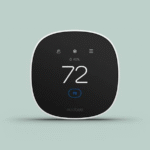
Some homeowners solve this problem by installing a smart thermostat with multiple sensors or a zoning system that controls different parts of the house separately.
Blocked Air Vents Reduce Cooling
Sometimes cool air cannot reach the upstairs because something is blocking the vents.
Furniture, rugs, curtains, or storage boxes may cover the air vents without you noticing.
Walk through each upstairs room and make sure every vent is fully open and free from anything that blocks the airflow.
Good airflow helps cool the room more evenly.
Ceiling Fans Can Help Move Cool Air
Ceiling fans do not actually lower the room temperature, but they help the air move around.
The moving air makes people feel cooler because it helps sweat evaporate from the skin more quickly.
During the summer, make sure your ceiling fan spins in the correct direction. Most fans should rotate counterclockwise to push cool air downward.
Using ceiling fans along with your air conditioner can make upstairs rooms feel much more comfortable.
Your Air Conditioner May Be Too Small
If your air conditioner is too small for your home, it may not be able to cool every room properly.
The downstairs often cools first because it is closer to the thermostat. The upstairs may stay warm because the system cannot keep up with the cooling demand.
An HVAC professional can check whether your air conditioner is the correct size for your home.
If the system is too small, replacing it with the right size unit may solve the problem.
Simple Ways to Keep Your Upstairs Cooler
Many homeowners can improve comfort by making a few simple changes.
- Close curtains or blinds during sunny hours.
- Replace dirty HVAC air filters regularly.
- Make sure all air vents are open and not blocked.
- Use ceiling fans to improve air circulation.
- Seal gaps around windows and doors.
- Add insulation to the attic if needed.
- Avoid using the oven during the hottest part of the day.
- Have your cooling system inspected if the problem continues.
These small steps can help reduce the temperature difference between your upstairs and downstairs.
When Should You Call a Professional?
If your upstairs is still much warmer after trying simple solutions, it may be time to call an HVAC professional.
A technician can inspect your air conditioner, ductwork, thermostat, attic insulation, and airflow. They can find problems that are difficult to notice without special tools.
Fixing these issues can improve comfort, reduce energy bills, and help your cooling system work more efficiently.
Final Thoughts
If your home is warmer upstairs than downstairs, the most common reasons are that heat naturally rises, the attic gets very hot, the air conditioner does not cool the upper floor well, or the upstairs receives more direct sunlight. Poor insulation, blocked air vents, and thermostat placement can also make the problem worse.
The good news is that many of these problems have simple solutions. Improving airflow, blocking sunlight, adding insulation, and maintaining your HVAC system can make a noticeable difference.
With the right changes, you can enjoy a home that feels cooler and more comfortable on every floor, even during the hottest days of the year.