A utility knife is the tool you reach for more than almost anything else in your home.
Opening Amazon boxes, breaking down cardboard for recycling, trimming wallpaper, cutting carpet, scoring drywall, slicing rope—every project starts or ends with a sharp blade.
But not all utility knives are created equal. A cheap box cutter with a wobbly blade and a flimsy lock is an accident waiting to happen.
We’ve tested the top models from Gerber, Milwaukee, Stanley, Slice, and Klein Tools to find the utility knives that actually deliver for everyday homeowners—safe, sharp, comfortable, and built to last.
This is tool is also our top pick for Home upgrade tools and tips.
Utility Knives for Home Use- Our Top Picks at a Glance
Best Overall for Home Use: Gerber Gear EAB Lite — Compact, tough, and versatile enough for everything from opening mail to light construction. The pocket knife that thinks it’s a utility blade.
Best for Tradespeople and Serious DIY: Milwaukee Fastback Press and Flip — One-handed deployment, integrated wire stripper, and jobsite-tough construction that survives real abuse.
Best for Safety and Families: Slice Folding Knife — Ceramic blade that’s finger-friendly but still sharp enough for boxes and tape. The safest option for homes with kids.
Best Budget Classic: Stanley Classic 99 — Nine dollars of pure reliability. The utility knife your grandfather used, updated with better blade steel.
Best for Electricians and Multi-Taskers: Klein Tools FLICKBLADE — Dual locking positions, quick blade changes, and the precision pros demand for detailed work.
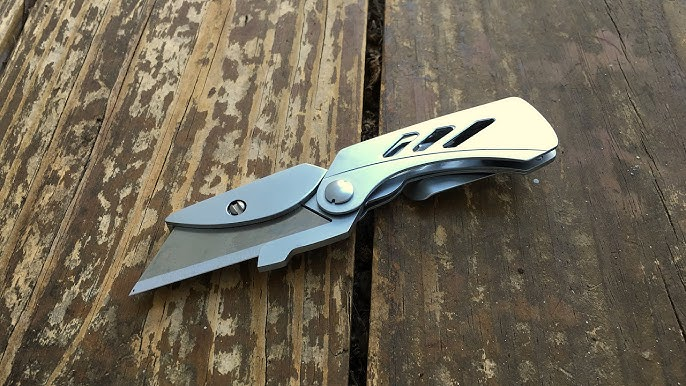
1. Gerber Gear EAB Lite — Best Overall Utility Knife for Home Use
Price: ~$14 | Style: Folding | Blade Length: 2.3 in | Weight: 2.5 oz | Closed Length: 2.8 in
The Short Review
The EAB Lite is the utility knife we recommend when someone asks, “Which one should I just buy and be done with it?” It’s compact enough to live in your pocket every day, tough enough for real work, and priced so reasonably you’ll never regret the purchase.
The stainless steel handle doubles as a pocket clip—or a money clip, if you’re traveling light. At just 2.5 ounces and 2.8 inches closed, it disappears in your pocket until you need it. But when you flip it open, the 2.3-inch blade locks solidly with zero side-to-side play. It slices through plastic zip ties, blister packs, cardboard, and packing tape without hesitation.
What separates the EAB Lite from disposable box cutters is the build quality. The brushed stainless steel construction feels like a real pocket knife, not a plastic toy. The blade sits firmly locked open with no wobble, giving you the leverage and confidence of a fixed-blade tool without the bulk or danger.
The trade-off? You need a flathead screwdriver to change blades. It’s not tool-free like some competitors. And the 2.3-inch blade is shorter than full-sized utility knives, so it’s not ideal for cutting carpet, drywall, or thick rope. For 90% of home tasks, though, it’s exactly the right size.
Buy this if: You want one utility knife for everyday carry, value portability and quality, or need something that looks and feels like a real tool rather than a disposable cutter.
Skip this if: You regularly cut thick materials like carpet or drywall, need tool-free blade changes, or want a larger handle for heavy-duty work.
Pros
- Ultra-compact and lightweight—perfect for pocket carry
- Solid stainless steel construction with no blade play
- Handle doubles as pocket/money clip
- Surprisingly capable for its size
- Excellent value at ~$14
Cons
- Requires flathead screwdriver for blade changes
- Shorter blade limits heavy-duty cutting
- No onboard blade storage
2. Milwaukee Fastback Press and Flip — Best Utility Knife for Tradespeople and Serious DIY
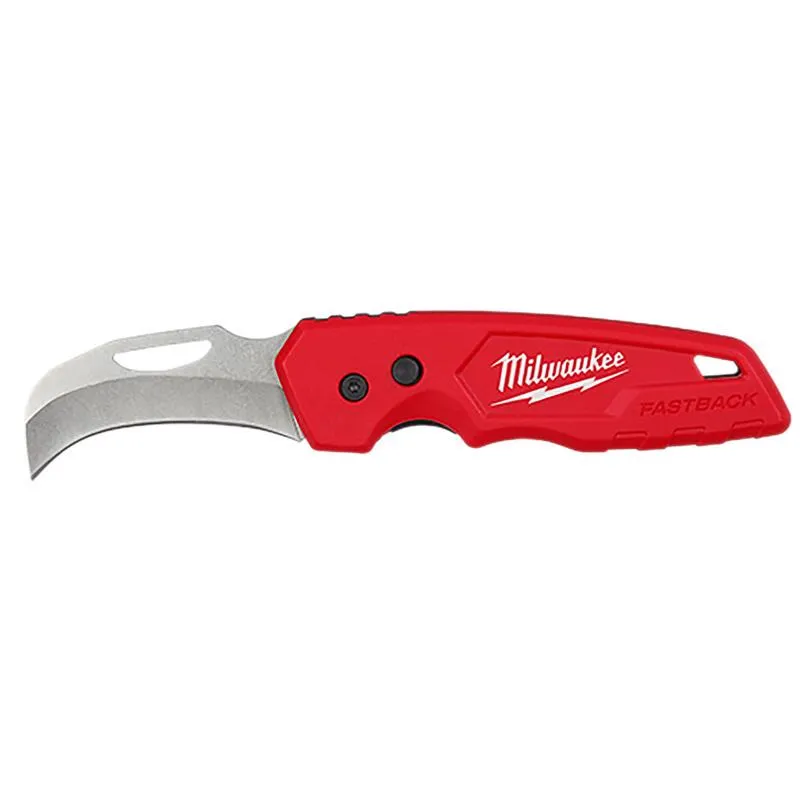
Price: ~$18 | Style: Folding | Blade Length: Standard utility | Weight: ~4 oz | Features: Wire stripper, gut hook, belt clip
The Short Review
Milwaukee built its reputation on tools that survive jobsites, and the Fastback brings that same DNA to a utility knife. This is the blade you reach for when you’re remodeling a bathroom, rewiring a room, or doing any project where you need one hand free and the other holding a knife.
The press-and-flip mechanism deploys the blade one-handed—press the button, flick your wrist, and the blade locks open. No fumbling, no two-handed operation. When you’re on a ladder, holding a piece of trim, or your other hand is covered in caulk, this matters enormously.
The all-metal construction is heat-resistant and corrosion-resistant, shaped into a grip that feels secure even with work gloves on. The integrated wire stripper is genuinely useful for electrical work—no more digging for a separate tool. The gut hook opens packages cleanly without extending the blade. And the belt clip keeps it accessible without digging through a toolbox.
In our testing, the Fastback survived drops onto concrete, exposure to sawdust and moisture, and repeated blade changes without loosening or degrading. The lock mechanism remained crisp after weeks of use.
The downside is weight. At roughly 4 ounces, it’s heavier than the EAB Lite and noticeable in a pocket. And while the wire stripper is handy, casual homeowners may never use it.
Buy this if: You do serious home improvement, need one-handed operation, want integrated tools (wire stripper, gut hook), or already trust Milwaukee for your power tools.
Skip this if: You want the lightest possible knife, only open boxes occasionally, or find integrated features unnecessary.
Pros
- One-handed press-and-flip deployment
- All-metal, heat and corrosion-resistant construction
- Integrated wire stripper and gut hook
- Secure belt clip for quick access
- Jobsite-tough durability
Cons
- Heavier than compact alternatives
- Integrated features may be overkill for casual users
- Slightly bulkier for pocket carry
3. Slice Folding Knife — Best Utility Knife for Safety and Family Homes
Price: ~$27 | Style: Folding | Blade Material: Ceramic | Weight: ~2.5 oz | Safety: Rounded tip, finger-friendly edge

The Short Review
If you have kids, if you’re accident-prone, or if you simply want a utility knife that won’t send you to the ER for stitches, the Slice is the safest option we tested—and it’s still genuinely useful for everyday cutting.
The ceramic blade uses a proprietary edge that’s finger-friendly. You can run your thumb along it without cutting yourself, yet it slices through cardboard, tape, foam, and paper with clean precision. The rounded tip eliminates the puncture hazard of pointed blades. And the heat-treated high-grade steel handle provides durability that matches the safety.
This isn’t a gimmick. The ceramic blade stays sharp longer than steel because it’s harder and doesn’t corrode. It won’t rust if left in a damp garage. And because the edge is designed to cut materials rather than skin, you can work with confidence around children or in tight spaces where a slip would be costly.
The folding design is ambidextrous—works equally well for left and right-handed users. It fits comfortably in a pocket, backpack, or tool pouch. And the lock keeps the blade securely housed when not in use.
The limitation is cutting power. The Slice won’t handle carpet, thick rope, or heavy-duty construction materials. The ceramic blade can chip if you try to pry with it or cut metal. And at $27, it’s pricier than basic steel alternatives.
Buy this if: Safety is your top priority, you have children in the home, you work in tight spaces where slips are likely, or you want a rust-proof blade that stays sharp longer.
Skip this if: You need to cut thick or tough materials regularly, want the absolute cheapest option, or need a blade you can pry and abuse.
Pros
- Finger-friendly ceramic blade reduces cut risk significantly
- Rounded tip eliminates puncture hazard
- Ambidextrous folding design
- Rust-proof and stays sharp longer than steel
- Heat-treated steel handle for durability
- Ideal for homes with children
Cons
- Not suitable for heavy-duty cutting (carpet, thick rope, metal)
- Ceramic can chip if used for prying
- Higher price than basic steel utility knives
- Limited to lighter materials
4. Stanley Classic 99 Utility Knife — Best Budget Utility Knife for Homeowners
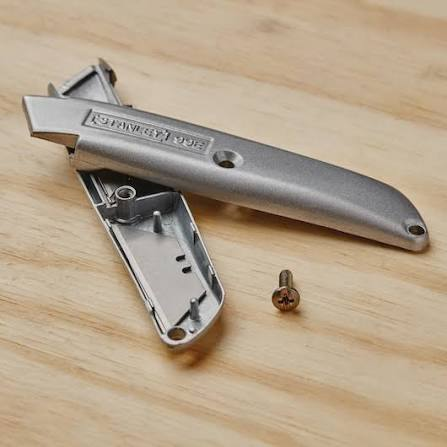
Price: ~$9 | Style: Retractable | Blade: Standard utility, 3 included | Weight: ~5 oz | Construction: Die-cast metal
The Short Review
Sometimes the best tool is the one that’s been working for fifty years. The Stanley 99 is that tool. At nine dollars, it’s the cheapest knife in our lineup—and somehow still one of the most reliable.
The interlocking nose holds the blade securely at any extension length. Need just the tip for scoring drywall? Extend a quarter inch. Need full blade for slicing carpet? Extend it all the way. The mechanism clicks positively at each position, and the blade never wobbles or retracts unexpectedly.
The die-cast metal body has a chunky, solid heft that feels like a real tool in your hand. Even with work gloves or wet hands, the grip is secure. The internal storage holds spare blades, and the included three 11-921 Heavy Duty blades are a step above standard utility blades in both sharpness and durability.
In our testing, the 99 handled everything from opening boxes to cutting carpet to trimming shingles without complaint. The blade didn’t break under pressure. The lock didn’t slip. The body didn’t crack when dropped.
The trade-offs are bulk and aesthetics. It’s not pocket-friendly—this lives in a toolbox or tool belt. The retracting mechanism is manual, not spring-loaded, so blade adjustment takes two hands. And the utilitarian design won’t win any beauty contests.
Buy this if: Your budget is under $10, you want a no-nonsense knife for a toolbox, or you prefer the reliability of a classic design over modern features.
Skip this if: You want pocket carry, one-handed operation, or a lighter, more compact tool.
Pros
- Exceptional value at ~$9
- Interlocking nose secures blade at any length
- Die-cast metal body with solid, tool-like heft
- Includes three heavy-duty carbon alloy blades
- Internal blade storage
- Proven design with decades of field history
Cons
- Bulky—not ideal for pocket carry
- Manual retraction requires two hands
- No one-handed deployment
- Basic appearance and features
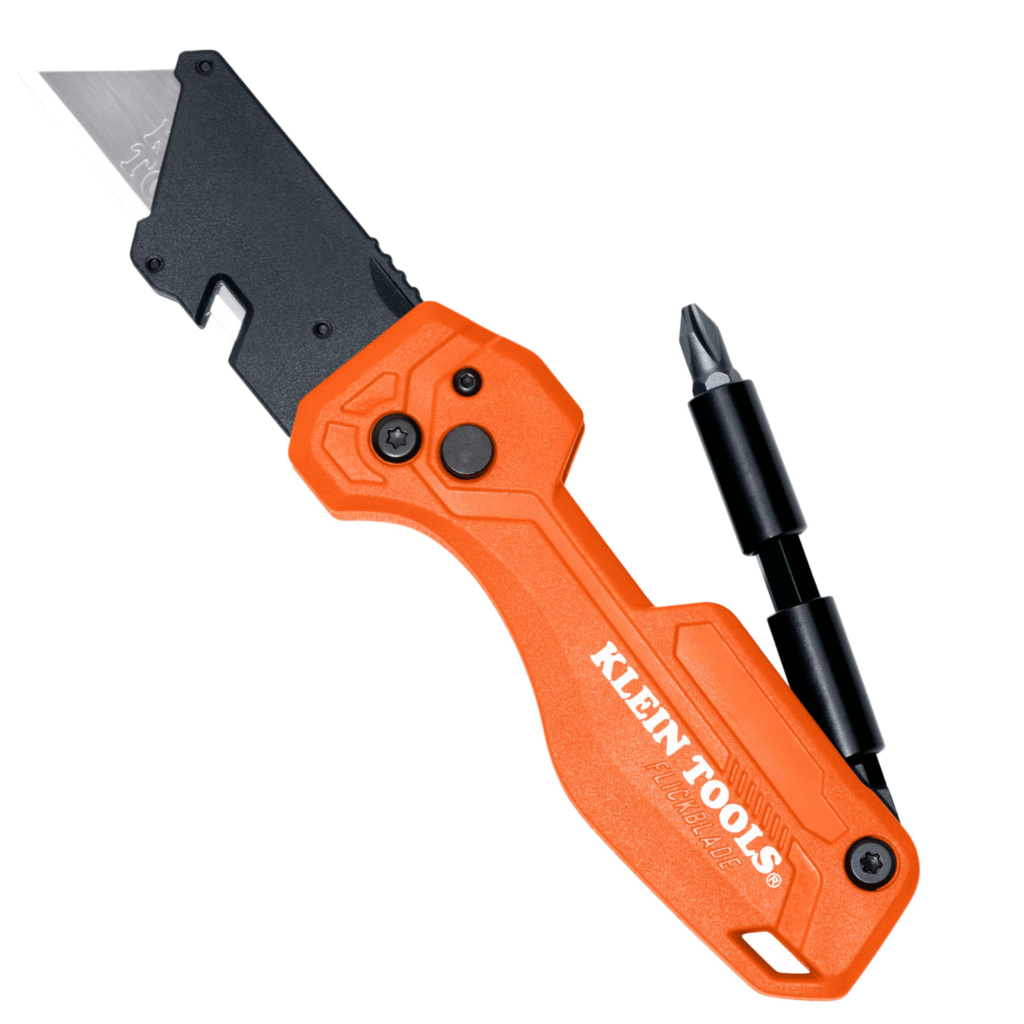
5. Klein Tools FLICKBLADE Folding Utility Knife — Best Utility Knife for Precision Work
Price: ~$25 | Style: Folding | Blade: Quick-change standard utility | Weight: ~3 oz | Closed Length: 4 in | Open Length: 6 in
The Short Review
Klein Tools built its reputation on electrical work, and the FLICKBLADE brings that tradesman precision to a utility knife. This is the blade you reach for when accuracy matters more than brute force—trimming outlet covers, scoring laminate, cutting insulation, or any detailed work where a wobbly blade ruins the job.
The dual locking positions are the standout feature. Lock the blade fully open for standard cutting, or engage the secondary position that angles the blade slightly for detailed work in confined spaces. This small adjustment makes a huge difference when you’re cutting around existing fixtures or working inside electrical boxes.
The quick-change blade system is genuinely tool-free. Press the release, swap the blade, and lock it back in under ten seconds. For professionals who change blades multiple times per day, this saves real time. For homeowners, it means you’re more likely to actually replace a dull blade instead of struggling with a dull edge.
The compact 4-inch closed length fits comfortably in a pocket or tool pouch. The steel belt clip holds securely without snagging. And the build quality is what you’d expect from Klein—precise, durable, and professional.
The limitation is size. The handle is smaller than the Stanley or Milwaukee, which can feel cramped for users with large hands during extended use. And the premium price reflects professional-grade construction that casual users may not need.
Buy this if: You do detailed work requiring precision, change blades frequently, want dual cutting positions, or trust Klein Tools for electrical and maintenance work.
Skip this if: You have very large hands, want the biggest blade possible, or don’t need precision features for basic home tasks.
Pros
- Dual locking positions for standard and precision cutting
- True tool-free quick-change blade system
- Compact and lightweight for all-day carry
- Professional-grade construction and precision
- Secure steel belt clip
- Trusted Klein Tools quality
Cons
- Smaller grip may feel cramped for large hands
- Premium price for professional features
- Less suited for heavy-duty material cutting
Complete Buying Guide: How to Choose the Right Utility Knife
Types of Utility Knives: Which Style Fits Your Life?
Folding Utility Knives
These look and operate like pocket knives, with blades that fold into the handle for safe carry. They’re compact, pocket-friendly, and often include clips for belts or pockets. Best for everyday carry, light to moderate cutting, and anyone who values portability. Examples: Gerber EAB Lite, Milwaukee Fastback, Klein FLICKBLADE.
Retractable Utility Knives
Classic box cutter design with blades that slide in and out of the handle. Usually larger and more robust than folding knives. Best for toolbox storage, heavy-duty cutting, and situations where you need variable blade extension. Examples: Stanley Classic 99, Lenox Tools Utility Knife.
Snap-Off Blade Knives
These use segmented blades that snap off when dull, revealing a fresh edge. Common in warehouses and shipping facilities. Best for high-volume cardboard and packaging work where blade changes need to be instant. Example: OLFA 9mm Stainless Steel.
Specialty Safety Knives
Designed with features that reduce injury risk—ceramic blades, rounded tips, auto-retracting mechanisms. Best for homes with children, retail environments, or anyone prioritizing safety over cutting power. Example: Slice Folding Knife.
Key Features That Actually Matter
Blade Locking Mechanism
A utility knife without a solid lock is dangerous. Look for positive-locking mechanisms that click firmly into place and don’t wobble under pressure. Folding knives should have liner locks or frame locks. Retractable knives need interlocking nose pieces that hold the blade securely at any extension.
Blade Change System
Tool-free quick changes save time and frustration. The best systems let you swap blades in under 10 seconds without hunting for a screwdriver. If you change blades frequently, this feature pays for itself.
Handle Material and Grip
Metal handles (stainless steel, aluminum) last longer and feel more substantial than plastic. Rubber or textured overmolds improve grip with wet or gloved hands. Consider weight—lighter knives are easier to carry; heavier knives absorb vibration and feel more solid during cuts.
Blade Compatibility
Most utility knives accept standard trapezoid utility blades available at any hardware store. This matters because proprietary blades are harder to find and more expensive. The Gerber EAB Lite uses standard blades. The Slice uses proprietary ceramic blades that cost more but last longer.
Portability
If you want everyday carry, look for pocket clips, compact closed lengths under 4 inches, and weights under 3 ounces. If the knife lives in a toolbox, size and weight matter less.
What We Learned After Testing 15+ Utility Knives
The cheapest knives cost more long-term. A $5 box cutter with a plastic body and loose lock will frustrate you, cut you, and need replacement within months. A $14 Gerber EAB Lite or $9 Stanley 99 lasts years.
One-handed operation is a game-changer. Once you experience the Milwaukee Fastback’s press-and-flip deployment, fumbling with two-handed openers feels archaic. If you work on ladders, in tight spaces, or with occupied hands, prioritize one-handed models.
Ceramic blades are underrated for home use. The Slice isn’t for contractors cutting carpet all day, but for homeowners opening boxes and breaking down recycling, the safety benefits outweigh the limitations. You won’t appreciate how finger-friendly it is until you use one.
Weight distribution matters more than total weight. A 5-ounce knife with balanced heft feels lighter than a 3-ounce knife with all the weight in the blade. Hold before you buy if possible.
Integrated features are only useful if you’ll use them. The Milwaukee’s wire stripper is brilliant for electricians. For a homeowner who never touches wiring, it’s just extra weight. Buy for your actual needs, not aspirational ones.
Price Ranges — What to Expect
Budget ($5–$12): Basic retractable box cutters with plastic or simple metal bodies. Functional but limited in durability and features. Examples: basic hardware store brands, Pacific Handy Cutter.
Mid-Range ($12–$25): The sweet spot for most homeowners. Folding designs, better materials, tool-free blade changes, and improved safety. Examples: Gerber EAB Lite, Milwaukee Fastback, Klein FLICKBLADE, Stanley 99.
Premium ($25–$60): Advanced materials, specialty blades, multi-tool integration, or professional-grade precision. Examples: Slice Folding Knife, Fiskars Pro, The Palmer.
Specialty ($60+): Titanium construction, extensive multi-tool features, or TSA-friendly designs. Overkill for most homeowners but appealing for enthusiasts. Example: BIG IDEA DESIGN TPT Slide.
Final Tips Before You Buy
Buy standard blade compatibility. Proprietary blades are expensive and hard to find. Stick with knives that accept universal trapezoid blades unless you have a specific reason not to.
Consider your primary use. Opening Amazon packages? The Gerber EAB Lite is perfect. Remodeling a bathroom? The Milwaukee Fastback or Stanley 99. Homes with small children? The Slice.
Test the lock before trusting it. A utility knife’s lock should feel solid, positive, and unambiguous. If it feels mushy or uncertain, don’t buy it.
Keep spare blades on hand. A dull blade is more dangerous than a sharp one because you push harder and slip more. Buy a pack of quality blades when you buy the knife.
Don’t use utility knives for prying. The blade is designed for cutting, not leverage. Prying with a utility knife chips blades, breaks mechanisms, and causes injuries. Use a proper pry bar or flathead screwdriver.
Frequently Asked Questions
Q: What’s the difference between a utility knife and a box cutter?
A: The terms are often used interchangeably, but “box cutter” typically refers to simple retractable knives designed primarily for cardboard and packaging. “Utility knife” is broader, encompassing folding designs, heavier-duty construction, and versatility for materials beyond cardboard. A box cutter opens your Amazon packages. A utility knife also trims carpet, scores drywall, and cuts rope.
Q: Are ceramic blades as good as steel?
A: For light-duty tasks—cardboard, tape, foam, paper—ceramic blades are excellent. They stay sharp longer, never rust, and are finger-friendly. For heavy-duty work like carpet, thick rope, or construction materials, steel blades are superior. Ceramic can chip under abuse or when used for prying.
Q: How often should I change the blade?
A: Change it whenever cutting requires noticeably more pressure, the edge catches or tears rather than slices, or you see visible nicks or chips. A sharp blade is safer than a dull one. For frequent home use, expect to change blades every 2–4 weeks. For occasional use, every few months.
Q: Can I carry a utility knife in my pocket?
A: Folding utility knives with pocket clips—like the Gerber EAB Lite, Milwaukee Fastback, and Klein FLICKBLADE—are designed for pocket carry. Retractable knives like the Stanley 99 are too bulky and should live in a toolbox. Always ensure the blade is fully retracted or folded before pocketing.
Q: What’s the safest utility knife for homes with kids?
A: The Slice Folding Knife is specifically designed with safety in mind. Its finger-friendly ceramic blade and rounded tip dramatically reduce injury risk. Store any utility knife out of reach of children, but the Slice offers the best margin of safety if accidentally accessed.
Q: Why does my utility knife blade wobble?
A: Wobble usually means the blade isn’t fully seated in the track, the locking mechanism is worn, or you’re using non-standard blades. Check that the blade is properly inserted and the lock is fully engaged. If wobble persists, the knife’s internal mechanism may be worn—time to replace it.
Q: Can I sharpen utility knife blades instead of replacing them?
A: You can, but it’s rarely worth the effort. Standard utility blades cost 30–50 cents each. Sharpening takes time, requires skill to maintain the correct angle, and removes material that compromises the blade’s fit in the track. Replace, don’t sharpen.
Q: What’s the best utility knife for drywall work?
A: For scoring and cutting drywall, you want a retractable knife with precise blade extension control and a comfortable grip for extended use. The Stanley Classic 99 excels here—the interlocking nose lets you extend just the tip for scoring, then full blade for cutting. The Milwaukee Fastback also works well with its solid lock and comfortable grip.
Q: Are expensive utility knives worth it?
A: For most homeowners, the $12–$25 range hits the sweet spot. Knives like the Gerber EAB Lite and Milwaukee Fastback offer professional-grade construction at reasonable prices. Spending $50+ gets you titanium, multi-tools, or specialty features that most homeowners never use. Buy for your actual needs.
Q: Can I take a utility knife on a plane?
A: No—utility knives must go in checked luggage, not carry-on. The only exception is bladeless handles like The Palmer, which you can carry through TSA and outfit with a blade at your destination. Always remove and pack blades separately in checked bags.
Disclosure: We independently research and test products. When you buy through links on our site, we may earn an affiliate commission at no extra cost to you.