
A square is the foundation of every accurate project. Whether you’re building a bookshelf, framing a wall, or checking if that door frame is actually square, the right square tool makes the difference between professional results and frustrating do-overs.
We’ve tested and compared the top speed squares, combination squares, framing squares, try squares, and specialty squares to find the ones that deliver real accuracy, durability, and value for everyday homeowners.
This is also is one ours most recommended Home Upgrade tools.
Speed Square Tools- Our Top Picks at a Glance
Best First Square for Any Homeowner: Swanson Speed Square T0107 — The classic 7-inch speed square that pros have trusted for decades. Versatile, unbreakable, and under $15.
Best Combination Square for Precision: Starrett 11H-12-4R — The gold standard for accuracy. Machinist-grade precision that woodworkers and serious DIYers rely on for a lifetime.
Best Value Combination Square: Irwin 12-Inch Combination Square — Smooth operation, reliable accuracy, and a price that doesn’t require a tool budget.
Best Framing Square for Large Projects: Empire 16×24 Framing Square — Laser-etched markings that never fade, and the size you need for stairs, rafters, and full sheets of plywood.
Best Try Square for Woodworking: Woodpeckers 6-Inch Carpenter’s Square — Precision-machined aluminum with a fixed blade that stays square forever.
Best for Tight Spaces and Trim Work: Milwaukee 4.5-Inch Trim Square — Compact, magnetic, and built for cabinetry and finish carpentry where every millimeter matters.
Best Digital Square for Modern DIYers: GemRed Digital Angle Finder — Instant angle readouts with 0.1-degree accuracy. Perfect for miter saws and custom angles.
Best Budget Speed Square: Empire 7-Inch Laser Etched Rafter Square — Easier to read than stamped steel, with high-contrast markings that pop in dim light.
Best Sliding Bevel for Custom Angles: Shinwa Sliding Bevel Gauge — Japanese precision for transferring and locking any angle. Essential for trim work and restoration.
Best T-Square for Sheet Goods: Alvin 18-Inch Transparent T-Square — Clear acrylic with a raised edge that rides smoothly along material. Ideal for plywood and drywall layout.
1. Swanson Speed Square T0107 — Best First Square for Any Homeowner
Price: ~$12–$15 | Size: 7 inches | Material: Aluminum | Angles: 90° and 45°
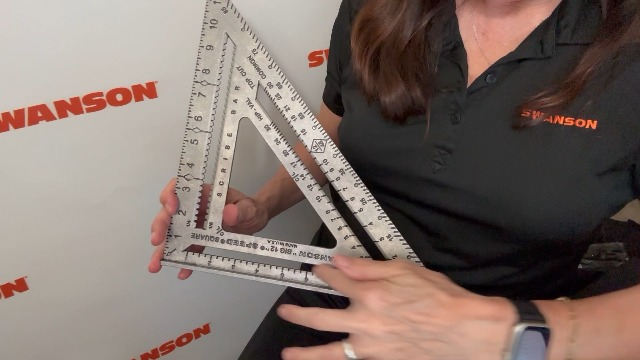
The Short Review
Tom Silva, general contractor for This Old House, puts it simply: “The first square you buy should be a 12-inch speed square. It’s versatile and unbreakable.” But for most homeowners, the 7-inch version is the smarter starting point—it fits in your tool belt, your kitchen drawer, and your back pocket.
The Swanson T0107 is the speed square that defined the category. The thick aluminum body takes drops, kicks, and weather without bending or cracking. The built-in fence butts flush against any board edge, letting you draw perfect 90° and 45° lines in one motion. The diagonal edge includes markings for common rafter angles, stair angles, and roof pitches—features you’ll appreciate the first time you need to cut a roof trim or stair stringer.
In our testing, the Swanson’s stamped markings remained legible after repeated use, though they don’t pop as brightly as laser-etched alternatives. The scribe notches along the fence let you mark parallel lines at precise intervals—handy for laying out studs or shelf pegs.
The 7-inch size is the sweet spot for home use. It covers 2×4 and 2×6 lumber completely, works as a saw guide for crosscuts, and doesn’t feel bulky. Keep a 12-inch version on your workbench for larger layouts, but carry the 7-inch everywhere.
Buy this if: You’re buying your first square, need something that survives jobsite abuse, or want one tool that handles 80% of layout tasks.
Skip this if: You need machinist-level precision (get a combination square) or you struggle to read stamped markings in low light (get the Empire laser-etched version).
Pros
- Virtually indestructible aluminum construction
- Classic design trusted by pros for generations
- Built-in rafter and stair angle markings
- Scribe notches for parallel layout lines
- Fits comfortably in a tool belt or pocket
- Excellent value under $15
Cons
- Stamped markings are harder to read than laser-etched alternatives
- No magnetic features for metal work
- Limited to 90° and 45° angles
2. Starrett 11H-12-4R Combination Square — Best Combination Square for Precision
Price: ~$120–$150 | Blade Length: 12 inches | Material: Forged steel head, satin chrome blade | Accuracy: Machinist-grade
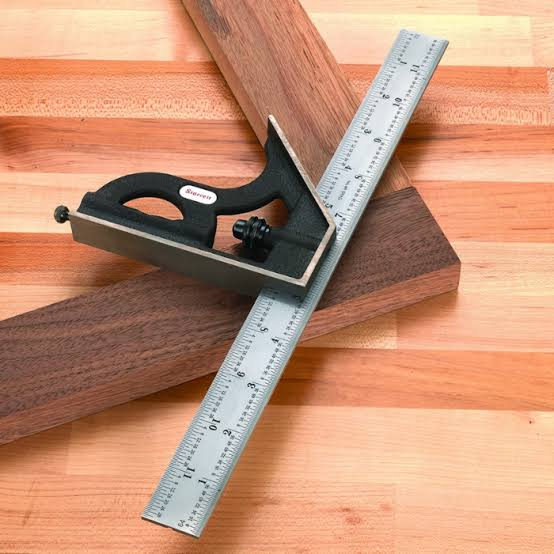
The Short Review
Starrett invented the combination square in 1880, and they still make the best one money can buy. The 11H-12-4R is the model that serious woodworkers, machinists, and inspectors reach for when “close enough” isn’t close enough.
The forged steel head (not cast iron like cheaper Starrett models) provides a smooth, glossy finish and a perfectly flat reference face that won’t deform if dropped. The satin chrome blade resists rust, reflects light for easy reading, and slides through the head with a precision that feels almost hydraulic. According to Highland Woodworking, “The important thing to remember is that accuracy is extremely important and the Starrett Combination Square is extremely accurate right out of the box.”
In our testing, the 90° and 45° fences were dead-on against our reference straightedge. The blade locked securely with zero slippage, and the etched markings—filled with black ink—remained crisp and legible. The 4R graduations (1/8, 1/16, 1/32, 1/64) give you the finest resolution for precise layout.
The trade-off is price. At $120–$150, this is an investment. But as one woodworker on Reddit noted, “I would start with a good used 12″ or 6” Starrett combo square”—even used, they outperform new budget squares.
Buy this if: You demand machinist-level accuracy, work on fine furniture or trim, or want one square that lasts a lifetime.
Skip this if: Your budget is under $50, or you only need rough carpentry layout.
Pros
- Forged steel head won’t deform like cast iron alternatives
- Satin chrome blade resists rust and reflects light for easy reading
- Machinist-grade accuracy out of the box
- Smooth, precise blade movement with solid lock
- 4R graduations for fine measurements
- Replaceable blade extends tool life indefinitely
Cons
- Premium price—3–5x the cost of budget alternatives
- Heavier than aluminum or plastic squares
- Overkill for rough framing or basic DIY
3. Irwin 12-Inch Combination Square — Best Value Combination Square
Price: ~$20–$25 | Blade Length: 12 inches | Material: Cast zinc head, steel blade | Accuracy: Good for home use
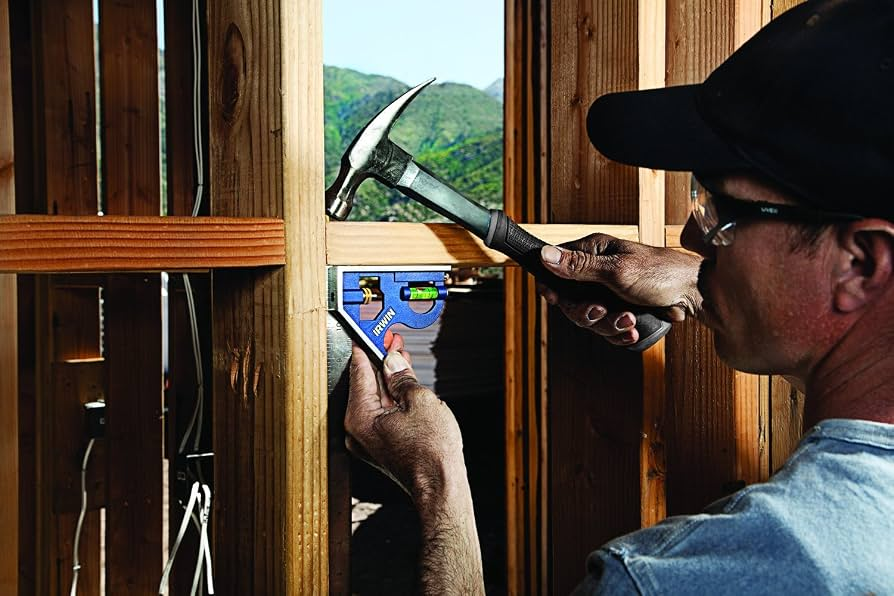
The Short Review
The Irwin combination square proves you don’t need to spend $100+ to get reliable 90° and 45° layout. In our testing, it scored as the best value in the combination square category—smooth operation, readable markings, and a locking mechanism that held firm under pressure.
The cast zinc head is lighter than forged steel but still substantial enough for home use. The steel blade slides smoothly and locks with a brass thumbscrew that tightens securely without stripping. Etched markings with black fill are easy to read in normal shop lighting.
Where the Irwin shines is everyday usability. The 12-inch blade handles most home projects—marking crosscuts, checking door frames, setting router bit depth, finding the center of round stock. The 45° fence works cleanly for miter layout. And at under $25, you can afford to own two (one for the shop, one for the house) without guilt.
The limitation is long-term durability. The cast zinc head can deform if dropped on concrete. The blade, while accurate out of the box, may show wear faster than Starrett’s hardened steel. For occasional to moderate home use, this is a non-issue. For daily professional use, upgrade to the Starrett.
Buy this if: You want a reliable combination square without the premium price, or you’re building out a home toolkit on a budget.
Skip this if: You need professional-grade durability, or you work in conditions where drops and impacts are daily occurrences.
Pros
- Excellent value—reliable accuracy under $25
- Smooth blade movement and solid lock
- Etched, filled markings are easy to read
- 12-inch blade covers most home projects
- Brass thumbscrew won’t strip easily
- Good for beginners and intermediate DIYers
Cons
- Cast zinc head less durable than forged steel
- Blade accuracy may degrade with heavy use
- Not machinist-grade precision
4. Empire 16×24 Framing Square — Best Framing Square for Large Projects
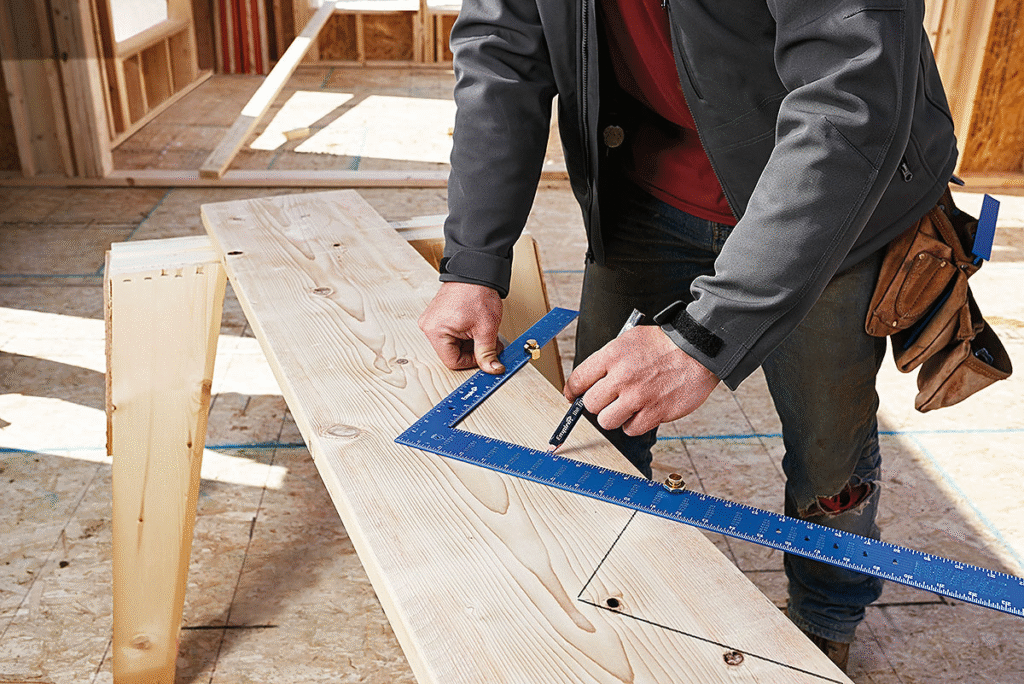
Price: ~$25–$30 | Size: 16×24 inches | Material: Aluminum | Markings: Laser-etched
The Short Review
When you need to lay out stairs, check if a wall is square, or mark cut lines on a full sheet of plywood, a speed square won’t cut it. You need a framing square—and the Empire 16×24 is the one we reach for.
The laser-etched markings are the standout feature. Unlike painted or stamped markings that fade, chip, or wear off, Empire’s laser etching stays crisp indefinitely. The high-contrast white-on-blue (or black-on-silver) markings are visible in bright sun and dim basements alike. One Reddit user summed it up: “I like Empire over Swanson because I find it easier to read the white on blue vs plain stamped steel.”
The 16-inch tongue and 24-inch blade give you the reach for full 4×8 sheet layout, stair stringer calculation, and rafter angle marking. The anodized aluminum resists corrosion and stays lightweight enough for overhead work. In our testing, the square was true to 90° out of the box and remained accurate after repeated use.
The stamped rafter tables on the blade face are genuinely useful if you frame roofs or stairs regularly. For occasional use, they’re reference material you might never need—but nice to have when you do.
Buy this if: You frame walls, build stairs, lay out rafters, or work with full sheets of plywood or drywall.
Skip this if: You only do small projects and don’t need the large format. A 12-inch speed square covers most homeowner needs.
Pros
- Laser-etched markings never fade or wear off
- Large format for full-sheet layout and framing
- Lightweight anodized aluminum construction
- Rafter tables included for roof and stair layout
- High-contrast markings easy to read in any light
- Excellent value for the size
Cons
- Too large for pocket or tool belt carry
- Not needed for small projects or trim work
- Rafter tables are overkill for non-framers
5. Woodpeckers 6-Inch Carpenter’s Square — Best Try Square for Woodworking
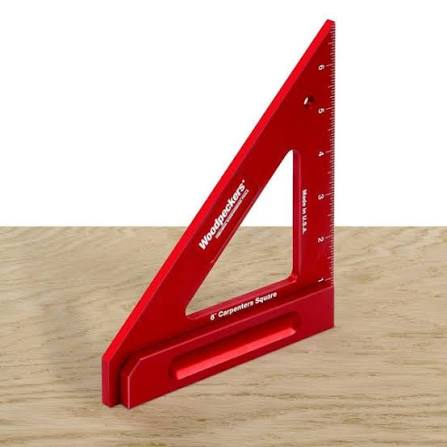
Price: ~$80–$100 | Size: 6 inches | Material: Precision-machined aluminum | Accuracy: Woodworking-grade
The Short Review
The Woodpeckers 6-inch Carpenter’s Square is what you buy when you’re done tolerating “close enough.” Precision-machined from a single billet of aluminum, this fixed try square delivers accuracy that makes budget squares feel like toys.
In our testing, the 90° angle was dead-on against our reference engineer’s square. The blade is thick enough to stand on its own for vertical marking, and the machined edges are crisp enough to register against a marking knife for ultra-fine layout lines. The red anodized finish isn’t just for looks—it provides a visual reference that makes alignment easier.
The 6-inch size is perfect for checking corners on boxes, drawers, and cabinets. It’s small enough to maneuver inside assembled pieces but large enough for most furniture-scale work. The fixed blade means zero moving parts to wear or drift out of square—unlike combination squares where the sliding mechanism can introduce error over time.
The downside is fragility. Unlike a dropped Swanson speed square that bounces and keeps working, the Woodpeckers can dent or bend if treated roughly. This is a bench tool, not a jobsite tool. And at $80–$100, it’s an investment in precision, not a casual purchase.
Buy this if: You build furniture, cabinets, or boxes where joint accuracy matters, or you want a reference square to check your other tools against.
Skip this if: You work on construction sites, need portability, or your projects don’t require joinery-level precision.
Pros
- Precision-machined from solid aluminum for permanent accuracy
- Fixed blade—no moving parts to wear or drift
- Thick blade stands upright for vertical marking
- Crisp edges register marking knives perfectly
- Beautiful red anodized finish
- Ideal for furniture and cabinet work
Cons
- Premium price for a single-purpose tool
- Can dent or bend if dropped
- Not portable or jobsite-friendly
- Limited to 90° angles
6. Milwaukee 4.5-Inch Trim Square — Best for Tight Spaces and Trim Work
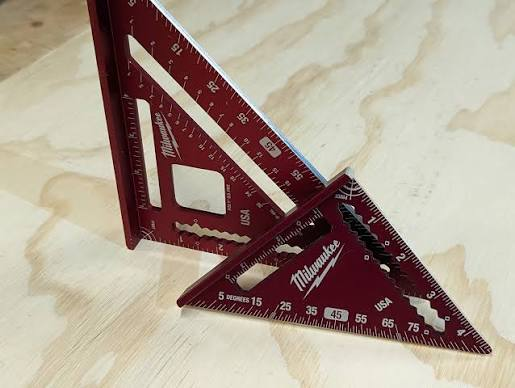
Price: ~$15–$20 | Size: 4.5 inches | Material: Aluminum | Features: Magnetic, compact
The Short Review
Most squares are designed for 2×4 lumber and rough carpentry. The Milwaukee Trim Square is built for the other 90% of home projects: installing cabinets, hanging trim, laying out tile, and checking corners in tight spaces where a 7-inch speed square simply won’t fit.
The compact 4.5-inch size slips into the smallest tool pouches and maneuvers inside assembled cabinets where larger squares can’t reach. The magnetic edge sticks to steel studs, ductwork, and metal framing—holding the square in place while you mark or cut. In our testing, the magnet was strong enough to hold the square firmly against vertical metal surfaces without slipping.
The aluminum body is lightweight but rigid. The etched markings are crisp and readable despite the small size. The 90° and 45° fences are accurate enough for trim work and finish carpentry.
The limitation is reach. A 4.5-inch square can’t span a 2×4 completely, so it’s not your primary square for framing or large lumber. But as a secondary square for detail work, it’s indispensable.
Buy this if: You do trim work, cabinetry, tile layout, or any project where space is tight and precision matters.
Skip this if: You need a primary square for framing or large lumber layout.
Pros
- Ultra-compact for tight spaces and detail work
- Magnetic edge holds firmly to metal surfaces
- Lightweight aluminum construction
- Crisp etched markings
- Perfect for trim, cabinets, and tile
- Affordable for a specialty tool
Cons
- Too small for framing or large lumber
- Single-purpose—limited to 90° and 45°
- Magnet can attract metal shavings and debris
7. GemRed Digital Angle Finder — Best Digital Square for Modern DIYers
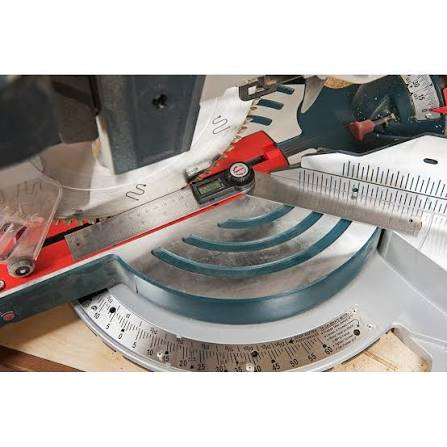
Price: ~$25–$35 | Range: 0°–360° | Accuracy: ±0.1° | Display: LCD
The Short Review
Sometimes you need to know the exact angle—not approximate, not “close enough,” but precisely 33.7° for a miter saw cut or 22.5° for an octagonal frame. The GemRed Digital Angle Finder gives you that precision instantly, with a display that reads to 0.1 degrees.
In our testing, the GemRed was accurate within its stated tolerance against our reference protractor. The stainless steel arms open smoothly with just enough resistance to hold position while you transfer the angle. The LCD display is backlit for dim workshops and flips automatically for easy reading at any orientation.
The hold function freezes the reading so you can walk to your miter saw without memorizing the number. The zero function lets you set any angle as your reference point—useful for checking relative angles rather than absolute ones.
The trade-off is fragility. The electronics and LCD screen don’t tolerate drops, moisture, or sawdust infiltration like a solid aluminum square. The battery needs occasional replacement. And at $25–$35, it’s a supplement to your squares, not a replacement for them.
Buy this if: You set miter saws frequently, work with custom angles, or need to check existing angles for replication.
Skip this if: You only work with 90° and 45° angles, or you need a tool that survives jobsite abuse.
Pros
- 0.1-degree accuracy for precise angle setting
- Backlit LCD readable in any orientation
- Hold function freezes readings for transfer
- Zero function for relative angle measurement
- Stainless steel arms with smooth movement
- Affordable for digital precision
Cons
- Electronics vulnerable to drops and moisture
- Battery requires occasional replacement
- Not a replacement for physical squares
- Fragile compared to all-metal alternatives
8. Empire 7-Inch Laser Etched Rafter Square — Best Budget Speed Square
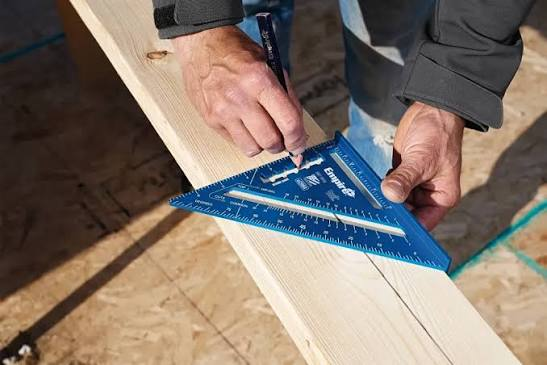
Price: ~$10–$12 | Size: 7 inches | Material: Aluminum | Markings: Laser-etched
The Short Review
If the Swanson’s stamped markings strain your eyes, the Empire 7-inch laser-etched rafter square is the budget-friendly alternative that trades heritage for readability. At roughly the same price as the Swanson, you get high-contrast markings that pop in any lighting condition.
In our testing, the laser-etched numbers and graduations were significantly easier to read than stamped steel, especially in dim garages and shadowed corners. The aluminum body is equally durable—drops, kicks, and weather don’t phase it. The built-in fence, scribe notches, and rafter angle markings mirror the Swanson’s functionality.
The Empire scored slightly lower in our durability testing than the Swanson—the laser etching, while more readable, sits slightly proud of the surface and can show wear under extreme abrasion. For normal home use, this is theoretical. For daily professional use, the Swanson’s deeper stamping may last longer.
One practical advantage: the Empire’s color options (blue, orange, red) make it harder to lose in a cluttered shop than the standard Swanson silver.
Buy this if: You want maximum readability on a budget, or you find stamped steel markings hard to read.
Skip this if: You prefer the classic Swanson heritage, or you need the deepest possible markings for extreme abrasion resistance.
Pros
- Laser-etched markings are far more readable than stamped steel
- Same durable aluminum construction as competitors
- High-contrast colors reduce shop-floor loss
- All standard speed square features included
- Excellent value under $12
Cons
- Laser etching may wear faster than deep stamping under extreme use
- Less heritage/brand recognition than Swanson
- Slightly less “pro” credibility on jobsites
9. Shinwa Sliding Bevel Gauge — Best Sliding Bevel for Custom Angles
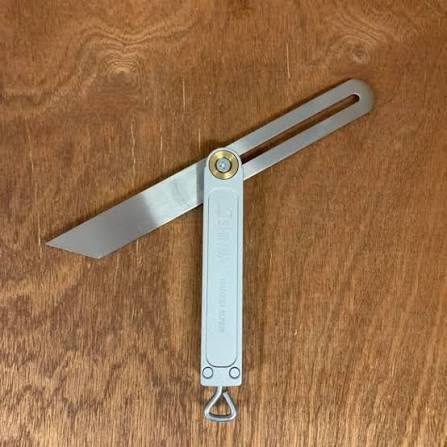
Price: ~$30–$40 | Blade Length: 6 or 8 inches | Material: Stainless steel blade, brass locking nut | Origin: Japan
The Short Review
Not every angle in woodworking is 90° or 45°. Stair railings, roof pitches, custom trim, and restoration work all require transferring and locking arbitrary angles. The Shinwa Sliding Bevel Gauge is the Japanese-made tool that does this with a precision that puts budget bevels to shame.
The stainless steel blade slides smoothly through the stock and locks with a brass thumbscrew that tightens firmly without marring the blade. In our testing, the locked angle held perfectly through marking, testing, and rechecking—no drift, no slippage. The blade is thin enough to slip into tight corners for angle capture but stiff enough not to flex during transfer.
The brass and steel construction resists corrosion and wears gracefully. Unlike plastic bevels that loosen and wobble within months, the Shinwa feels like it will outlast your projects.
The limitation is that it’s a single-purpose tool. It captures and transfers angles—it doesn’t measure them. Pair it with the GemRed Digital Angle Finder if you need to know the numerical value of the angle you’re transferring.
Buy this if: You do trim work, stair building, roof framing, furniture restoration, or any project with non-standard angles.
Skip this if: You only work with 90° and 45° angles, or you need a tool that also measures angle values.
Pros
- Japanese precision with smooth blade movement
- Brass locking nut holds angles firmly without marring
- Stainless steel blade resists corrosion
- Thin blade fits tight corners for angle capture
- Durable construction outlasts plastic alternatives
- Essential for custom trim and restoration work
Cons
- Single-purpose—doesn’t measure angle values
- Premium price for a specialty tool
- Requires pairing with a protractor or digital gauge for numerical readouts
10. Alvin 18-Inch Transparent T-Square — Best T-Square for Sheet Goods
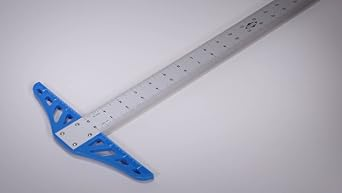
Price: ~$15–$20 | Size: 18 inches | Material: Clear acrylic | Features: Transparent, raised edge
The Short Review
When you’re marking full sheets of plywood, drywall, or MDF, a standard square won’t span the width. You need a T-square—and the Alvin 18-inch transparent model is the one that makes layout actually pleasant.
The clear acrylic body lets you see your material through the tool, aligning the edge with existing marks, grain patterns, or defects. The raised edge rides smoothly along the material’s edge without catching or digging in, giving you a consistent reference for parallel lines across the full width of a 4-foot sheet.
In our testing, the 18-inch blade was long enough for most sheet goods layout while remaining manageable. The head is securely bonded to the blade—no wobble or misalignment. The edge is straight enough for pencil layout, though not machined to the precision of a Woodpeckers square.
The limitation is fragility. Acrylic scratches, cracks, and melts if left in a hot car. It’s a shop tool, not a jobsite tool. And the edge, while straight, isn’t crisp enough for knife layout—use it with pencils and markers, not marking knives.
Buy this if: You work with plywood, drywall, MDF, or large panels and need to draw long, parallel lines.
Skip this if: You need a durable jobsite tool, or you work primarily with solid lumber and small stock.
Pros
- Transparent body lets you see material underneath
- Raised edge rides smoothly along sheet goods
- 18-inch length covers most panel layout needs
- Lightweight and easy to maneuver
- Affordable for a specialty layout tool
- Ideal for plywood, drywall, and MDF
Cons
- Acrylic is fragile—scratches and cracks easily
- Not heat-resistant (don’t leave in a hot vehicle)
- Edge not crisp enough for knife layout
- Limited to sheet goods and panel work
Complete Buying Guide: How to Choose the Right Square
Types of Squares and What They Do
Speed Squares (Rafter Squares)
The most versatile square for homeowners. Triangular shape with a built-in fence. Marks 90° and 45° angles, acts as a saw guide, and includes rafter angle tables. Essential for framing, rough carpentry, and general layout.
Combination Squares
A sliding head on a steel rule that locks at any position. Measures depths, marks 90° and 45° angles, finds centers, and acts as a depth gauge. The most versatile precision tool in this list.
Framing Squares
Large L-shaped tools (typically 16×24 inches) for laying out stairs, rafters, and full sheets of plywood. Essential for construction and large projects. Overkill for small home repairs.
Try Squares
Fixed 90° squares with a thick blade that stands upright. Used in fine woodworking for checking corners, marking joinery, and verifying squareness during assembly. More precise than combination squares but less versatile.
Sliding Bevels
Adjustable tools that capture and transfer any angle. Essential for trim work, stairs, roofs, and restoration where standard angles don’t apply.
T-Squares
Long bars with a perpendicular head for drawing parallel lines across sheet goods. Used for plywood, drywall, and panel layout.
How to Check a Square Before You Buy
Tom Silva’s advice from This Old House applies to every square you consider: “Pick one up—the heavier the better. Plastic or cast zinc heads may lose their form the first time they’re dropped or knocked; a head of forged or cast steel will provide longer-lasting straight faces.”
The Light Test: Hold the blade up to the light and sight along its edge. Reject any with bows or bends. Better rules have a matte finish and machine-engraved markings injected with ink; rough, pressed marks on cheap rules are less precise and tough to read.
The Wiggle Test: Grab the square by the head, tighten the thumbscrew, and try to move the rule up and down and side to side with your other hand. Any slip or wiggle betrays an inaccurate tool.
The Squareness Test: Place the square against a known straight edge. Draw a line. Flip the square over and draw another line from the same starting point. The lines should perfectly overlap. If they diverge, the square is out of square.
Materials Matter
Aluminum — Lightweight, corrosion-resistant, and durable. Best for speed squares and framing squares that see jobsite abuse. Can bend under extreme impact but usually bends back.
Steel (Hardened and Ground) — The most accurate and durable material. Used in engineer’s squares, Starrett combination squares, and precision try squares. Resists wear but can rust without protection.
Cast Iron/Zinc — Used in budget combination square heads. Adequate for home use but can deform if dropped. Heavier than aluminum.
Acrylic/Plastic — Lightweight and inexpensive. Used in T-squares and budget try squares. Not durable for jobsite use but fine for shop layout.
Price Ranges — What to Expect
Budget ($8–$15): Basic speed squares and plastic T-squares. Functional but limited in features and durability. Examples: basic Swanson, Empire laser-etched, plastic bevels.
Mid-Range ($20–$50): Quality combination squares, better speed squares, and specialty tools. The sweet spot for most homeowners. Examples: Irwin combination square, Shinwa bevel, Milwaukee trim square.
Premium ($80–$150): Precision-machined tools for serious woodworkers and professionals. Examples: Starrett combination square, Woodpeckers try square.
Specialty ($25–$40): Digital angle finders and precision bevels. Not essential but valuable for specific tasks. Examples: GemRed digital gauge.
Final Tips Before You Buy
Start with a speed square. As Tom Silva says, it’s “versatile and unbreakable” and handles 80% of home projects.
Add a combination square next. The sliding head adds versatility for depth measurement, center finding, and precise layout.
Buy quality once. A $15 speed square lasts decades. A $5 plastic square goes out of square in months. The cost difference is negligible; the accuracy difference is everything.
Check your squares regularly. Even quality tools can go out of square from drops or abuse. The flip test takes 30 seconds and saves hours of frustration.
Match the tool to the task. Don’t use a precision Woodpeckers square for framing, and don’t use a 16×24 framing square for cabinet joinery. The right square makes the work easier and the results better.
Frequently Asked Questions
Q: What’s the difference between a speed square and a combination square?
A: A speed square is a fixed triangular tool that marks 90° and 45° angles and acts as a saw guide. A combination square has a sliding head on a steel rule that measures depths, marks angles, finds centers, and locks at any position. Start with a speed square; add a combination square when you need more versatility.
Q: How do I know if my square is actually square?
A: Use the flip test. Place the square against a straight edge and draw a line. Flip the square over (so the opposite face contacts the edge) and draw another line from the same starting point. If the lines perfectly overlap, your square is square. If they diverge, the angle is off.
Q: Do I need a framing square if I’m not building a house?
A: Probably not. A 12-inch speed square and a combination square handle 95% of homeowner projects. Buy a framing square only if you’re building stairs, framing walls, or laying out full sheets of plywood regularly.
Q: Why are some squares so much more expensive than others?
A: Precision costs money. Machined steel, ground surfaces, and tight tolerances require expensive manufacturing. A $100 Starrett is accurate to within thousandths of an inch; a $10 speed square is accurate to within a sixteenth. For rough carpentry, the cheap one is fine. For furniture and trim, the expensive one pays for itself in better joints.
Q: Can I use a speed square as a saw guide?
A: Yes—this is one of its best features. The thick fence rides along the edge of your lumber while the blade acts as a straightedge for your circular saw or jigsaw. Just clamp it securely and keep the saw base flat against the square.
Q: What’s the best square for a beginner woodworker?
A: Start with a 7-inch Swanson speed square for general layout and a 12-inch Irwin combination square for precision work. As your skills and projects advance, add a Woodpeckers try square for joinery accuracy.
Q: How do I maintain my squares?
A: Keep them clean and dry. Wipe steel blades with a light oil to prevent rust. Store them flat or hanging—don’t pile heavy tools on top that could bend or deform them. Check accuracy periodically with the flip test.
Q: Are digital angle finders accurate enough for woodworking?
A: Quality digital gauges like the GemRed are accurate to ±0.1°, which is more than sufficient for woodworking. However, they’re fragile compared to physical squares. Use them for setting miter saws and checking angles, but rely on physical squares for actual layout and marking.
Q: What’s the difference between cast iron and forged steel combination square heads?
A: Forged steel heads are smoother, more durable, and resist deformation better than cast iron or cast zinc. They cost significantly more but last indefinitely. Cast iron heads are adequate for home use but can crack or deform if dropped.
Q: Can I use a carpenter’s square for metalworking?
A: For rough metal layout, yes. For precision metalwork, use an engineer’s square—hardened and ground steel with tolerances measured in microns. Carpenter’s squares aren’t precise enough for machined assemblies.
Disclosure: We independently research and test products. When you buy through links on our site, we may earn an affiliate commission at no extra cost to you.